

-
Products
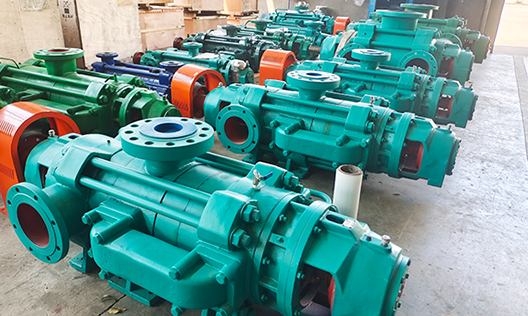
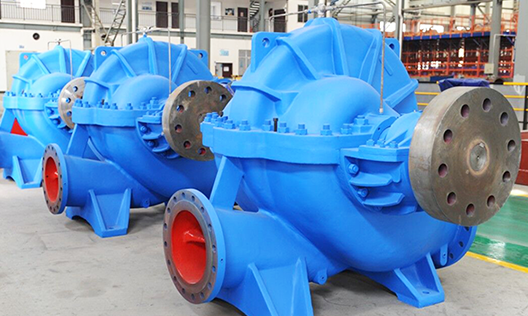
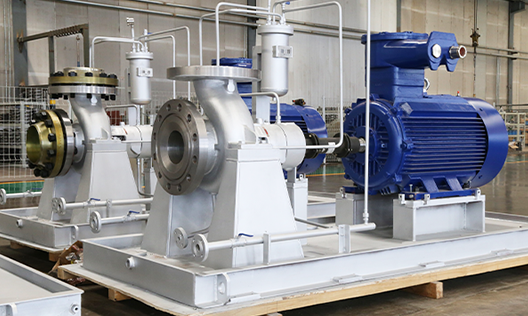
Puede fabricar 26 series de productos, incluyendo bombas de circulación para grandes centrales eléctricas, bombas de condensación para grandes centrales eléctricas, bombas petroquímicas, bombas multietapa, bombas de aguas residuales y lodo, bombas multietapa autoequilibradas, bombas de doble succión y única etapa tipo split, y bombas centrífugas de succión simple y única etapa.
-
Cases
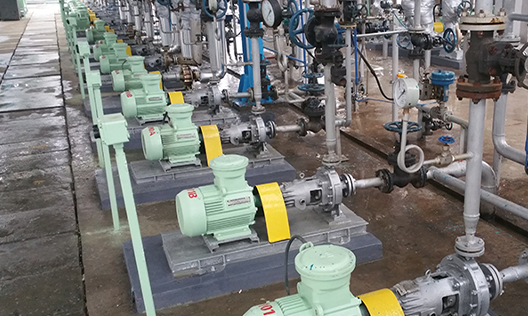
La elección de más de cientos de miles de clientes, cubriendo industrias como minería de carbón, metalurgia, química, energía, recursos hídricos, alimentos, municipalidades y protección ambiental, y exportando a Asia Sudeste, África, América y otros lugares.
-
Service
La empresa fue la primera en la industria en obtener las certificaciones internacionales del sistema de calidad ISO 9001:2008, del sistema de gestión ambiental ISO 14001 y del sistema de gestión de seguridad y salud ocupacional GB/T 28001, además de la certificación API 610 de la Asociación Estadounidense del Petróleo.
-
About us
La empresa, fundada en 1989, es una empresa nacional de alta tecnología integral que integra diseño, investigación y desarrollo, fabricación y servicios; actualmente es una empresa clave en la industria china de bombas centrífugas y una de las grandes fábricas especializadas.
-

Blogs
Con productos innovadores, calidad excepcional y servicios integrales, buscamos la verdad y la pragmática, avanzamos con iniciativa, y nos esforzamos por lograr el objetivo de ser "la marca líder en el campo de aplicación de bombas centrífugas en el país"! Raigada en Hunan, orientada a todo el país y hacia el mundo!
Technical Solution for Abnormally Reduced Rotational Speed in D-Type Horizontal Multistage Centrifugal Pumps
Publication Date:
2026-05-10
Author:
Source:


Type D Horizontal Multistage centrifugal pump As a core fluid-handling device in industries such as petrochemicals, water conservancy, and power generation, its operational stability is directly linked to production continuity and system energy efficiency. The rated speed (1450 rpm/2900 rpm) serves as the foundation for ensuring that critical pump parameters—such as head and flow rate—meet specifications; once the speed falls below the design threshold, not only does delivery efficiency decline markedly and energy consumption rise, but cascading failures such as cavitation and accelerated component wear may also occur, potentially leading to production-line shutdowns and safety risks in severe cases. In current industrial settings, troubleshooting speed anomalies often lacks standardized procedures due to the complex interplay among multiple systems, resulting in biased diagnostics and delayed maintenance. Against this backdrop, this paper, Centrifugal pump Manufacturer Changsha Zoomlion Pump Industry Drawing on national and industry standards such as GB/T 12350-2008, API 610, and ANSI/ASME B73.1, we have developed a four-dimensional fault diagnosis system encompassing electrical, power, fluid, and mechanical domains. This system is complemented by tiered solutions for emergency response, planned maintenance, and preventive upkeep, along with clearly defined, end-to-end safety operating procedures. The result is a problem-solving guide that is both scientifically rigorous and practically applicable, helping engineering personnel rapidly pinpoint the root causes of failures, reduce maintenance costs, and ensure the long-term, stable operation of equipment.

I. Fault Diagnosis Logic
When the rotational speed of a D-type horizontal multistage centrifugal pump falls below its rated value (typically below 1,450 or 2,900 rpm), the root cause must be identified by systematically evaluating four key aspects: the electrical system, the power source, the fluid characteristics, and the mechanical structure. The specific troubleshooting procedure is as follows:
1. Electrical System Fault Diagnosis Voltage Stability: Use a digital multimeter to measure the supply voltage at the motor terminals; the three-phase voltage deviation shall not exceed ±5% (per national standard GB/T 12350-2008). A voltage dip below 85% of the rated value will trigger the generator’s load-reduction protection. Power Switching Equipment: Inspect circuit breakers and contactor contacts for burnout or erosion, and use an infrared thermal imager to measure the temperature of wiring terminals (normal operating temperature ≤65°C), in order to eliminate power losses caused by excessive contact resistance.
2. Power System Performance Evaluation Motor Parameter Verification: Use a clamp-on ammeter to measure the rated current and compare it with the motor nameplate specifications (e.g., the efficiency curve for Y-series three-phase induction motors). The no-load current should be no more than 30% of the rated current. Bearing Clearance Inspection: Use feeler gauges to measure the radial clearance of the motor bearings (for single-row deep-groove ball bearings, the clearance should not exceed 0.15 mm). Exceeding this tolerance can increase mechanical losses by 15%–20%.
3. Fluid Dynamics Impact Analysis Viscosity–Flow Rate Characteristics: According to ISO 3104, if the measured fluid viscosity exceeds 1.5 times the design value, the pump efficiency curve must be verified in accordance with API 610. Inlet Pressure Monitoring: Use a vacuum gauge to measure the pump inlet vacuum (typically ≥0.02 MPa), and ensure that the net positive suction head available (NPSH) is at least 1.2 times the design value.
4. Diagnosis of Clogging in Flow-Path Components Impeller Clearance Measurement: After removing the pump cover, use a micrometer to measure the clearance between the impeller and the guide vanes (standard value ≤ 0.3 mm). Foreign-object blockage can reduce head by more than 30%. Guide-Vane Passage Cleanliness: Use an endoscope to inspect the inner wall of the guide-vane passage for scale thickness; when the scaling rate exceeds 0.2 mm/month, chemical cleaning is required (using citric acid at a concentration of 5%–8%).
II. Tiered Solutions
1. Emergency Condition Handling (within 24 hours): Voltage Restoration: Activate the UPS uninterruptible power supply system and install an SVC-30 kVA voltage stabilizer (voltage regulation accuracy ±2%). Flow Rate Adjustment: Temporarily open the recirculation line valve (opening no greater than 15%) and use throttling to maintain the rotational speed at 90% of the rated value.
2. Planned Maintenance (within 72 hours) Motor Maintenance: Replace the bearings of the Y-series motor (SKF 6314/C3) and adjust the bearing clearance to 0.05–0.1 mm. Impeller Repair: Use laser cladding technology to repair worn blades, with a cladding layer hardness of HRC 55–60.
3. Preventive Maintenance (Quarterly Implementation) Fluid Filtration System: Install a 200-mesh stainless steel filter screen (compliant with GB/T 14295-2019) and a differential pressure alarm switch (setpoint: 0.08 MPa). Sealing System Upgrade: Replace the mechanical seal’s rotating ring material with silicon carbide (SiC) and the stationary ring material with graphite impregnated with phenolic resin.
III. Safety Operating Procedures
1. Implement the Lockout/Tagout (LOTO) procedure and operate high-voltage components while wearing 5 kV-rated insulating gloves.
2. Prior to motor maintenance, the insulation resistance must be measured using a megohmmeter (≥100 MΩ, 500 V range).
3. Replacement of the fluid medium shall be subject to cleanliness certification in accordance with the ANSI/ASME B73.1 standard (ISO 4406 class 18/15/12).
Recommended Information


Related Products
Perhaps you also want to know?
Zoomlian Pump Industry
Address:No. 210, Environmental Protection Middle Road, Yuhua Economic Development Zone, Changsha City, Hunan Province China
All rights reserved © Changsha Zoomlian Pump Co., Ltd.
This website supports IPv4 IPv6 bidirectional access
Website construction:Zhongqi Power Changsha