

-
Products
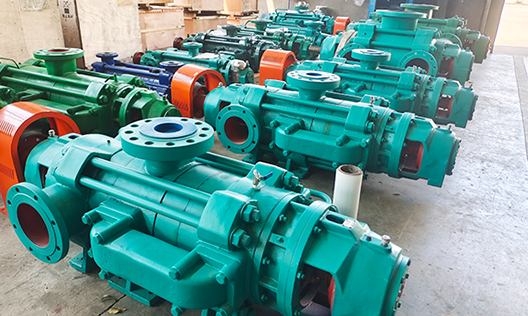
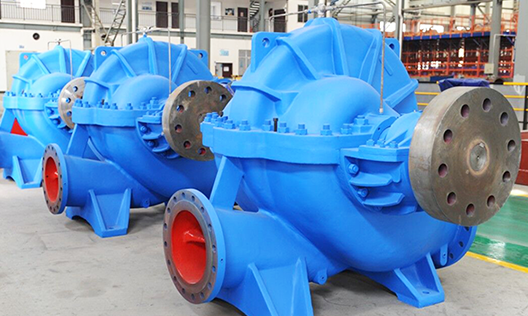
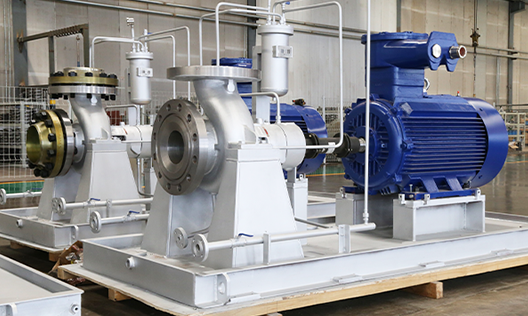
Puede fabricar 26 series de productos, incluyendo bombas de circulación para grandes centrales eléctricas, bombas de condensación para grandes centrales eléctricas, bombas petroquímicas, bombas multietapa, bombas de aguas residuales y lodo, bombas multietapa autoequilibradas, bombas de doble succión y única etapa tipo split, y bombas centrífugas de succión simple y única etapa.
-
Cases
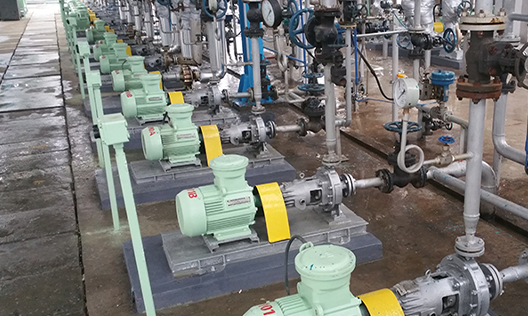
La elección de más de cientos de miles de clientes, cubriendo industrias como minería de carbón, metalurgia, química, energía, recursos hídricos, alimentos, municipalidades y protección ambiental, y exportando a Asia Sudeste, África, América y otros lugares.
-
Service
La empresa fue la primera en la industria en obtener las certificaciones internacionales del sistema de calidad ISO 9001:2008, del sistema de gestión ambiental ISO 14001 y del sistema de gestión de seguridad y salud ocupacional GB/T 28001, además de la certificación API 610 de la Asociación Estadounidense del Petróleo.
-
About us
La empresa, fundada en 1989, es una empresa nacional de alta tecnología integral que integra diseño, investigación y desarrollo, fabricación y servicios; actualmente es una empresa clave en la industria china de bombas centrífugas y una de las grandes fábricas especializadas.
-

Blogs
Con productos innovadores, calidad excepcional y servicios integrales, buscamos la verdad y la pragmática, avanzamos con iniciativa, y nos esforzamos por lograr el objetivo de ser "la marca líder en el campo de aplicación de bombas centrífugas en el país"! Raigada en Hunan, orientada a todo el país y hacia el mundo!
Corrosion Causes and Anti-Corrosion Technical Solutions for Impellers of DP-Type Self-Balancing Multistage Centrifugal Pumps
Publication Date:
2026-05-12
Author:
Source:


DP-type self-balancing horizontal multistage centrifugal pump Analysis of Impeller Corrosion and Mitigation Measures As a critical piece of equipment for industrial fluid conveyance, the DP‑type self‑balancing horizontal multistage centrifugal pump is subject to impeller corrosion, a typical failure mode that adversely affects pump performance and service life. In the following article, the manufacturer of self‑balancing multistage centrifugal pumps… Changsha Zoomlion Pump Industry This paper analyzes the corrosion mechanisms and influencing factors to identify the causes of impeller corrosion in DP-type self-balancing multistage centrifugal pumps and proposes corresponding anti-corrosion technical solutions, providing a reference for user organizations.

I. Classification of Corrosion Causes
(1) Chemical Corrosion: In fluid media, corrosive chemicals—such as acids, bases, and salts—react chemically with the impeller material, thereby destroying the metal’s surface oxide film. Material‑specific corrosion resistance varies significantly: stainless steel impellers exhibit good resistance to common acidic and alkaline media but are prone to pitting corrosion in strongly oxidizing or reducing environments; duplex steels offer improved resistance to localized corrosion, yet remain susceptible to degradation when exposed to chloride ion concentrations exceeding 500 ppm.

(2) Electrochemical Corrosion: In humid environments, an electrolyte film forms on the impeller surface, leading to electrochemical reactions with ions in the surrounding medium. When dissimilar metallic materials come into contact with an electrolyte solution, galvanic corrosion occurs due to the potential difference between the electrodes: for a composite impeller made of carbon steel and stainless steel immersed in a neutral salt solution, the corrosion rate on the carbon steel side can be 3–5 times that on the stainless steel side. Electrochemical corrosion is often accompanied by localized micro‑galvanic effects, which give rise to pitting and accelerate its propagation.
(3) Coupling of Physical Factors 1. Particle Abrasion: Hard particles in the fluid—such as sand grains or metal debris—travels at high velocity with the working medium through the impeller, causing mechanical wear on the surface. The resulting roughness then accelerates electrochemical corrosion. 2. Flow‑Field Stress: When the inlet flow velocity exceeds 2.5 m/s or the outlet pressure fluctuates by more than ±10% of the design value, turbulent erosion and cavitation‑induced pitting are likely to occur, thereby damaging the protective film.
(4) Improper Operation and Maintenance 1. Temperature失控: When the medium temperature deviates from the design value by ±15°C, the rate of chemical corrosion increases exponentially (e.g., for every 10°C rise in temperature, the acid‑corrosion rate doubles to quadruples). 2. Fouling and Blockage: Prolonged lack of maintenance leads to the deposition of calcium‑magnesium scale or biofilms on the impeller surface, creating localized concentration gradients that accelerate corrosion.
II. Solution
(1) Material Optimization: For highly corrosive service conditions, a Hastelloy C276 impeller is recommended, as its corrosion resistance surpasses that of titanium alloys and it is suitable for acidic environments with a pH below 2. Additionally, applying a surface‑sprayed ceramic coating—such as an alumina–zirconia composite coating—can enhance wear resistance and chemical‑corrosion resistance.
(II) Process Improvements 1. Optimize the impeller flow passage design by maintaining the inlet velocity within the range of 1.8–2.2 m/s and limiting outlet pressure fluctuations to ±5%. 2. Employ precision casting for critical flow‑path components, achieving a surface roughness of Ra ≤ 1.6 μm to minimize turbulent disturbances.
(3) Operation and Maintenance Standards: Establish a corrosion monitoring system to assess the impeller’s corrosion condition in real time using electrochemical impedance spectroscopy (EIS). It is recommended to perform surface roughness measurements every 2,000 operating hours; initiate surface repair when Ra exceeds 3.2 μm.
Impeller corrosion is the result of multiple interacting factors. By adopting a three‑pronged approach—material selection, structural optimization, and intelligent operation and maintenance—Changsha Zoomlion Pump Industry can keep the corrosion rate below 0.1 mm/year, significantly enhancing the reliability of DP‑type pump units. Users are advised to develop tailored anti‑corrosion strategies based on the characteristics of the process fluid—such as its corrosivity, particle size, and temperature—and, when necessary, conduct material compatibility tests and flow‑field simulations for validation.
Previous:
Recommended Information


Related Products
Perhaps you also want to know?
Zoomlian Pump Industry
Address:No. 210, Environmental Protection Middle Road, Yuhua Economic Development Zone, Changsha City, Hunan Province China
All rights reserved © Changsha Zoomlian Pump Co., Ltd.
This website supports IPv4 IPv6 bidirectional access
Website construction:Zhongqi Power Changsha