

-
Products
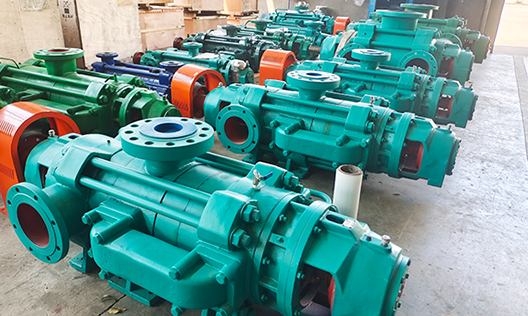
Puede fabricar 26 series de productos, incluyendo bombas de circulación para grandes centrales eléctricas, bombas de condensación para grandes centrales eléctricas, bombas petroquímicas, bombas multietapa, bombas de aguas residuales y lodo, bombas multietapa autoequilibradas, bombas de doble succión y única etapa tipo split, y bombas centrífugas de succión simple y única etapa.
-
Cases
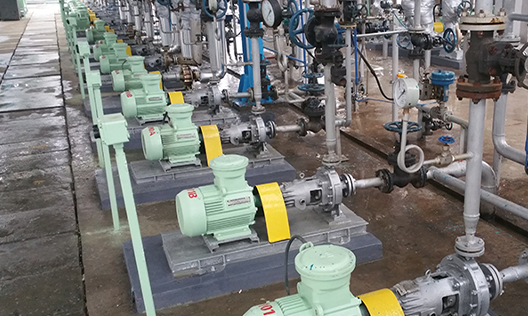
La elección de más de cientos de miles de clientes, cubriendo industrias como minería de carbón, metalurgia, química, energía, recursos hídricos, alimentos, municipalidades y protección ambiental, y exportando a Asia Sudeste, África, América y otros lugares.
-
Service
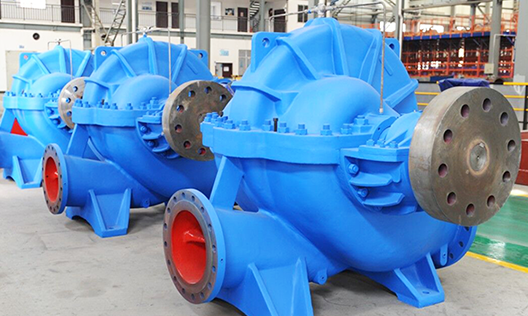
La empresa fue la primera en la industria en obtener las certificaciones internacionales del sistema de calidad ISO 9001:2008, del sistema de gestión ambiental ISO 14001 y del sistema de gestión de seguridad y salud ocupacional GB/T 28001, además de la certificación API 610 de la Asociación Estadounidense del Petróleo.
-
About us
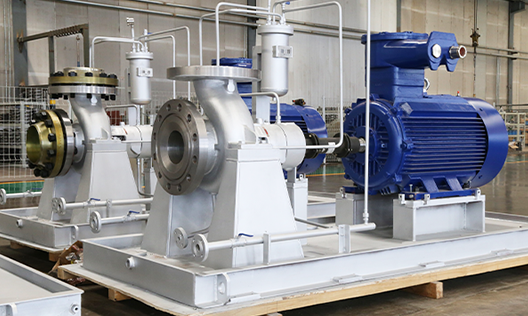
La empresa, fundada en 1989, es una empresa nacional de alta tecnología integral que integra diseño, investigación y desarrollo, fabricación y servicios; actualmente es una empresa clave en la industria china de bombas centrífugas y una de las grandes fábricas especializadas.
-

Blogs
Con productos innovadores, calidad excepcional y servicios integrales, buscamos la verdad y la pragmática, avanzamos con iniciativa, y nos esforzamos por lograr el objetivo de ser "la marca líder en el campo de aplicación de bombas centrífugas en el país"! Raigada en Hunan, orientada a todo el país y hacia el mundo!
Technical Solution for Leak-Proof Oil Sealing in Multi-Stage Centrifugal Pump Systems
Publication Date:
2026-05-09
Author:
Source:


As a widely used core fluid-handling device on the market capable of delivering high flow rates and head, multistage centrifugal pumps have sealing reliability that directly impacts production continuity and energy-efficiency performance. Centrifugal pump Professional manufacturer Changsha Zoomlion Pump Industry Drawing on engineering practice, this paper will propose a systematic solution to the oil leakage problem in multistage centrifugal pumps, covering everything from equipment selection to operation and maintenance management:

1. Sealing System Optimization: A combined fluororubber–metal bellows sealing structure is employed, with seals selected in accordance with ISO 3066 standards based on the medium’s characteristics (such as corrosivity and temperature range). This ensures uniform distribution of contact pressure across the dynamic sealing interface, thereby reducing the risk of leakage.
2. Preventive Maintenance System: Establish a three-tier inspection regime: daily inspections focus on bearing housing oil level and fluctuations in inlet and outlet pressure gauges; weekly inspections include impeller clearance measurement (≤0.1 mm) and radial runout inspection of the seal ring; monthly inspections involve disassembly for thorough examination, with quantitative assessment of wear on the rotating seal face (allowable limit ≤0.2 mm), and prompt replacement of components that exceed tolerance limits.
3. Lubrication Management Specifications: Configure dedicated dual-face mechanical seal lubricant (NLGI Grade 2) in accordance with API 682; replace the lubricant every 5,000 operating hours and simultaneously clean residual contaminants from the bearing chamber to prevent lubricant failure that could lead to overheating and premature aging of the seals.
4. Installation Precision Control: Prior to shipment, the piping system shall be pre-assembled to meet ISO 4406 cleanliness class (NAS 12). During on-site installation, a laser alignment instrument with an accuracy of ±0.05 mm/m shall be used to ensure coaxial alignment between the pump shaft and the motor shaft. The torque for anchor bolts shall be applied in accordance with GB/T 50231, tightening them diagonally in stages to 200 ± 5 N·m.
5. Intelligent Condition Monitoring: The system integrates a PT100 temperature sensor (accuracy ±0.5°C) and a pressure transmitter (range ±0.2% FS), enabling real-time monitoring via the SCADA system of the pump inlet–outlet pressure differential (normal range: 0.3–0.6 MPa) and bearing temperature (≤75°C). An alarm is triggered when the temperature difference exceeds 8°C, thereby preventing seal failure due to thermal expansion and contraction.
6. Material Engineering Adaptation: Develop dedicated pump body materials tailored to the characteristics of different process fluids: use HT200 cast iron with a ceramic coating for conveying clean water; for corrosive media, employ 316L stainless steel combined with Hastelloy C276 seal rings. All materials must be accompanied by certificates of conformity, including heat-treatment reports.
7. Empowering Operations and Maintenance Personnel:
Conduct specialized training on EN ISO 14690 mechanical seals, with a focus on mastering:
① Disassembly sequence for the mechanical seal (a dedicated puller must be used to prevent deformation of the shaft sleeve);
② Method for measuring spring compression (standard value: 15 ± 0.5 mm);
③ Leakage rate testing (using the soap-bubble method; leakage ≤ 3 drops within 10 minutes).
By leveraging the aforementioned technological integration, Changsha Zoomlion Pump Industry has increased the mean time between failures of its multistage pumps to over 8,000 hours and reduced leakage rates to no more than 0.05 mL/h, thereby providing reliable assurance for continuous industrial production.
Recommended Information


Related Products
Perhaps you also want to know?
Zoomlian Pump Industry
Address:No. 210, Environmental Protection Middle Road, Yuhua Economic Development Zone, Changsha City, Hunan Province China
All rights reserved © Changsha Zoomlian Pump Co., Ltd.
This website supports IPv4 IPv6 bidirectional access
Website construction:Zhongqi Power Changsha