

-
Products
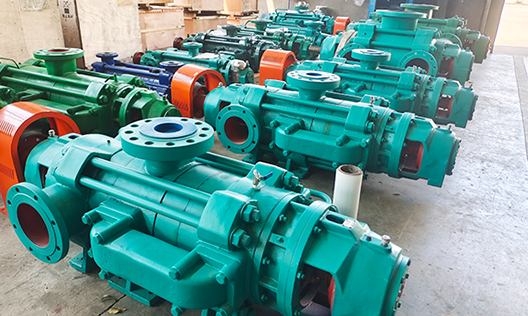
Puede fabricar 26 series de productos, incluyendo bombas de circulación para grandes centrales eléctricas, bombas de condensación para grandes centrales eléctricas, bombas petroquímicas, bombas multietapa, bombas de aguas residuales y lodo, bombas multietapa autoequilibradas, bombas de doble succión y única etapa tipo split, y bombas centrífugas de succión simple y única etapa.
-
Cases
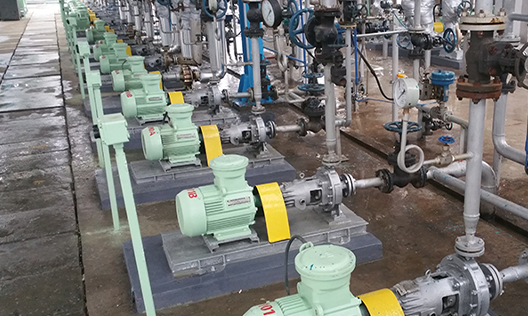
La elección de más de cientos de miles de clientes, cubriendo industrias como minería de carbón, metalurgia, química, energía, recursos hídricos, alimentos, municipalidades y protección ambiental, y exportando a Asia Sudeste, África, América y otros lugares.
-
Service
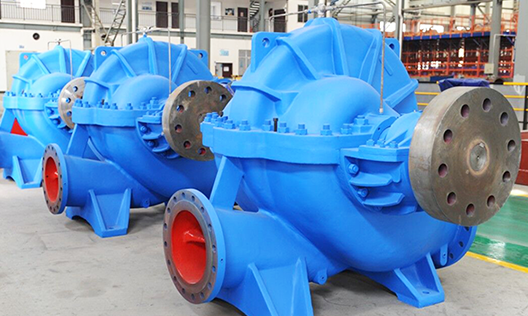
La empresa fue la primera en la industria en obtener las certificaciones internacionales del sistema de calidad ISO 9001:2008, del sistema de gestión ambiental ISO 14001 y del sistema de gestión de seguridad y salud ocupacional GB/T 28001, además de la certificación API 610 de la Asociación Estadounidense del Petróleo.
-
About us
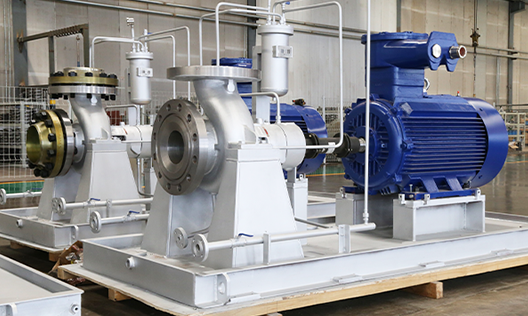
La empresa, fundada en 1989, es una empresa nacional de alta tecnología integral que integra diseño, investigación y desarrollo, fabricación y servicios; actualmente es una empresa clave en la industria china de bombas centrífugas y una de las grandes fábricas especializadas.
-

Blogs
Con productos innovadores, calidad excepcional y servicios integrales, buscamos la verdad y la pragmática, avanzamos con iniciativa, y nos esforzamos por lograr el objetivo de ser "la marca líder en el campo de aplicación de bombas centrífugas en el país"! Raigada en Hunan, orientada a todo el país y hacia el mundo!
Causes of Misalignment in High-Efficiency, Energy-Saving Multistage Pump Couplings and Optimization Solutions
Publication Date:
2026-05-08
Author:
Source:


Multistage centrifugal pumps are widely used in industrial fluid-handling applications, and their operational stability and energy efficiency are highly dependent on the coupling system. Coupling As the core component for power transmission between the motor and the pump shaft, concentricity deviation will directly affect equipment performance. In this paper, Centrifugal pump Manufacturer Changsha Zoomlion Pump Industry This paper will systematically analyze the causes of misalignment in multi-stage centrifugal pump couplings and propose corresponding solutions from a technical application perspective.

I. The Root Causes of Coupling Misalignment
1. Installation-related errors: During installation, if the conventional dial indicator method is used with improper operating procedures—such as uneven loading on the measuring probe—or if the laser alignment instrument lacks sufficient calibration accuracy due to environmental vibration, radial and axial misalignment of the coupling may exceed allowable limits. Changsha Zoomlion Pump Industry recommends using a dual-laser alignment system to ensure that the coaxiality error is ≤0.05 mm/m.
2. Manufacturing process defects: Incomplete elimination of forging stresses in the coupling blank, insufficient positioning accuracy of machine tools during precision machining (e.g., a repeat positioning error greater than 0.02 mm on a machining center), or failure to use dedicated tooling for keyway machining can all lead to geometric deviations. Prior to shipment, three-coordinate measurement must be performed, and critical dimension tolerances must be controlled within ±0.01 mm.
3. Long-term operational degradation: media-induced corrosion (e.g., pitting on the coupling surface caused by acidic solutions), material fatigue resulting from high-speed rotation (e.g., sleeve wear exceeding 0.1 mm), and loosening of foundation bolts (when vibration acceleration exceeds 5 m/s²), among others, will progressively disrupt the original concentric alignment. It is recommended to establish a vibration spectrum monitoring database, with particular emphasis on the 1X and 2X frequency components.
4. Dynamic Load Impacts: Radial forces generated by impeller imbalance during pump operation (e.g., when the single-stage head difference exceeds 3 meters) and axial thrust caused by sudden pressure fluctuations in the piping network (e.g., during instantaneous full opening or closing of valves) can both lead to periodic misalignment of the coupling. Changsha Zhonglian Pump Industry recommends using vibration-damping rubber buffer pads to mitigate the impact of these shocks.
5. Lack of maintenance and management: Failure to perform periodic alignment in accordance with ISO 18436-4 (recommended every 3,000 operating hours), improper selection of grease (e.g., using standard lithium-based grease in high-temperature service), and failure to tighten fastening bolts in stages to 50% of the specified preload torque can all accelerate the degradation of concentricity.
II. Quantitative Analysis of the Impact of Misalignment
1. Efficiency Degradation: Field measurements show that when the radial misalignment reaches 0.1 mm, pump system efficiency decreases by approximately 3%–5%; and for an axial misalignment of 0.08 mm per meter, additional motor power consumption increases by 12%–15%.
2. Accelerated mechanical wear: Bearing life is reduced to one-third of the design value (e.g., an SKF 6310 bearing has a life of only 2,000 hours when Δ = 0.15 mm), and seal leakage increases by a factor of 2 to 3.
3. Fault-Related Interlock Risks: Shear stress concentration in the coupling keyway (resulting in a 40% reduction in shear strength) and premature failure of the motor bearings (when vibration intensity exceeds 7.1 mm/s), which, in severe cases, can trigger shaft system resonance (with natural frequency deviation of ±10%).
III. Optimization Solutions for Changsha Zoomlion Pump Industry
1. High-precision installation process: Laser alignment instruments (such as the German Dr. Schenck brand) are used for dual-end-face alignment, combined with a thermal fitting process to eliminate thermal deformation of the shaft system (with heating temperature controlled at 80–100°C).
2. Full Lifecycle Monitoring: Establish a 3D database covering “installation–operation–maintenance,” upload vibration data to the cloud platform in real time, and use AI algorithms to predict trends in concentricity changes.
3. Material Performance Upgrade: Key components are made from duplex stainless steel (e.g., F51) or Hastelloy C276, with a ceramic coating applied to the surface (hardness > HRC 70), thereby enhancing corrosion resistance and wear resistance.
4. Intelligent Early-Warning System: Integrates a vibration sensor with a temperature drift error of ±0.1°C and a torque-monitoring module; when radial displacement exceeds 0.08 mm, the system automatically triggers shutdown protection.
Changsha Zoomlion Pump Industry emphasizes that coupling concentricity management must be tailored to the characteristics of fluid conveyance—for example, high-viscosity media require fluid-film compensation technology—and that comprehensive, end-to-end control spanning design, manufacturing, and operation and maintenance is essential to ensure the stable operation of multistage centrifugal pumps. It is recommended that technical personnel regularly participate in ISO 13709 standard training to ensure that equipment operation and maintenance comply with international standards.
Recommended Information


Related Products
Perhaps you also want to know?
Zoomlian Pump Industry
Address:No. 210, Environmental Protection Middle Road, Yuhua Economic Development Zone, Changsha City, Hunan Province China
All rights reserved © Changsha Zoomlian Pump Co., Ltd.
This website supports IPv4 IPv6 bidirectional access
Website construction:Zhongqi Power Changsha