

-
Products
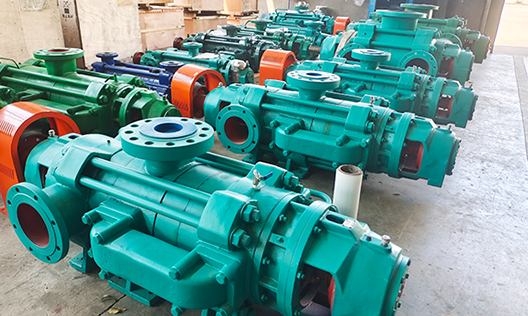
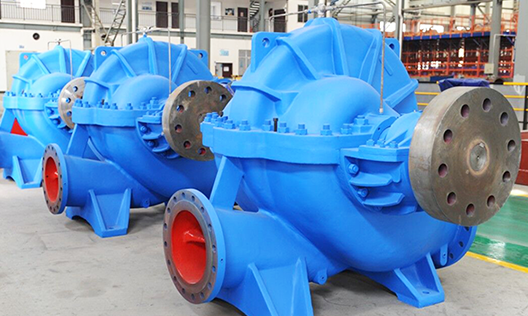
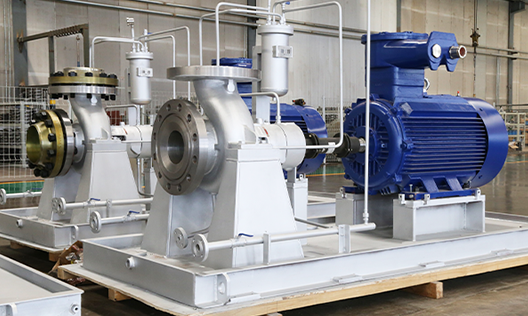
Puede fabricar 26 series de productos, incluyendo bombas de circulación para grandes centrales eléctricas, bombas de condensación para grandes centrales eléctricas, bombas petroquímicas, bombas multietapa, bombas de aguas residuales y lodo, bombas multietapa autoequilibradas, bombas de doble succión y única etapa tipo split, y bombas centrífugas de succión simple y única etapa.
-
Cases
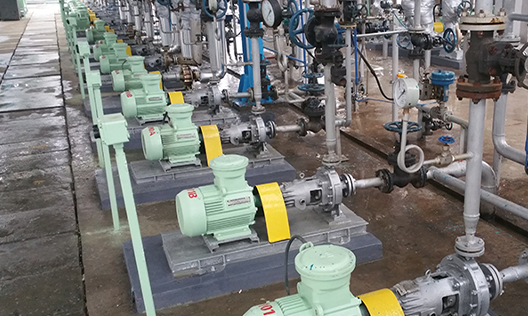
La elección de más de cientos de miles de clientes, cubriendo industrias como minería de carbón, metalurgia, química, energía, recursos hídricos, alimentos, municipalidades y protección ambiental, y exportando a Asia Sudeste, África, América y otros lugares.
-
Service
La empresa fue la primera en la industria en obtener las certificaciones internacionales del sistema de calidad ISO 9001:2008, del sistema de gestión ambiental ISO 14001 y del sistema de gestión de seguridad y salud ocupacional GB/T 28001, además de la certificación API 610 de la Asociación Estadounidense del Petróleo.
-
About us
La empresa, fundada en 1989, es una empresa nacional de alta tecnología integral que integra diseño, investigación y desarrollo, fabricación y servicios; actualmente es una empresa clave en la industria china de bombas centrífugas y una de las grandes fábricas especializadas.
-

Blogs
Con productos innovadores, calidad excepcional y servicios integrales, buscamos la verdad y la pragmática, avanzamos con iniciativa, y nos esforzamos por lograr el objetivo de ser "la marca líder en el campo de aplicación de bombas centrífugas en el país"! Raigada en Hunan, orientada a todo el país y hacia el mundo!
Technical Risks and Control Measures for Overloading Multistage Pumps
Publication Date:
2026-04-29
Author:
Source:


Multistage pumps serve as core fluid-handling equipment in industrial, agricultural, and municipal engineering applications, with their primary function being pressure boosting achieved through the series connection of multiple impellers to meet the demands of liquid transport under complex operating conditions. However, when a multistage pump unit operates for an extended period at loads significantly deviating from its rated capacity, a series of technical risks may arise, necessitating close attention to the following issues:

1. Efficiency Degradation: The design efficiency of multistage pumps is based on the optimal matching among rated flow (Q), head (H), and shaft power (P). When the actual load exceeds the rated operating conditions—for example, when the flow rate exceeds the design value by more than 10%—pressure imbalance occurs at the impeller inlet and outlet, leading to a sharp increase in hydraulic losses. As a result, the measured efficiency drops by 15%–25% compared with the design value, and the system’s energy consumption rises significantly.
2. Reduced service life: Overloading increases the alternating stress on the pump shaft, and when the bearing temperature rise exceeds 80°C (the standard limit is ≤70°C), the oxidation rate of the lubricating grease accelerates, reducing bearing life by more than 50%. Additionally, insufficient net positive suction head (NPSH)—when NPSH is less than the allowable value—causes cavitation, resulting in pitting and spalling on the impeller blade surfaces, which may necessitate impeller replacement within three months.
3. Safety Hazards: Motor overload can trigger the thermal protection device; continued operation under such conditions will lead to insulation aging of the windings. Additionally, frictional heat generated in the mechanical seal due to excessive shaft power can raise the seal face temperature above 120°C, accelerating the aging of the O-rings and increasing the leakage rate from 0.1 mL/h to 5 mL/h, which may result in process medium leakage and contamination.
4. System-wide cascading failures: When the outlet pressure of a multistage pump fluctuates by more than ±0.05 MPa, the stable operation of downstream equipment—such as heat exchangers and metering pumps—is compromised, increasing the likelihood of production-line shutdowns by a factor of three.
Changsha Zoomlion Pump Industry recommends:
Selection Phase: Match the pump type to the process curve (flow–head characteristic curve) to ensure that the operating point falls within the high-efficiency zone (within ±10% of the flow rate at the maximum efficiency point).
Operational Monitoring: An intelligent control cabinet is used to monitor current, vibration, and temperature parameters in real time, with three-level alarm thresholds set at 80%, 90%, and 100% of the rated load.
Maintenance and Optimization: Conduct NPSH verification every 2,000 operating hours and perform impeller dynamic balancing inspections annually to ensure the long-term stable operation of the pump unit. Through precise load control and preventive maintenance, the mean time between failures of multistage pumps can be effectively extended, significantly reducing life-cycle costs.
Recommended Information


Related Products
Perhaps you also want to know?
Zoomlian Pump Industry
Address:No. 210, Environmental Protection Middle Road, Yuhua Economic Development Zone, Changsha City, Hunan Province China
All rights reserved © Changsha Zoomlian Pump Co., Ltd.
This website supports IPv4 IPv6 bidirectional access
Website construction:Zhongqi Power Changsha