

-
Products
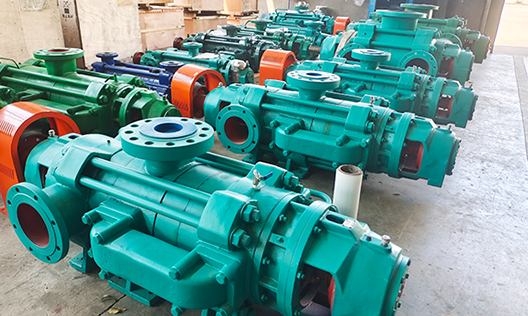
Puede fabricar 26 series de productos, incluyendo bombas de circulación para grandes centrales eléctricas, bombas de condensación para grandes centrales eléctricas, bombas petroquímicas, bombas multietapa, bombas de aguas residuales y lodo, bombas multietapa autoequilibradas, bombas de doble succión y única etapa tipo split, y bombas centrífugas de succión simple y única etapa.
-
Cases
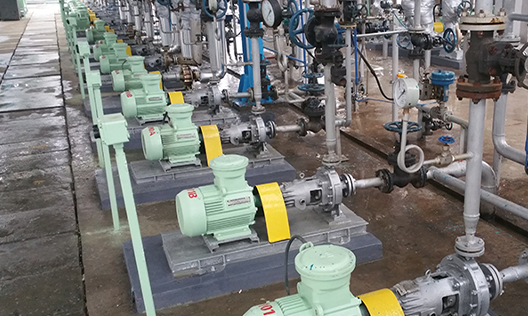
La elección de más de cientos de miles de clientes, cubriendo industrias como minería de carbón, metalurgia, química, energía, recursos hídricos, alimentos, municipalidades y protección ambiental, y exportando a Asia Sudeste, África, América y otros lugares.
-
Service
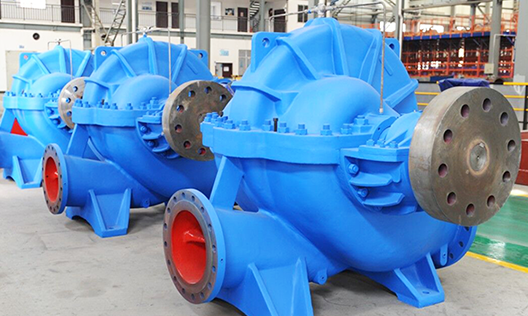
La empresa fue la primera en la industria en obtener las certificaciones internacionales del sistema de calidad ISO 9001:2008, del sistema de gestión ambiental ISO 14001 y del sistema de gestión de seguridad y salud ocupacional GB/T 28001, además de la certificación API 610 de la Asociación Estadounidense del Petróleo.
-
About us
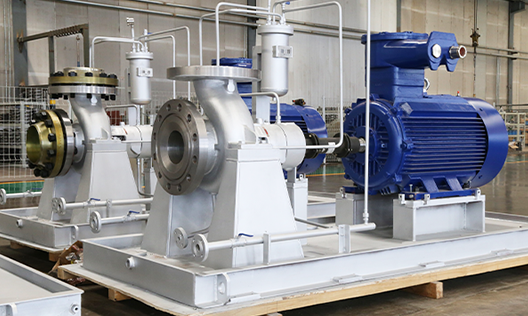
La empresa, fundada en 1989, es una empresa nacional de alta tecnología integral que integra diseño, investigación y desarrollo, fabricación y servicios; actualmente es una empresa clave en la industria china de bombas centrífugas y una de las grandes fábricas especializadas.
-

Blogs
Con productos innovadores, calidad excepcional y servicios integrales, buscamos la verdad y la pragmática, avanzamos con iniciativa, y nos esforzamos por lograr el objetivo de ser "la marca líder en el campo de aplicación de bombas centrífugas en el país"! Raigada en Hunan, orientada a todo el país y hacia el mundo!
Technical Specifications and Key Operational Procedures for Multi-Stage Pump Water Pressure Regulation
Publication Date:
2026-04-27
Author:
Source:


Multistage pumps serve as the core equipment in industrial and specialized commercial water supply systems, and their pressure regulation directly affects the accuracy of fluid delivery and the overall energy efficiency of the system. In the following article, a multistage pump manufacturer Changsha Zoomlion Pump Industry The technical specifications and key operational procedures for multi-stage pump water-pressure regulation are provided for reference by user organizations.

I. Preparations Before Adjustment
1. Environmental Verification: Verify power supply stability (three-phase voltage deviation ≤ ±5%), recheck the pump base mounting bolt torque against the factory-specified values, and inspect the support conditions of the inlet and outlet piping to ensure there is no risk of resonance.
2. Technical Preparation: Familiarize yourself with the “Pressure Adjustment Curve” section in the equipment’s User Manual, master the method for calculating NPSH (Net Positive Suction Head), and verify the system’s design pressure range.
II. Implementation Steps for Water Pressure Regulation
1. Initial parameter acquisition: Use a remote pressure gauge (accuracy class 1.5) to measure the outlet pressure during pump operation, and record basic parameters such as flow rate (Q) and rotational speed (n).
2. Inlet Valve Regulation Method: On the pump’s flow-head characteristic curve (Q-H curve) within the high-efficiency range, gradually open or close the inlet butterfly valve in increments of no more than 10% per adjustment. After each adjustment, allow the system to stabilize for 30 seconds and record the corresponding relationship between ΔP and ΔQ until the target pressure is achieved.
3. Speed Regulation Method: When the system requires long-term stable operation, adjust the motor frequency (f) using a variable-frequency drive (for motors with power ≥11 kW), calculate the rotational speed according to the formula n = 60f/p, and verify the pressure regulation performance by referencing the pump characteristic curve (n1/n2 = √(H1/H2)).
4. Multi-stage Impeller Pressure Balancing: For D-type and MD-type pump series, when cross-condition operation is required, the pressure distribution in the intermediate-stage guide vane chambers must be checked concurrently to prevent uneven loading on a single side of the impeller, which could lead to mechanical seal failure.
III. Key Control Principles
1. Safety Threshold: During adjustment, pressure fluctuations shall not exceed ±5% of the design value; overpressure operation is strictly prohibited (operate in accordance with the maximum working pressure indicated on the nameplate).
2. Dynamic Monitoring: When a PID closed-loop control system is employed, a pressure feedback threshold of ±0.02 MPa is set, and automatic adjustment is achieved via the PLC system.
3. Document Management: Each adjustment must be recorded in the “Pump Operating Parameter Log,” which shall include the adjustment time, valve opening degree, frequency value, and comparative pressure data before and after the adjustment, to serve as the basis for subsequent maintenance.
IV. Recommendations from Changsha Zoomlion Pump Industry
For multistage pumps of different configurations (e.g., vertical or horizontal), it is recommended to prioritize a combined adjustment strategy of “coarse adjustment using the inlet valve followed by fine adjustment via speed control.” After adjustment, the pump shall undergo a continuous 4-hour operational test to verify that key parameters—such as vibration intensity (≤4.5 mm/s) and bearing temperature (≤75°C)—comply with the GB/T 3215-2016 standard. In addition, the adjustment mechanism shall be lubricated and its seals inspected on a regular basis (every 3 months) to ensure long-term stability of adjustment accuracy.
Recommended Information


Related Products
Perhaps you also want to know?
Zoomlian Pump Industry
Address:No. 210, Environmental Protection Middle Road, Yuhua Economic Development Zone, Changsha City, Hunan Province China
All rights reserved © Changsha Zoomlian Pump Co., Ltd.
This website supports IPv4 IPv6 bidirectional access
Website construction:Zhongqi Power Changsha