

-
Products
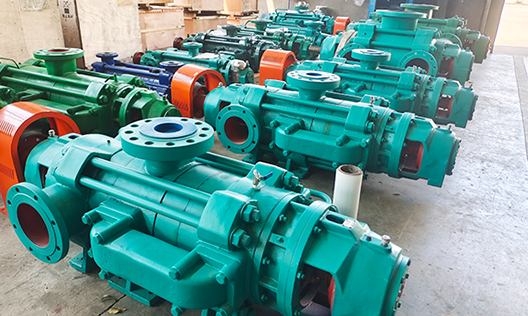
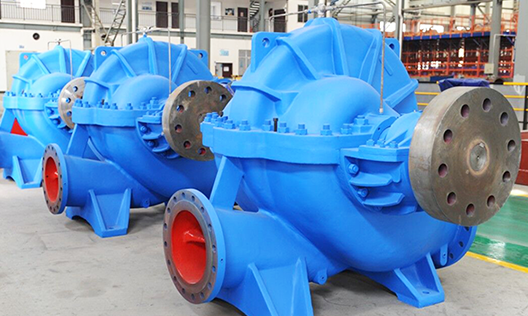
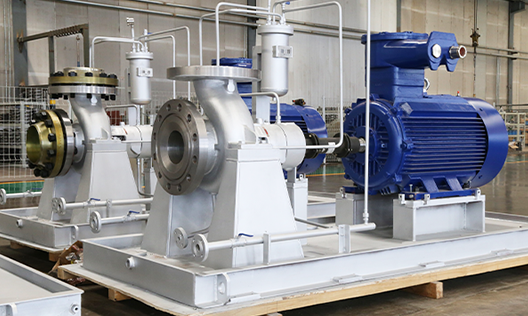
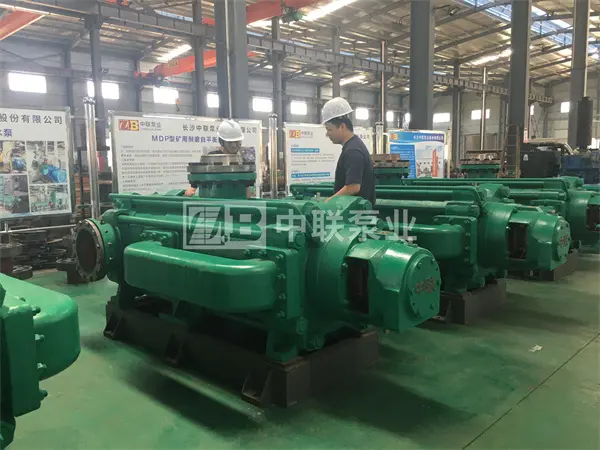
Puede fabricar 26 series de productos, incluyendo bombas de circulación para grandes centrales eléctricas, bombas de condensación para grandes centrales eléctricas, bombas petroquímicas, bombas multietapa, bombas de aguas residuales y lodo, bombas multietapa autoequilibradas, bombas de doble succión y única etapa tipo split, y bombas centrífugas de succión simple y única etapa.
-
Cases
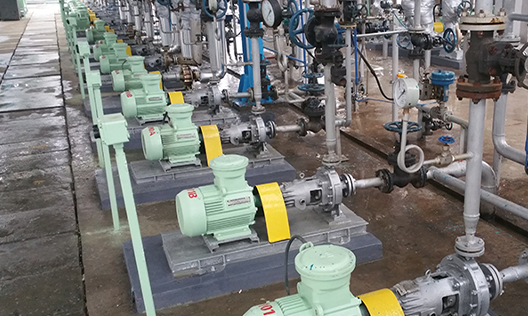
La elección de más de cientos de miles de clientes, cubriendo industrias como minería de carbón, metalurgia, química, energía, recursos hídricos, alimentos, municipalidades y protección ambiental, y exportando a Asia Sudeste, África, América y otros lugares.
-
Service
La empresa fue la primera en la industria en obtener las certificaciones internacionales del sistema de calidad ISO 9001:2008, del sistema de gestión ambiental ISO 14001 y del sistema de gestión de seguridad y salud ocupacional GB/T 28001, además de la certificación API 610 de la Asociación Estadounidense del Petróleo.
-
About us
La empresa, fundada en 1989, es una empresa nacional de alta tecnología integral que integra diseño, investigación y desarrollo, fabricación y servicios; actualmente es una empresa clave en la industria china de bombas centrífugas y una de las grandes fábricas especializadas.
-
Blogs
Con productos innovadores, calidad excepcional y servicios integrales, buscamos la verdad y la pragmática, avanzamos con iniciativa, y nos esforzamos por lograr el objetivo de ser "la marca líder en el campo de aplicación de bombas centrífugas en el país"! Raigada en Hunan, orientada a todo el país y hacia el mundo!
Analysis of the Causes of Aging and Failure of Bearings in High-Pressure Centrifugal Pumps and Corresponding Solutions
Publication Date:
2026-05-30
Author:
Source:


High-pressure centrifugal pumps are commonly referred to as multistage centrifugal pumps, because the greater the number of stages, the higher the pressure and the greater the head. As core equipment for industrial fluid conveyance, the performance of their bearing systems directly determines the operational stability and service life of the entire unit. Bearing degradation is the result of the coupled effects of multiple factors, encompassing materials science, tribology, mechanics, and environmental engineering. The following is Centrifugal pump Manufacturer Changsha Zoomlion Pump Industry From a technical application perspective, this paper systematically analyzes the key factors that induce bearing aging:

1. Accumulated frictional wear
In high-pressure centrifugal pumps, under high-speed (typically >2900 rpm) and heavy-load operating conditions, the rolling elements and raceways form a dynamic contact pair. The continuous relative motion gives rise to mechanical wear, which degrades the surface microtopography. When the amount of wear exceeds the bearing clearance design threshold (typically ≤0.02 mm), abnormal vibration spectra emerge, accelerating the loss of geometric accuracy. The SKF 72 series bearings used by Changsha Zoomlion Pump Industry feature a contact angle design (15°/25°) that optimizes load distribution; however, even under prolonged low-lubrication conditions, abrasive wear can still occur.
2. Lubrication System Failure
Bearing lubrication relies on the hydrodynamic pressure effect generated by the lubricant film. When the lubricant’s viscosity index is less than 90 (resulting in a kinematic viscosity greater than 100 mm²/s at 40°C) or when the water content in the oil exceeds 0.05%, the risk of oil-film breakdown increases significantly. Changsha Zoomlion Pump Industry recommends using L-TSA46 antioxidant and anti-rust turbine oil, which, with its superior water-separation characteristics (>24 hours), can effectively reduce the risk of emulsification. In addition, during grease lubrication, if the amount of grease exceeds one-third of the bearing cavity volume, inadequate heat dissipation will lead to oxidation and degradation of the base oil.
3. Chemical Corrosion Penetration
In media containing H₂S, Cl⁻, and other corrosive species, bearing seals—such as nitrile rubber seals with a temperature rating below 120°C—are prone to swelling-induced failure. To address these challenges in chemical-process applications, Changsha Zoomlion Pump Industry has developed a fluororubber double-lip seal design that can reduce the rate of media ingress to less than 0.1 mg/(cm²·h). In electrochemical corrosion, microcells formed between the bearing rings and rolling elements (e.g., Fe–C galvanic cells) can initiate pitting corrosion; the corrosion rate is positively correlated with the medium’s pH, with rates exceeding 0.5 mm/year when the pH is below 4.
4. Alternating Stress Fatigue
Bearings operating under start–stop and variable-load conditions are subjected to pulsating cyclic stresses. When the stress amplitude exceeds the material’s fatigue limit—for example, the σ-1 of SUJ2 bearing steel is 550 MPa—initial cracks will initiate at the raceway contact points. By employing finite-element simulation to optimize the fillet radii at the bearing housing transition (R ≥ 1.5 mm), Changsha Zoomlion Pump Industry has achieved a 30% increase in bearing fatigue life. According to ISO 281, the basic rating life L₁₀ for a 6309 bearing under 10⁸ load cycles must exceed 8,000 hours.
5. Overload Operating Conditions
The bearing’s rated static load capacity C₀ must satisfy a safety factor of 1.2 times the operating load P (where P = 1.5Fₐ + 0.5Fᵣ). The Chongqing Zoomlion Pump Industry Selection Manual explicitly stipulates that when the pump’s operating flow deviates from the design condition by ±15%, the bearing’s load-carrying capacity must be recalculated. Measured data show that when the flow exceeds the design value by 20%, the bearing temperature rise can reach ambient temperature plus 45°C, causing the heat distortion temperature of the cage material (nylon 66)—which is normally above 200°C—to drop to a critical level.
6. Influence of Ambient Temperature and Humidity
High-temperature environments (>150°C) can shorten the oxidation induction period of bearing lubricants (e.g., the oxidation stability of No. 46 turbine oil is less than 1,000 hours). Changsha Zoomlion Pump Industry recommends employing a forced-air cooling system with an air flow rate of ≥0.5 m³/min, combined with a heat-sink fin design, to reduce bearing temperature fluctuations to less than 5°C. Dust contamination (e.g., dust concentration >10 mg/m³) accelerates abrasive wear; therefore, the cleanliness of the bearing chamber should be inspected regularly (at intervals of ≤2,000 hours), with the ISO 4406 contamination level maintained at ≤18/15.
7. Material Selection Defects
The metallurgical quality of bearing materials—such as SUJ2 bearing steel with an oxygen content of less than 5 ppm—directly affects wear resistance. Changsha Zoomlion Pump Industry employs a vacuum degassing smelting process that can increase bearing life by 25%. When the operating temperature exceeds 250°C, ceramic composite bearings (Al₂O₃ + Si₃N₄) should be selected; their hardness (HRA > 85) enables them to resist high-temperature wear, though the cost increases by approximately 40%.
In summary, Changsha Zoomlion Pump Industry recommends the following measures to extend bearing life: ① establish a bearing health monitoring system (vibration intensity V ≤ 4.5 mm/s); ② replenish lubricating grease every 5,000 operating hours, filling the bearing cavity to approximately half its capacity; and ③ install bearing housing temperature sensors with an accuracy of ±1°C for real-time monitoring. By implementing full lifecycle management, the mean time between failures (MTBF) of high-pressure centrifugal pump bearings can be increased to more than 12,000 hours.
Recommended Information



Related Products
Perhaps you also want to know?
Zoomlian Pump Industry
Address:No. 210, Environmental Protection Middle Road, Yuhua Economic Development Zone, Changsha City, Hunan Province China
All rights reserved © Changsha Zoomlian Pump Co., Ltd.
This website supports IPv4 IPv6 bidirectional access
Website construction:Zhongqi Power Changsha