

-
Products
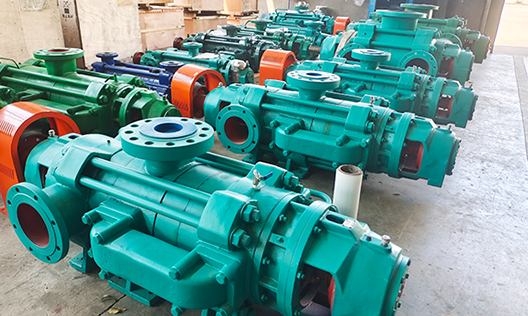
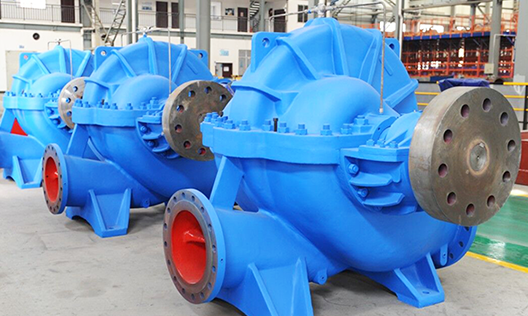
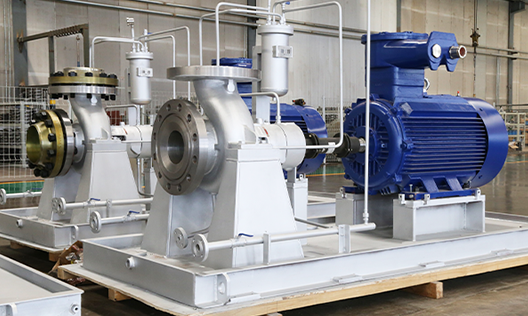
Puede fabricar 26 series de productos, incluyendo bombas de circulación para grandes centrales eléctricas, bombas de condensación para grandes centrales eléctricas, bombas petroquímicas, bombas multietapa, bombas de aguas residuales y lodo, bombas multietapa autoequilibradas, bombas de doble succión y única etapa tipo split, y bombas centrífugas de succión simple y única etapa.
-
Cases
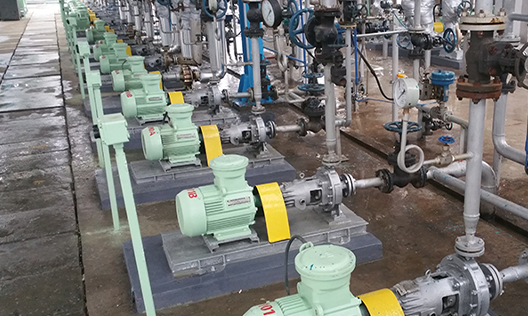
La elección de más de cientos de miles de clientes, cubriendo industrias como minería de carbón, metalurgia, química, energía, recursos hídricos, alimentos, municipalidades y protección ambiental, y exportando a Asia Sudeste, África, América y otros lugares.
-
Service
La empresa fue la primera en la industria en obtener las certificaciones internacionales del sistema de calidad ISO 9001:2008, del sistema de gestión ambiental ISO 14001 y del sistema de gestión de seguridad y salud ocupacional GB/T 28001, además de la certificación API 610 de la Asociación Estadounidense del Petróleo.
-
About us
La empresa, fundada en 1989, es una empresa nacional de alta tecnología integral que integra diseño, investigación y desarrollo, fabricación y servicios; actualmente es una empresa clave en la industria china de bombas centrífugas y una de las grandes fábricas especializadas.
-

Blogs
Con productos innovadores, calidad excepcional y servicios integrales, buscamos la verdad y la pragmática, avanzamos con iniciativa, y nos esforzamos por lograr el objetivo de ser "la marca líder en el campo de aplicación de bombas centrífugas en el país"! Raigada en Hunan, orientada a todo el país y hacia el mundo!
Functions, Application Standards, and Maintenance Essentials of Multistage Pump Couplings
Publication Date:
2026-04-30
Author:
Source:


As the core component of the power transmission system in multistage pumps, the coupling directly affects the transmission efficiency, operational stability, and energy-saving performance of the pump unit, playing a critical supporting role in industrial fluid-handling applications. Through precise power transmission, misalignment compensation, and safety protection design, the coupling provides essential assurance for multistage pumps to adapt to complex operating conditions and achieve high efficiency and energy savings. In this paper, the multistage pump manufacturer Changsha Zoomlion Pump Industry This session will cover the technical characteristics, application standards, and maintenance essentials of multistage pump couplings.

I. Core Technical Features
1. Power Transmission Function: Utilizing rigid or elastic coupling structures, the motor torque is precisely transmitted to the impellers at each stage, ensuring stable pump set speed (typical transmission efficiency ≥ 98%) and preventing flow fluctuations caused by power interruptions.

2. Concentricity Assurance: Precision-machined shaft-hub fits and alignment design compensate for installation misalignment between the pump shaft and the motor shaft (allowing radial deviation ≤0.15 mm and angular deviation ≤0.2°), thereby reducing vibration and shaft-system wear and extending the service life of the pump unit.
3. Safety Redundancy Design: High-strength alloy materials (such as 45 steel subjected to quenching and tempering) are employed, along with overload protection mechanisms (such as shear pins and elastic buffers), to prevent motor overloading in the event of pump unit jamming, thereby enhancing operational safety.
4. Energy-Saving Optimization: Optimized geometric parameters—such as shaft-hole taper and keyway fit—reduce transmission losses, resulting in 3–5% greater energy efficiency compared with conventional couplings. When paired with an intelligent coupling system, dynamic torque monitoring can be implemented, further enhancing energy-saving performance.
II. Technical Specifications and Maintenance Key Points
Coupling selection must be matched to the pump unit’s actual operating conditions, such as the temperature of the conveyed medium and the pressure rating. It is recommended to choose standardized product series certified to ISO 9001 to ensure compatibility and reliability.
Recommended maintenance schedule: During the initial operating phase, perform alignment checks every 500 hours; once operation has stabilized, conduct dynamic balancing inspections every 2,000 hours to promptly identify potential issues.
Replacement Criteria: The coupling shall be replaced promptly when any of the following conditions occur to prevent adverse effects on pump unit operation:
① Fatigue cracks in elastic components;
② Shaft hole wear exceeds 0.2 mm;
③ Keyway fit clearance > 0.15 mm.
Coupling technology optimized through ANSYS simulation ensures radial runout of no more than 0.02 mm even under 1.2 times the rated operating condition. Its structural design and performance optimization not only meet the core requirements of high efficiency and energy savings in multistage pumps, but also lay a solid foundation for the stable and long-term operation of industrial fluid-handling systems through precise transmission, robust safety protection, and low-loss characteristics, making it one of the key components that enable breakthroughs in multistage pump performance.
Recommended Information


Related Products
Perhaps you also want to know?
Zoomlian Pump Industry
Address:No. 210, Environmental Protection Middle Road, Yuhua Economic Development Zone, Changsha City, Hunan Province China
All rights reserved © Changsha Zoomlian Pump Co., Ltd.
This website supports IPv4 IPv6 bidirectional access
Website construction:Zhongqi Power Changsha