

-
Products
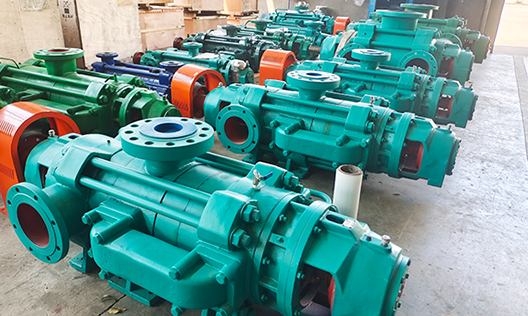
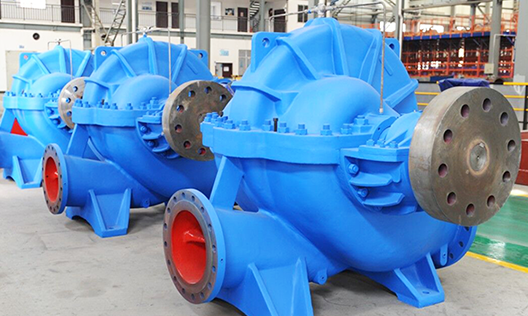
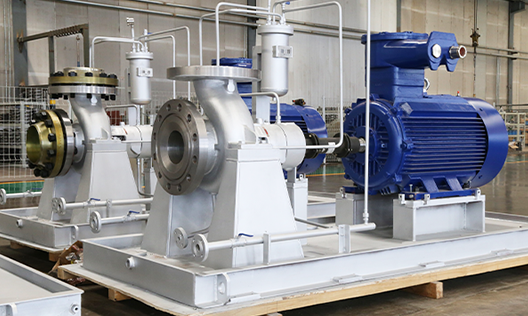
Puede fabricar 26 series de productos, incluyendo bombas de circulación para grandes centrales eléctricas, bombas de condensación para grandes centrales eléctricas, bombas petroquímicas, bombas multietapa, bombas de aguas residuales y lodo, bombas multietapa autoequilibradas, bombas de doble succión y única etapa tipo split, y bombas centrífugas de succión simple y única etapa.
-
Cases
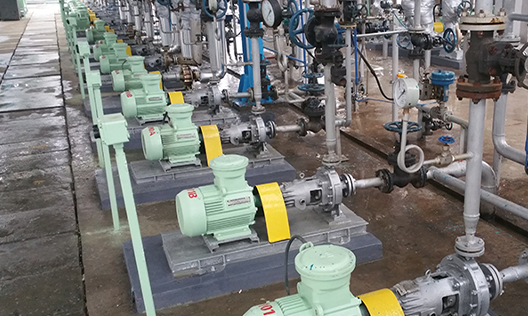
La elección de más de cientos de miles de clientes, cubriendo industrias como minería de carbón, metalurgia, química, energía, recursos hídricos, alimentos, municipalidades y protección ambiental, y exportando a Asia Sudeste, África, América y otros lugares.
-
Service
La empresa fue la primera en la industria en obtener las certificaciones internacionales del sistema de calidad ISO 9001:2008, del sistema de gestión ambiental ISO 14001 y del sistema de gestión de seguridad y salud ocupacional GB/T 28001, además de la certificación API 610 de la Asociación Estadounidense del Petróleo.
-
About us
La empresa, fundada en 1989, es una empresa nacional de alta tecnología integral que integra diseño, investigación y desarrollo, fabricación y servicios; actualmente es una empresa clave en la industria china de bombas centrífugas y una de las grandes fábricas especializadas.
-

Blogs
Con productos innovadores, calidad excepcional y servicios integrales, buscamos la verdad y la pragmática, avanzamos con iniciativa, y nos esforzamos por lograr el objetivo de ser "la marca líder en el campo de aplicación de bombas centrífugas en el país"! Raigada en Hunan, orientada a todo el país y hacia el mundo!
Causes of Leakage in High-Flow, High-Head Multistage Pumps and Prevention Methods
Publication Date:
2026-01-22
Author:
Source:


As a core fluid equipment used in fields such as hydraulic engineering, thermal power generation, and chemical fluid transportation, the multi-stage pump with high flow rate and high head has sealing performance that directly affects operational stability and production safety. Leakage faults not only lead to waste of media and increased energy consumption but can also, in severe cases, trigger equipment shutdowns and safety incidents. Therefore, accurately identifying the root cause of leakage and implementing targeted prevention and control measures are crucial for ensuring the long-term reliable operation of pump units. In this article, the manufacturer of multi-stage pumps... Changsha Zhonglian Pump Industry The technical engineer will share the causes of leakage in high-flow, high-head multistage pumps and provide preventive measures for reference by user organizations.

I. Leaking of multi-stage pumps 6 The root cause
1. Mechanical seal failure (the most common cause): As a critical sealing structure for the rotating and stationary components of a pump, mechanical seals often leak due to wear on the mating surfaces between the moving ring and the stationary ring, or due to aging of the sealing elements (within their normal service life). 8000-10000 hours), or when the selected model does not match the operating conditions (e.g., using ordinary rubber seals for high-temperature media, or failing to adopt balanced mechanical seals in high-pressure applications), the sealing surfaces cannot form an effective liquid film, leading to medium leakage.
2. Manufacturing and Processing Defects: During the pump body casting process, sand holes and air pockets were not completely eliminated, or tiny cracks (hidden defects) appeared during machining. Under long-term operating conditions characterized by pressure fluctuations and temperature changes, these defects will gradually expand, eventually forming leakage paths. In addition, the clearance between the impeller and the pump shaft exceeds the specified tolerance (exceeding the allowable limit). 0.03-0.05mm The standard range can also cause leakage at the shaft seal.
3. Bearing wear triggers a cascading failure: As the core rotating component, bearings, after prolonged operation, can suffer from ball wear and cage damage, leading to excessive radial runout of the pump shaft (exceeding...). 0.02mm ), which in turn can compromise the concentricity of the mechanical seal, leading to misalignment and leakage at the sealing surfaces. Meanwhile, improper adjustment of bearing clearance (either too large or too small) can also exacerbate uneven stress on the sealing elements, accelerating water leakage.
4. Installation accuracy does not meet the standard: When connecting the pump body to the pipeline flange, aging, damage, or incorrect selection of sealing gaskets (such as using ordinary rubber gaskets in high-temperature conditions) can lead to leakage at the flange joint. Additionally, if the coaxiality deviation between the pump shaft and the motor shaft exceeds... 0.2mm The tightening torque of the anchor bolts is uneven (does not meet requirements). GB/T9124 Standard), which can induce operational vibration and indirectly damage the sealing structure.
5. Improper matching between the medium’s corrosivity and operating conditions: When conveying corrosive media containing chloride ions, acids, or bases, if the pump body material is not appropriately selected—such as failing to choose a material that is resistant to corrosion— 316L If the materials of stainless steel, Hastelloy, or seals have not been treated for corrosion resistance, electrochemical corrosion or chemical erosion may occur, leading to pitting and damage on the pump body’s flow passages and sealing surfaces, ultimately causing leaks. In certain applications, where the medium contains solid particles, the sealing surfaces may also experience accelerated abrasive wear.
6. Operation and Running Parameter Violation: The outlet pressure exceeds the pump body’s designed pressure rating (e.g., overpressure). 1.2 (Exceeding the rated value by more than double) can cause cracks in the pump body welds and sealing surfaces due to excessive stress; insufficient inlet pressure can trigger cavitation, and the resulting shock bubbles can damage the sealing structure; prolonged operation under overload conditions (exceeding the rated flow and pressure values) 10% The above-mentioned factors will accelerate component wear and indirectly cause leaks.
II. Scientific Prevention Methods for Leaks in Multistage Pumps
1. Specialized Control of Mechanical Seals: Conduct periodic inspections to check for wear on the sealing surfaces and leakage. Upon detection of any moving ring issues... / Replace the stationary ring immediately if it is scratched or the sealing lip has aged; select the appropriate type precisely based on operating conditions (choose a metal bellows seal for high-temperature applications and a seal suitable for corrosive media). PTFE Material seals), and apply the appropriate grease as required (e.g., synthetic grease for high-temperature operating conditions).
2. Source control of manufacturing quality: During procurement, require manufacturers to provide non-destructive testing reports for pump bodies. UT/MT Testing), factory hydrostatic test records (test pressure is at the rated pressure) 1.5 Twice the specified value); Before installation, verify that the pump body surface has no sand holes or cracks, and that the clearance between the impeller and the shaft meets the requirements specified in the technical manual.
3. Bearing Maintenance and Condition Monitoring: By Operating Cycle (every... 6000 Replace the bearing grease every hour, and regularly monitor the bearing’s operating condition using a vibration detector (vibration velocity ≤). 2.8mm/s ); detected abnormal bearing noise and excessive temperature rise (exceeding 85 ℃) Replace it promptly, and after replacement, calibrate the concentricity of the shaft system and the bearing clearance.
4. Standardized installation procedure: When using flange connections, select sealing gaskets that match the operating conditions (e.g., flexible graphite gaskets for high-temperature applications and metal-wound gaskets for high-pressure applications). Tighten the bolts according to the principle of uniform tightening in a diagonal pattern to ensure a tight and seamless fit at the joint surface. After installation, use a dial indicator to verify the coaxiality between the pump shaft and the motor shaft, keeping the deviation within the specified tolerance. 0.1mm Within.
5. Corrosion Protection and Media Compatibility: Select the pump body material based on the characteristics of the medium (choose titanium alloy for strongly acidic media; choose materials resistant to chloride ions for media containing chloride ions). 316L Stainless steel; critical components can be equipped with anti-corrosion coatings (such as ceramic coatings or PTFE coatings). When conveying media containing particles, install a filter at the inlet (filtration accuracy ≤ 0.5mm ), reduce abrasion.
6. Standardized Operation and Load Control: Strictly set operating parameters according to the equipment manual, ensuring that the outlet pressure does not exceed the rated value. 1.1 Double, and avoid prolonged operation under overload conditions; install a pressure safety valve at the pump unit outlet (with a set pressure equal to the rated pressure). 1.25 By doubling the capacity, prevent overpressure damage; regularly monitor the inlet liquid level to avoid cavitation.
III. Emergency Response and Long-term Management
If a leak is detected during operation, immediately reduce the load or shut down the equipment to relieve pressure and prevent the fault from escalating. For minor leaks, temporarily tighten the flange bolts and replenish the sealing grease. In the case of severe leaks (such as cracks in the pump body or complete failure of the mechanical seal), the equipment must be shut down and the damaged components replaced; operating with the fault present is strictly prohibited.
In terms of long-term management, it is recommended to establish an operational logbook for pump units, recording data such as seal replacement cycles, bearing operating conditions, and changes in medium parameters. For critical pump units that operate continuously, it is advisable to install leak detection sensors to enable early warning and prompt handling of water leakage faults, thereby further reducing operation and maintenance costs and minimizing safety risks.
Recommended Information


Related Products
Perhaps you also want to know?
Zoomlian Pump Industry
Address:No. 210, Environmental Protection Middle Road, Yuhua Economic Development Zone, Changsha City, Hunan Province China
All rights reserved © Changsha Zoomlian Pump Co., Ltd.
This website supports IPv4 IPv6 bidirectional access
Website construction:Zhongqi Power Changsha