

-
Products
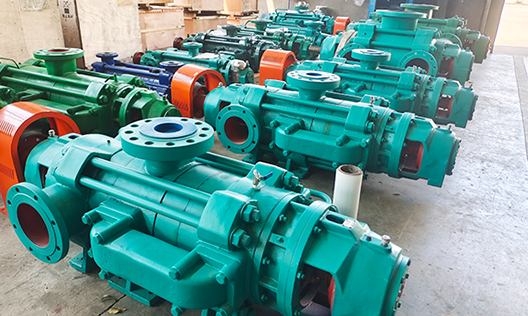
Puede fabricar 26 series de productos, incluyendo bombas de circulación para grandes centrales eléctricas, bombas de condensación para grandes centrales eléctricas, bombas petroquímicas, bombas multietapa, bombas de aguas residuales y lodo, bombas multietapa autoequilibradas, bombas de doble succión y única etapa tipo split, y bombas centrífugas de succión simple y única etapa.
-
Cases
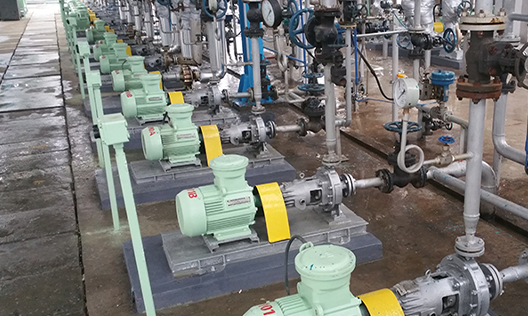
La elección de más de cientos de miles de clientes, cubriendo industrias como minería de carbón, metalurgia, química, energía, recursos hídricos, alimentos, municipalidades y protección ambiental, y exportando a Asia Sudeste, África, América y otros lugares.
-
Service
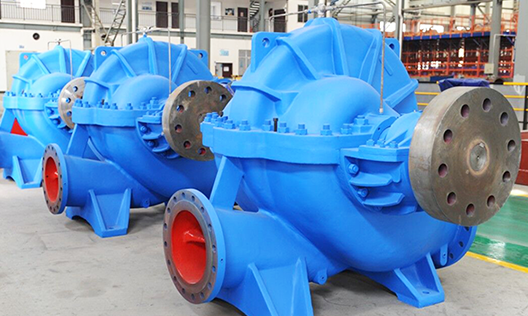
La empresa fue la primera en la industria en obtener las certificaciones internacionales del sistema de calidad ISO 9001:2008, del sistema de gestión ambiental ISO 14001 y del sistema de gestión de seguridad y salud ocupacional GB/T 28001, además de la certificación API 610 de la Asociación Estadounidense del Petróleo.
-
About us
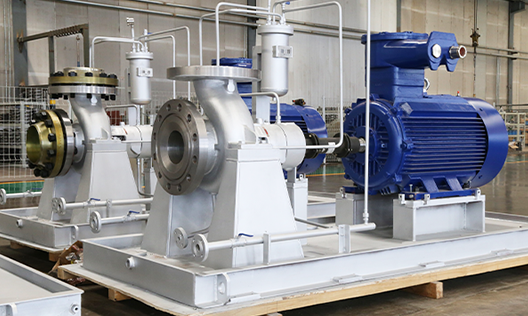
La empresa, fundada en 1989, es una empresa nacional de alta tecnología integral que integra diseño, investigación y desarrollo, fabricación y servicios; actualmente es una empresa clave en la industria china de bombas centrífugas y una de las grandes fábricas especializadas.
-

Blogs
Con productos innovadores, calidad excepcional y servicios integrales, buscamos la verdad y la pragmática, avanzamos con iniciativa, y nos esforzamos por lograr el objetivo de ser "la marca líder en el campo de aplicación de bombas centrífugas en el país"! Raigada en Hunan, orientada a todo el país y hacia el mundo!
Analysis of the Multi-Stage Centrifugal Pump Monitoring and Protection System: Core Components, Operating Principles, and Industrial Value
Publication Date:
2026-01-21
Author:
Source:


Multistage centrifugal pump As a critical core component in fields such as industrial fluid conveyance, municipal water supply, and hydraulic engineering, its continuous and stable operation directly determines the safety and economic efficiency of the production process. The intelligent protection system—comprising monitoring and protective accessories—is what the industry commonly refers to as: Intelligent Monitoring System Through the closed-loop logic of “sensor data acquisition, control system analysis, decision-making, and precise actuator response,” real-time control and management of pump units and conveying systems are achieved, which not only reduces equipment failure rates but also... 40% The above-mentioned measures not only extend the service life but also optimize system operational efficiency and reduce long-term operation and maintenance costs, serving as crucial technological support for ensuring the continuity of industrial production. In this article, we will focus on centrifugal pump manufacturers. Changsha Zhonglian Pump Industry Let me share with you the core components, working principles, and industrial value of the multi-stage centrifugal pump monitoring and protection system.

I. The Core Role of the Monitoring and Protection System
1. Real-time operational monitoring: Using high-precision sensing devices, the system dynamically captures key operating parameters of the pump unit—including flow rate, inlet and outlet pressures, motor temperature, and bearing vibration—providing real-time feedback on equipment status to ensure that the pump unit consistently operates within its rated performance range (e.g., flow rate fluctuations are controlled within ± 5% , the temperature does not exceed 85 ℃), avoiding inefficient operation or component wear caused by parameter deviations.
2. Proactive Safety Protection: When the system detects abnormal signals—such as sudden pressure spikes, overloaded operation, or excessive temperature—the warning and response mechanism is immediately activated. Actions taken include cutting off power, adjusting valves, and switching to backup pumps, thereby preventing the fault from escalating and avoiding serious issues like impeller damage or motor burnout, thus ensuring both personnel and production safety.
3. Energy efficiency optimization and enhancement: Relying on real-time monitoring data, the control system can dynamically adjust the operating parameters of the pump unit (such as rotational speed and valve opening) to ensure that the pump unit always operates within an efficient range, representing an improvement over the traditional non-monitoring mode. 5% 10% Its energy utilization efficiency aligns with the development needs of industrial energy conservation and consumption reduction.
II. Core Components and Operational Logic
The stable operation of monitoring and protection systems relies on the coordinated collaboration of three core components—sensors, control systems, and actuators—to form a complete technological closed loop.
1. Sensor Acquisition Unit: As the system’s “sensing terminal,” it must be equipped with specialized sensors tailored to the specific operating conditions—flow monitoring should use either electromagnetic flowmeters or ultrasonic flowmeters (measurement accuracy ± 1% ), pressure monitoring uses a diffused silicon pressure transmitter, and temperature monitoring is paired with... PT100 Platinum resistance sensors are used for temperature measurement, while piezoelectric vibration sensors are configured for vibration monitoring. These devices convert physical parameters into electrical signals and transmit them accurately to the control system via shielded cables or wireless transmission modules, ensuring the stability of data transmission.
2. Core Control Unit: Performs the functions of “data processing and decision-making hub,” with built-in industrial-grade components. PLC or a dedicated control chip that performs real-time analysis of the collected data using pre-set algorithms. For example, when the motor temperature exceeds the set threshold (typically... 90 ℃), the system immediately identifies it as an anomaly, in 0.5 Generate disposal instructions within seconds; simultaneously support data storage and historical traceability, providing data support for equipment operation and maintenance.
3. Actuator unit: Performs specific actions according to control system instructions. Common devices include solenoid valves (for rapid shut-off or regulation of medium flow), soft starters (for controlling motor start-up and stop, thereby preventing inrush currents), backup pump switching devices, and others. The actuator response time is ≤ 1 Seconds—ensure the timeliness of exception handling.
III. Functional Compatibility of Specialized Protective Accessories
In addition to the core components, special protective accessories must be provided to meet specific operating condition requirements, further enhancing the system’s protection capabilities.
Overcurrent protector: Monitors the motor’s operating current in real time and trips when the current exceeds the rated value. 1.2 When the current exceeds the rated value, the system automatically triggers power-off protection to prevent the motor windings from burning out due to overcurrent. This feature is particularly suitable for applications with frequent start-stop cycles or significant load fluctuations (such as mine drainage and chemical medium transportation).
Overload protector: Monitors the motor’s output power or torque to detect whether an overload condition exists. When the duration of the overload exceeds... 3 At the second mark, automatically reduce the pump unit’s load (e.g., by adjusting the rotational speed) or shut down the pump to prevent mechanical failures such as pump shaft bending and impeller wear.
Dry-run protection device: This key component, not mentioned in the original text, monitors the pressure differential between the pump’s inlet and outlet or the liquid level of the medium to prevent dry running of the pump unit, thereby avoiding dry friction of seals and overheating of bearings. It is particularly well-suited for long-distance pumping applications involving high-head multistage pumps.
IV. Industrial Application Value and Suitable Use Cases
This monitoring and protection system is widely adaptable to various application scenarios involving multi-stage centrifugal pumps.
Power industry: Real-time monitoring of the pressure and temperature of boiler feedwater pumps to ensure stable steam supply to the unit.
Chemical industry: Overload and overcurrent protection during the conveyance of corrosive media to prevent the risk of media leakage.
Hydraulic Engineering: Condition monitoring of long-distance pumping units and automatic switchover to standby pumps, ensuring continuous water supply.
Mining industry: Dry-run and overload protection for drainage pumps, suitable for harsh underground working conditions.
It should be noted that the original text does not explicitly address the issue of “component compatibility”—high-quality monitoring and protection components must precisely match the pump unit model. We recommend selecting components from the same brand as the pump body or those certified by the manufacturer to ensure signal transmission compatibility and proper installation dimensions. At the same time, prioritize smart components that support remote monitoring, which facilitates unattended operation and further reduces management costs.
Recommended Information


Related Products
Perhaps you also want to know?
Zoomlian Pump Industry
Address:No. 210, Environmental Protection Middle Road, Yuhua Economic Development Zone, Changsha City, Hunan Province China
All rights reserved © Changsha Zoomlian Pump Co., Ltd.
This website supports IPv4 IPv6 bidirectional access
Website construction:Zhongqi Power Changsha