

-
Products
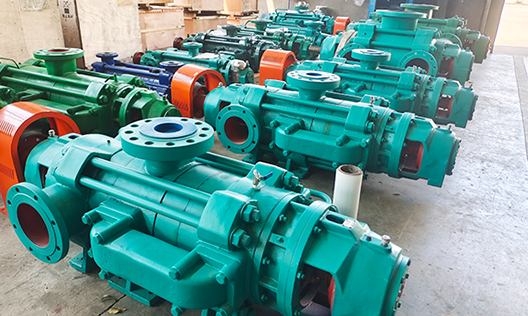
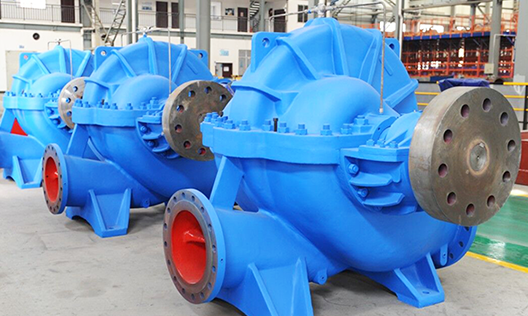
Puede fabricar 26 series de productos, incluyendo bombas de circulación para grandes centrales eléctricas, bombas de condensación para grandes centrales eléctricas, bombas petroquímicas, bombas multietapa, bombas de aguas residuales y lodo, bombas multietapa autoequilibradas, bombas de doble succión y única etapa tipo split, y bombas centrífugas de succión simple y única etapa.
-
Cases
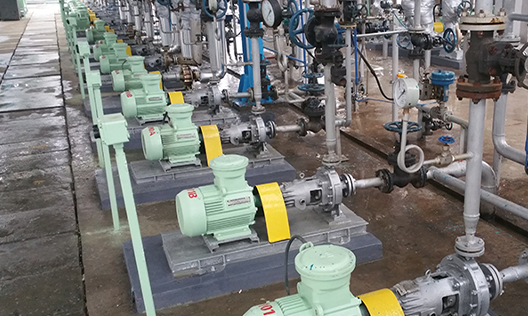
La elección de más de cientos de miles de clientes, cubriendo industrias como minería de carbón, metalurgia, química, energía, recursos hídricos, alimentos, municipalidades y protección ambiental, y exportando a Asia Sudeste, África, América y otros lugares.
-
Service
La empresa fue la primera en la industria en obtener las certificaciones internacionales del sistema de calidad ISO 9001:2008, del sistema de gestión ambiental ISO 14001 y del sistema de gestión de seguridad y salud ocupacional GB/T 28001, además de la certificación API 610 de la Asociación Estadounidense del Petróleo.
-
About us
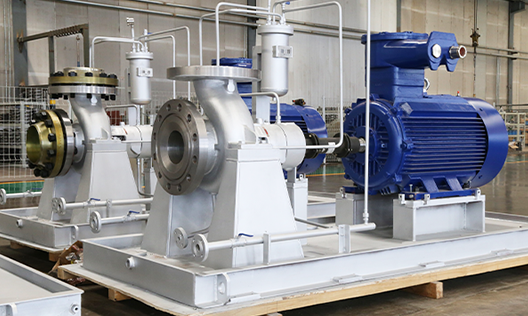
La empresa, fundada en 1989, es una empresa nacional de alta tecnología integral que integra diseño, investigación y desarrollo, fabricación y servicios; actualmente es una empresa clave en la industria china de bombas centrífugas y una de las grandes fábricas especializadas.
-

Blogs
Con productos innovadores, calidad excepcional y servicios integrales, buscamos la verdad y la pragmática, avanzamos con iniciativa, y nos esforzamos por lograr el objetivo de ser "la marca líder en el campo de aplicación de bombas centrífugas en el país"! Raigada en Hunan, orientada a todo el país y hacia el mundo!
Common Types, Characteristics, and Applications of Shaft Seals for Centrifugal Pumps
Publication Date:
2026-01-20
Author:
Source:


The shaft seal is the “sealing guardian” of a centrifugal pump—it operates in the gap between the rotating shaft and the stationary casing. It must not only prevent medium leakage, which could lead to waste or contamination, but also keep air from seeping in and affecting the pump’s operational efficiency. Choosing the right shaft seal can not only reduce maintenance frequency but also lower energy consumption; on the other hand, selecting the wrong one may result in frequent equipment failures. Next, let’s turn to the centrifugal pump manufacturer... Changsha Zhonglian Pump Industry From a professional perspective, we’ll break down the four most commonly used types of shaft seals for centrifugal pumps, highlighting their respective features and suitable application scenarios to help you quickly identify the right sealing solution for your needs.

I. Four Common Types of Shaft Seals for Centrifugal Pumps and Their Core Features
1. Packing Seal (also known as Gland Seal)
This is the most traditional type of shaft seal, with a structure so simple it’s “immediately obvious”: It consists of a stuffing box, flexible packing (commonly made of graphite, PTFE, or aramid fibers), and a gland. By compressing the packing, radial pressure is generated, which fills the gap between the shaft and the housing, thereby achieving a seal.
Core features:
Advantages: Simple structure, easy to disassemble and assemble, extremely low procurement and maintenance costs, and no need for complex auxiliary systems. It has low requirements for shaft machining accuracy, and minor wear can be compensated by tightening the gland.
Disadvantages: The leakage rate is relatively high (5–50 ml/h under new installation conditions). During operation, a small amount of leakage is required to lubricate the packing; otherwise, dry friction will occur. The packing exhibits noticeable wear on both the shaft and itself, resulting in a short maintenance cycle—typically requiring adjustment or replacement of the packing every 3 to 12 months.
2. Mechanical seal (also known as face seal)
The most widely used type of shaft seal in the industrial sector today consists of precision components such as a rotating ring, a stationary ring, springs, and sealing rings. Through the force of the spring and the pressure of the medium, the rotating ring and the stationary ring are brought into tight contact along their precision flat surfaces, forming an extremely thin liquid film that achieves effective sealing.
Core features:
Advantages: Extremely low leakage rate (typically ≤1 ml/h), virtually achieving zero leakage; low friction power consumption, only 20%-50% of that of packing seals, resulting in significant energy savings; long service life—up to 1-5 years under normal operating conditions—with extended maintenance-free periods.
Disadvantages: The initial procurement cost is relatively high (approximately 3 to 10 times that of packing seals); it has strict requirements for installation accuracy and shaft runout; and after a failure occurs, professional personnel must disassemble and replace the component.
3. Dynamic seals (including back-vane seals and auxiliary impeller seals)
A special sealing mechanism that relies on “centrifugal force” employs a back vaned impeller or a secondary impeller as its core component. During pump operation, centrifugal force flings the medium from the shaft seal area into the pump chamber, creating either atmospheric or negative pressure at the shaft seal location, thereby preventing leakage. When the pump stops, the centrifugal force disappears, necessitating the use of additional shutdown sealing devices, such as packing seals, to provide auxiliary sealing.
Core features:
Advantages: Reliable structure, moderate price, and easy maintenance; highly resistant to solid particles in the medium, unlikely to clog, and does not require a complex flushing and cooling system.
Disadvantages: Significant power loss; the parking seal has a relatively short service life and requires regular inspection and replacement; there are clear limitations on the pump’s inlet pressure (typically, the inlet pressure must be ≤10% of the design pressure).
4. Dry gas seal (gas-lubricated seal)
A high-end sealing configuration suitable for high-pressure and high-speed operating conditions, using dry gas as the lubricant medium. The spiral grooves on the rotating ring generate a hydrodynamic pressure effect, causing the sealing end faces to separate and form an air film, thereby achieving non-contact sealing.
Core features:
Advantages: Completely free of medium leakage and highly environmentally friendly; the sealing end faces experience no wear, ensuring a long service life (up to several years); suitable for high-temperature (≤400℃), high-pressure (≤30 MPa), and high-speed (≤17,000 r/min) operating conditions.
Disadvantages: High initial cost and stringent requirements for gas purity; requires a complementary gas filtration and pressure stabilization system, with relatively high technical barriers to maintenance.
II. Comparison of Application Scenarios for Different Shaft Seals
Shaft seal type |
Core Application Scenarios |
Typical Application Cases |
Packing seal
|
Low-speed, low-pressure (≤1 MPa), normal-temperature operating conditions; non-hazardous media.
|
Clear water transfer pumps, agricultural irrigation pumps, small circulation pumps
|
Mechanical seal
|
Medium-to-high speed, medium-to-high pressure (≤30 MPa), high temperature (≤400℃); clean or hazardous media
|
Chemical process pumps, boiler feedwater pumps, and oil transfer pumps
|
Power seal
|
Media containing solid particles; mining, metallurgy, and desulfurization applications
|
Desulfurization pump, filter press pump, slurry transfer pump
|
Dry gas seal
|
High-pressure, high-speed, and leak-free requirements; conveying gases or volatile liquids
|
Pumps for natural gas transmission, ethylene plant pumps, and pumps for high-pressure compressors
|
III. Three Key Principles for Shaft Seal Selection
Core parameters for matching operating conditions: The shaft seal type should be determined primarily based on the characteristics of the medium—whether it contains particles, is corrosive, or is flammable and explosive—as well as the working pressure, temperature, and rotational speed. For example, when conveying mineral slurries containing particles, a dynamic seal is preferred; when handling flammable chemical media, a mechanical seal or dry gas seal must be selected.
Balancing Cost and Maintenance: If your budget is limited, your maintenance team has moderate technical expertise, and the operating conditions are relatively simple (such as clear water conveyance), a packing seal is a viable option. However, if your operation is continuous and the conditions are demanding (such as 24-hour chemical production), a mechanical seal is recommended—it offers lower overall costs in the long run.
Matching Pump Body Design: Some centrifugal pumps (such as IS-type single-stage, single-suction pumps) can be equipped with either packing seals or mechanical seals. When selecting a pump, it’s essential to confirm whether the pump body’s sealing chamber design is compatible. For high-pressure, high-speed pumps, it’s necessary to communicate with the manufacturer in advance to verify the installation space requirements and supporting system specifications for dry gas seals.
IV. Reminders About Common Selection Pitfalls
Misconception 1: Thinking that “mechanical seals are universally applicable.” Mechanical seals are sensitive to solid particles in the medium; if used directly in media containing sand, the sealing faces will wear out rapidly and must be used in conjunction with a flushing system.
Misconception 2: Neglecting maintenance requirements—dry gas seals require a specialized gas treatment system. If the site lacks the necessary maintenance capabilities, forcing their use will lead to frequent failures.
Misconception 3: Focusing solely on the initial cost—Although packing seals are inexpensive, the combined total of long-term leakage losses and maintenance costs could exceed the initial investment required for mechanical seals.
There’s no “optimal solution” when selecting a shaft seal—only the “most suitable match.” Only by comprehensively considering the medium’s properties, operating conditions, maintenance requirements, and cost budget can you ensure long-term, stable operation of your centrifugal pump. If you’re unsure which shaft seal to choose for your specific application, Zhonglian Pump Industry offers free selection consultations. Click here! Online customer service Or call 15616442288 (same number on WeChat). Our company can customize sealing solutions based on your specific needs.
Recommended Information


Related Products
Perhaps you also want to know?
Zoomlian Pump Industry
Address:No. 210, Environmental Protection Middle Road, Yuhua Economic Development Zone, Changsha City, Hunan Province China
All rights reserved © Changsha Zoomlian Pump Co., Ltd.
This website supports IPv4 IPv6 bidirectional access
Website construction:Zhongqi Power Changsha