

-
Products
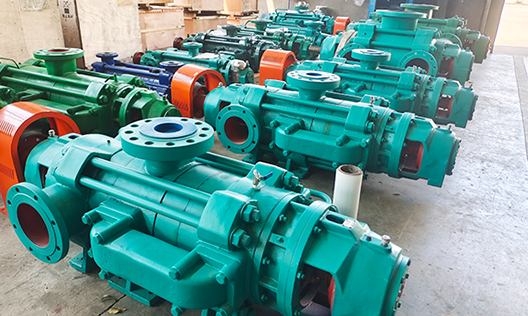
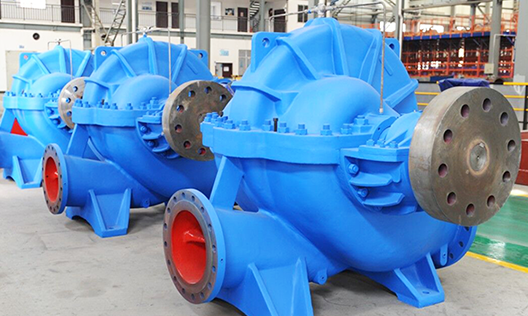
Puede fabricar 26 series de productos, incluyendo bombas de circulación para grandes centrales eléctricas, bombas de condensación para grandes centrales eléctricas, bombas petroquímicas, bombas multietapa, bombas de aguas residuales y lodo, bombas multietapa autoequilibradas, bombas de doble succión y única etapa tipo split, y bombas centrífugas de succión simple y única etapa.
-
Cases
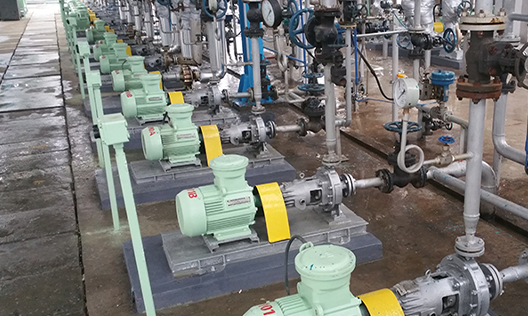
La elección de más de cientos de miles de clientes, cubriendo industrias como minería de carbón, metalurgia, química, energía, recursos hídricos, alimentos, municipalidades y protección ambiental, y exportando a Asia Sudeste, África, América y otros lugares.
-
Service
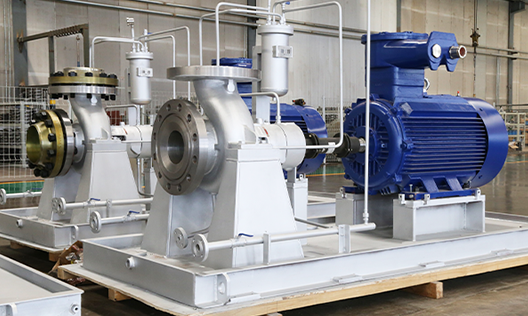
La empresa fue la primera en la industria en obtener las certificaciones internacionales del sistema de calidad ISO 9001:2008, del sistema de gestión ambiental ISO 14001 y del sistema de gestión de seguridad y salud ocupacional GB/T 28001, además de la certificación API 610 de la Asociación Estadounidense del Petróleo.
-
About us
La empresa, fundada en 1989, es una empresa nacional de alta tecnología integral que integra diseño, investigación y desarrollo, fabricación y servicios; actualmente es una empresa clave en la industria china de bombas centrífugas y una de las grandes fábricas especializadas.
-

Blogs
Con productos innovadores, calidad excepcional y servicios integrales, buscamos la verdad y la pragmática, avanzamos con iniciativa, y nos esforzamos por lograr el objetivo de ser "la marca líder en el campo de aplicación de bombas centrífugas en el país"! Raigada en Hunan, orientada a todo el país y hacia el mundo!
Structural Characteristics, Core Functions, and Industrial Application Scope of D-Type Horizontal Multistage Centrifugal Pumps
Publication Date:
2026-01-13
Author:
Source:


As a D Horizontal multistage centrifugal pump As the core load-bearing component, the pump body is not only a critical channel for fluid transport but also assumes the essential tasks of pressure accumulation and energy conversion. The rationality of its design directly determines the equipment’s operational efficiency, stability, and service life. Therefore, in the selection, matching, and daily operation and maintenance of pumps, gaining a deep understanding of the pump body’s structural characteristics and functional logic is an important prerequisite for ensuring the long-term reliable operation of the equipment. In this article, Changsha Zhonglian Pump Industry, a manufacturer of centrifugal pumps, will introduce the structural features, core functions, and industrial application scope of D-type horizontal multistage centrifugal pump bodies, providing valuable reference for user organizations.

I. Material Selection and Structural Features of the Pump Body
D The material selection for the casing of horizontal multistage centrifugal pumps must be tailored to meet the requirements of different operating conditions: Under normal operating conditions, high-quality cast iron is often used, as it offers good mechanical strength and cost-effectiveness. For applications involving the conveyance of corrosive media—such as in the chemical and pharmaceutical industries—stainless steel materials are preferred (e.g., ...). 304、316L ), which can effectively resist corrosion from acidic and alkaline media, thereby extending the service life of equipment.
In terms of structural design, the pump body adopts a horizontal installation layout, featuring a compact overall structure that occupies minimal space, thus facilitating workshop layout and subsequent maintenance. Inside the pump body, multiple impellers are arranged in series along the axial direction; each impeller is equipped with an independent hydraulic flow passage. These passages feature an optimized hydraulic design that minimizes eddy currents and resistance losses during fluid flow, laying a solid foundation for efficient operation.
II. Analysis of the Core Functions of the Pump Body
1. Fluid Guidance and Conveyance: The pump body serves as a sealed flow channel for the fluid. Through its precise coordination with the impeller, it smoothly guides the fluid from the inlet end, sequentially conveying it through multi-stage flow passages to the outlet end, thereby ensuring the continuity and stability of fluid transport.
2. Multi-stage pressure superposition: Relying on a series-connected impeller arrangement, the fluid sequentially flows through each stage of impellers within the pump body. The centrifugal force generated by the rotation of each impeller exerts pressure on the fluid. Through multi-stage pressure superposition, the pump ultimately achieves high-pressure delivery, meeting the demands of long-distance and high-head transportation in industrial applications.
3. Energy-efficient conversion: The pump body, through its optimally designed hydraulic flow passages, efficiently converts the rotational mechanical energy input by the motor into the pressure energy and kinetic energy of the fluid, thereby minimizing energy losses. This is also... D One of the core reasons why this type of pump possesses “high efficiency and energy saving” characteristics.
4. Operational Stability Assurance: Through streamlined flow passage design and dynamic and static balancing calibration of the impeller, the pump body can effectively reduce pulsations and hydraulic shocks during fluid flow, thereby minimizing operational noise and vibration. At the same time, it avoids issues such as cavitation and vortex formation caused by improper flow passage design, enhancing the smoothness of equipment operation.
III. Industrial Application Scenarios and Adaptation Fields
Leveraging its compact structure and high-pressure, high-efficiency core advantages, D The horizontal multistage centrifugal pump body is suitable for a variety of complex industrial conditions and is widely used in the following fields:
Chemical industry: Long-distance transportation of various neutral and corrosive media;
Petroleum and Chemical Industry: Pressurized transportation during crude oil extraction and refining processes;
Metallurgical Industry: Cooling circulating water and hydraulic oil conveyance in smelting processes;
Power Industry: Boiler feedwater and circulating water systems for thermal power plants and nuclear power stations;
Pharmaceutical Industry: Clean delivery of pharmaceutical intermediates and purified water;
Municipal and Water Resources: High-rise building water supply, long-distance water conveyance projects.
Recommended Information


Related Products
Perhaps you also want to know?
Zoomlian Pump Industry
Address:No. 210, Environmental Protection Middle Road, Yuhua Economic Development Zone, Changsha City, Hunan Province China
All rights reserved © Changsha Zoomlian Pump Co., Ltd.
This website supports IPv4 IPv6 bidirectional access
Website construction:Zhongqi Power Changsha