

-
Products
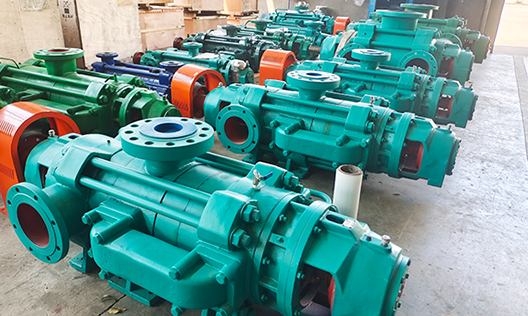
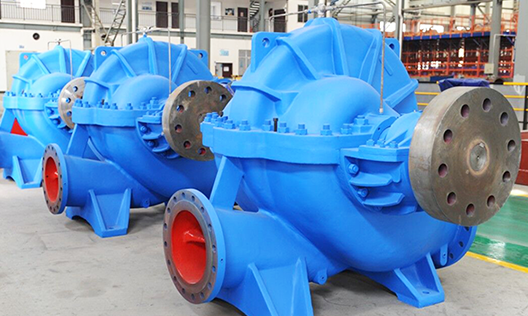
Puede fabricar 26 series de productos, incluyendo bombas de circulación para grandes centrales eléctricas, bombas de condensación para grandes centrales eléctricas, bombas petroquímicas, bombas multietapa, bombas de aguas residuales y lodo, bombas multietapa autoequilibradas, bombas de doble succión y única etapa tipo split, y bombas centrífugas de succión simple y única etapa.
-
Cases
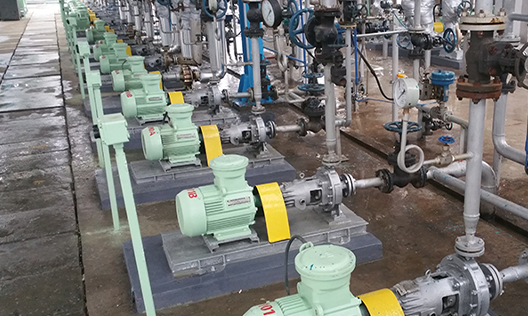
La elección de más de cientos de miles de clientes, cubriendo industrias como minería de carbón, metalurgia, química, energía, recursos hídricos, alimentos, municipalidades y protección ambiental, y exportando a Asia Sudeste, África, América y otros lugares.
-
Service
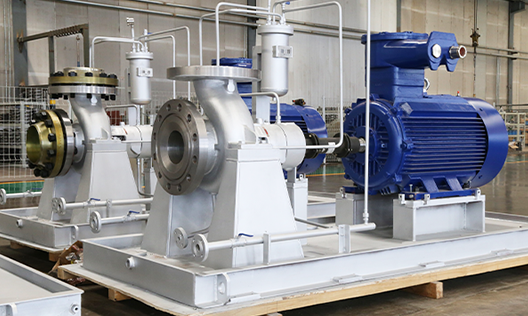
La empresa fue la primera en la industria en obtener las certificaciones internacionales del sistema de calidad ISO 9001:2008, del sistema de gestión ambiental ISO 14001 y del sistema de gestión de seguridad y salud ocupacional GB/T 28001, además de la certificación API 610 de la Asociación Estadounidense del Petróleo.
-
About us
La empresa, fundada en 1989, es una empresa nacional de alta tecnología integral que integra diseño, investigación y desarrollo, fabricación y servicios; actualmente es una empresa clave en la industria china de bombas centrífugas y una de las grandes fábricas especializadas.
-

Blogs
Con productos innovadores, calidad excepcional y servicios integrales, buscamos la verdad y la pragmática, avanzamos con iniciativa, y nos esforzamos por lograr el objetivo de ser "la marca líder en el campo de aplicación de bombas centrífugas en el país"! Raigada en Hunan, orientada a todo el país y hacia el mundo!
Is a self-balancing multistage centrifugal pump really that good? This article thoroughly explains its structural principles and advantages.
Publication Date:
2026-01-14
Author:
Source:


A self-balancing multistage pump is... Changsha Zhonglian Pump Industry With decades of deep expertise in pump R&D, we have drawn on advanced technologies from similar foreign products and independently absorbed and adapted them, strictly adhering to: API1601 The newly developed, standard horizontal sectional multistage centrifugal pump features a single-suction or double-suction inlet design for the impeller in the first stage, serving as a replacement for conventional pumps. D Type Multistage centrifugal pump Our highly efficient and energy-saving core products are specifically designed to meet the practical needs of industrial pump users and drive technological upgrades in the pump industry. So, just how good are self-balancing multistage centrifugal pumps? In this article, Changsha Zhonglian Pump Industry will thoroughly explain the structural principles and advantages of self-balancing multistage pumps, highlighting their multiple benefits—including a wide high-efficiency range, an extensive performance spectrum, excellent cavitation resistance, fewer wear parts, and convenient installation and maintenance—making them the preferred equipment for industrial fluid conveyance.
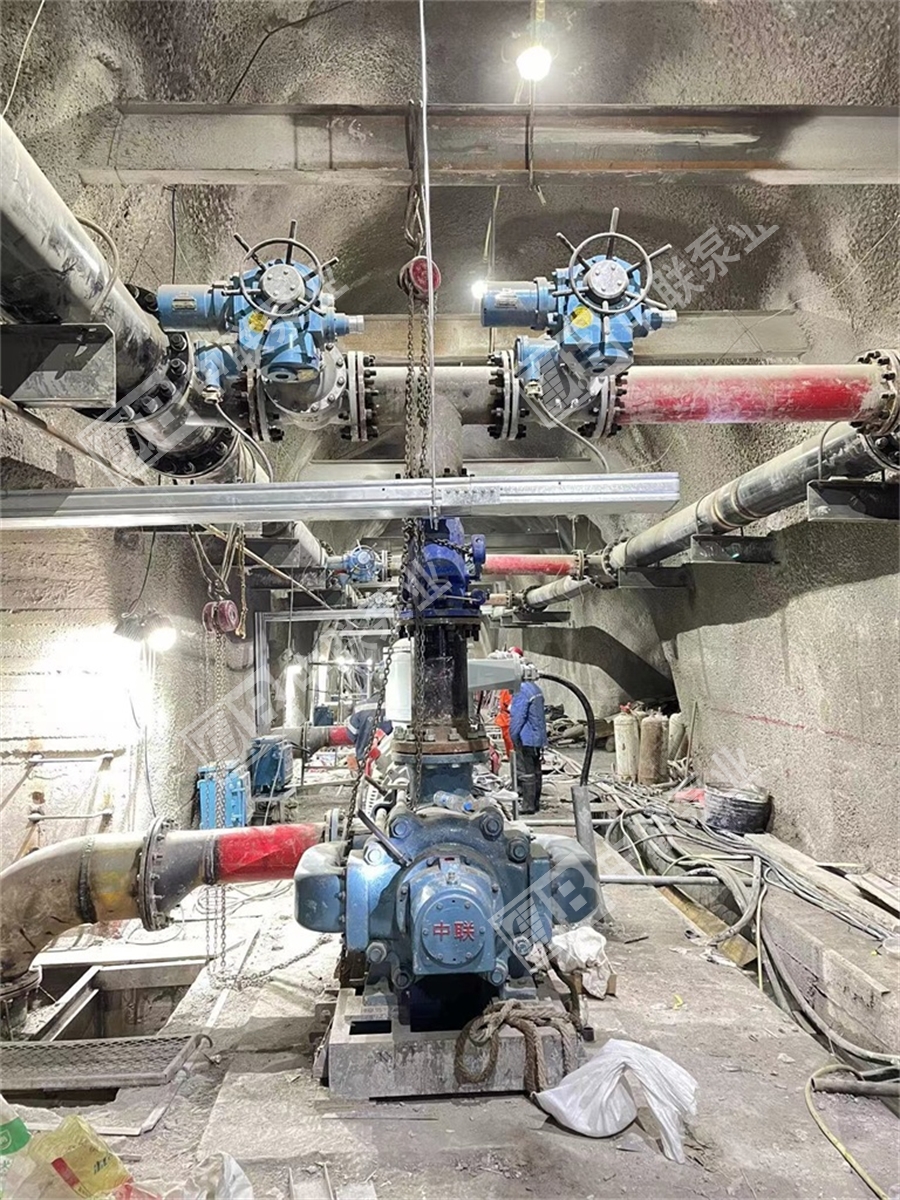
As a tradition D 、 DG An ideal replacement for conventional multistage centrifugal pumps, this self-balancing multistage centrifugal pump breaks through traditional hydraulic models with a proprietary, high-pressure-resistant, high-performance design. It introduces a groundbreaking innovation to the classic structure of multistage centrifugal pumps—eliminating the axial force balancing mechanism found in conventional models and thereby fundamentally addressing the series of issues caused by the traditional balance disc and balance drum designs. By adopting a design without any balancing devices, this pump not only eliminates disc friction losses associated with balance discs but also avoids balancing reflux losses, resulting in a direct efficiency boost compared to other multistage pumps of the same category. 5-14% Moreover, its operational efficiency even reaches that of a conventional multistage pump. 3 More than doubled; at the same time, it completely eliminates common failures such as wear on the balance disc and its seat, and rotor seizure—caused by failure of the balancing device—thereby significantly extending the service life of the entire pump unit, markedly enhancing economic benefits for users, and substantially reducing production and operation costs.
In terms of operating principle, the shaft of a self-balancing multistage centrifugal pump is driven by an electric motor to rotate. By doing work on the liquid, the pump increases its energy and achieves continuous fluid transport. The fluid’s flow path is clear and highly efficient: starting from the suction sump, the liquid enters the pump’s inlet section, sequentially passing through the forward impeller, forward guide vanes, and middle section. After exiting horizontally from the outlet section, the fluid flows through a transition pipe into the secondary inlet section. Then, under the action of the reverse impeller and reverse guide vanes, it is continuously discharged vertically from the outlet section. Throughout the entire process, fluid resistance is minimal, energy loss is low, and transport efficiency remains remarkably stable.
Core Structure and Configuration Features
1. Overall structural design: The pump features a sectional structure with a single-suction (or first-stage impeller with double suction) inlet. The suction port can be arranged either vertically upward or horizontally, while the discharge port is uniformly arranged vertically upward, making it suitable for various industrial installation scenarios. The core components of the entire unit include the suction section, middle section, discharge section, secondary suction section, and positive... / Anti-missile blade, positive / The assembly consists of components such as the impeller, pump shaft, throttling and pressure-reducing device, retaining sleeve, bearing housing, and transition pipe. The middle section is tightly connected to the inlet and outlet sections via high-strength through-bolts. The sealing surfaces between the inlet section, middle section, and outlet section employ a hard metal seal lubricated with aluminum-based vulcanized grease, offering excellent sealing performance, high-pressure resistance, leak-proof characteristics, and suitability for harsh operating conditions.
2. Rotor and Stationary Components: The rotor consists of the pump shaft, a forward-facing impeller mounted on the shaft, a throttling and pressure-reducing device, a sleeve for the backward-facing impeller, bearing retaining sleeves, and other components. It features a compact structure and excellent operational stability. A sealing ring and guide vane sleeve are installed between the rotor and the stationary components to ensure precise sealing. If the seals wear out and affect the pump’s performance, they can be directly replaced, making maintenance convenient.
3. Bearing and Lubrication System: The system employs a “solid-lubricant” dry-oil lubrication design. The drive end is equipped with cylindrical roller bearings, while the tail end features angular contact ball bearings. This scientifically optimized bearing configuration effectively handles both radial and axial forces, ensuring stable and high-speed operation of the pump shaft, and simplifying lubrication and maintenance procedures.
4. Shaft Seal and Sealing Maintenance: The shaft sealing options include mechanical seals and packing seals, catering to the diverse needs of different users. When using a packing seal, it is essential to ensure that the packing rings are correctly positioned and tightened to an appropriate degree—ideally, with liquid leaking out in a dripping manner. All sealing components are housed within a sealed cavity, into which water at a certain pressure is introduced, providing triple functions of water sealing, water cooling, and water lubrication. The shaft seal is equipped with a replaceable shaft sleeve, effectively protecting the pump shaft from wear. Moreover, bearing and seal replacements can be carried out without dismantling the inlet and outlet pipelines, significantly reducing maintenance time and labor costs.
5. Drive and Rotation Direction: Driven directly by the prime mover via an elastic pin coupling or a diaphragm coupling, this design offers high transmission efficiency and smooth operation. When viewed from the direction of the prime mover, the pump body rotates clockwise, with a clearly defined rotation direction that ensures unambiguous installation and alignment.
6. Motor configuration: Standard matching Y3 This series of motors delivers powerful performance while being energy-efficient and reducing energy consumption. For hazardous environments with flammable and explosive gases, custom configurations are available. YB3 The series of explosion-proof motors comply with explosion-proof safety standards and are suitable for special operating conditions such as chemical industries and mining.
Previous:
Recommended Information


Related Products
Perhaps you also want to know?
Zoomlian Pump Industry
Address:No. 210, Environmental Protection Middle Road, Yuhua Economic Development Zone, Changsha City, Hunan Province China
All rights reserved © Changsha Zoomlian Pump Co., Ltd.
This website supports IPv4 IPv6 bidirectional access
Website construction:Zhongqi Power Changsha