

-
Products
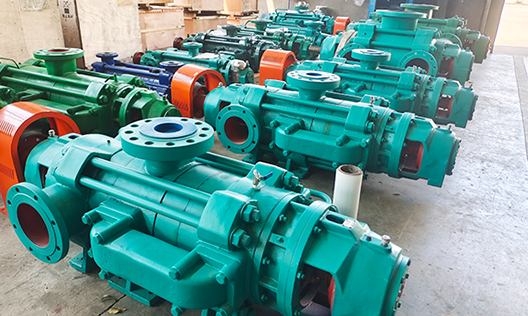
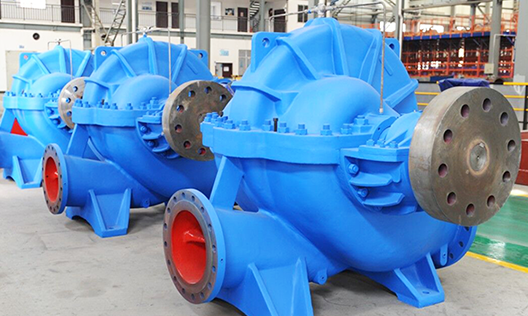
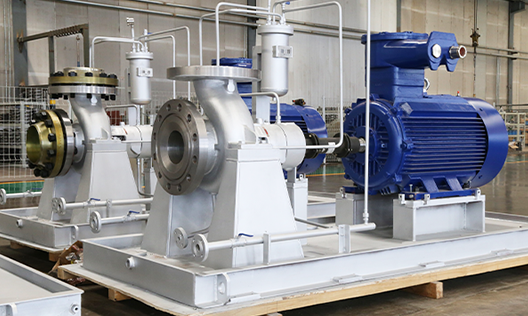
Puede fabricar 26 series de productos, incluyendo bombas de circulación para grandes centrales eléctricas, bombas de condensación para grandes centrales eléctricas, bombas petroquímicas, bombas multietapa, bombas de aguas residuales y lodo, bombas multietapa autoequilibradas, bombas de doble succión y única etapa tipo split, y bombas centrífugas de succión simple y única etapa.
-
Cases
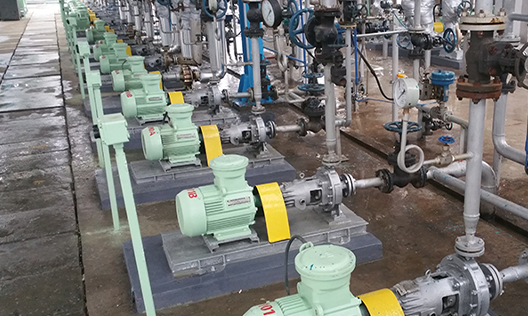
La elección de más de cientos de miles de clientes, cubriendo industrias como minería de carbón, metalurgia, química, energía, recursos hídricos, alimentos, municipalidades y protección ambiental, y exportando a Asia Sudeste, África, América y otros lugares.
-
Service
La empresa fue la primera en la industria en obtener las certificaciones internacionales del sistema de calidad ISO 9001:2008, del sistema de gestión ambiental ISO 14001 y del sistema de gestión de seguridad y salud ocupacional GB/T 28001, además de la certificación API 610 de la Asociación Estadounidense del Petróleo.
-
About us
La empresa, fundada en 1989, es una empresa nacional de alta tecnología integral que integra diseño, investigación y desarrollo, fabricación y servicios; actualmente es una empresa clave en la industria china de bombas centrífugas y una de las grandes fábricas especializadas.
-

Blogs
Con productos innovadores, calidad excepcional y servicios integrales, buscamos la verdad y la pragmática, avanzamos con iniciativa, y nos esforzamos por lograr el objetivo de ser "la marca líder en el campo de aplicación de bombas centrífugas en el país"! Raigada en Hunan, orientada a todo el país y hacia el mundo!
Analysis of the Six Main Causes of Insufficient Head in Self-Balancing Multistage Pumps
Publication Date:
2025-12-29
Author:
Source:


Self-balancing Multistage pump Thanks to their structural advantages of self-balancing axial forces, highly efficient and energy-saving characteristics, and stable operational performance, these pumps are widely used in critical sectors such as hydraulic engineering, power systems, petrochemicals, and municipal water supply. The pump’s head performance directly determines the system’s conveying efficiency and the rate at which operational targets are met. In actual operating conditions, some users encounter the issue of the pump’s actual head being lower than the design expectations, which not only affects the completion of conveying tasks but may also increase energy consumption and equipment wear. Based on the structural features of self-balancing multistage pumps and industry experience, the following is a list of manufacturers of self-balancing multistage pumps. Changsha Zhonglian Pump Industry A technical engineer has summarized the six main reasons for insufficient head in self-balancing multistage pumps, for reference by user organizations.

Please click on the image to learn about the model specifications and product details of Changsha Zhonglian Pump Industry’s [Self-Balancing Multistage Pumps].
1. The design selection does not match the actual operating conditions.
The head performance of a self-balancing multistage pump is closely related to its core parameters, such as the number of stages, rated flow rate, and rated speed. If, during the selection phase, these parameters are not precisely matched to the actual delivery scenario—such as the conveying height of the medium or pipeline resistance—or if standard models are selected blindly without considering the specific operating conditions, the pump will operate outside its optimal working range, and its actual head output will fail to meet the design specifications. For example, when operating under low-flow conditions but selecting a self-balancing pump designed for high flow rates, the phenomenon known as "using a big horse to pull a small cart" is likely to occur, resulting in insufficient head output.
II. The characteristics of the conveyed medium deviate from the design requirements.
The head design of a self-balancing multistage pump is based on specific medium parameters (density, viscosity, and cleanliness). When the actual medium being conveyed differs from the design values, the head will be significantly affected.
1. When the medium viscosity exceeds the design range, both the frictional resistance along the pipeline and the flow resistance within the pump increase simultaneously, leading to a decrease in effective head (for every increase in viscosity...). 1 Twice the flow rate may result in a reduced head. 10%-30% );
2. Although an increase in medium density does not directly affect the hydraulic head, it does increase the operational load on the pump body, indirectly leading to instability in the head output.
3. The presence of solid particles and impurities in the medium can easily cause blockage of flow passages, disrupt the hydraulic model, and consequently reduce the head.
III. Changes in Operating Environment and Operating Conditions
Fluctuations in the pump’s operating environment can directly affect its head performance.
When the ambient temperature is too high, thermal expansion of pump components causes changes in fitting clearances, leading to a reduction in hydraulic efficiency. Conversely, when the temperature is too low, the viscosity of the medium may increase, thereby raising the resistance to fluid transport.
If the actual system pressure and flow deviate from the design values—for example, if the outlet pressure suddenly rises or the inlet pressure is insufficient—this will disrupt the pump’s original hydraulic balance, causing fluctuations in the head output.
Changes in altitude affect atmospheric pressure, which in turn impacts the pump's suction performance and indirectly leads to insufficient head (for every 100-meter increase in altitude...). 1000 Meters, atmospheric pressure decreases by approximately 10% , requiring targeted adjustments to inhalation parameters.
4. Equipment wear and lack of maintenance and upkeep
After long-term operation, wear and aging of the core components of a self-balancing multistage pump will directly lead to a decline in head.
1. Wear on the impeller, cavitation damage, or corrosion of the guide vane flow passages can disrupt the hydraulic structure and reduce energy conversion efficiency.
2. Bearing wear and loose bushings can cause rotor eccentricity, compromising the mating accuracy between the impeller and the flow passage, increasing internal leakage, and consequently reducing the effective head.
3. Wear or jamming of self-balancing mechanisms (such as balance drums and balance sleeves) can disrupt the axial force balance, indirectly affecting hydraulic performance.
4. Prolonged failure to perform inspections and maintenance, deterioration of lubricating oil, and leakage from seals will accelerate component wear, leading to a continuous decline in head.
5. The piping system design or installation is unreasonable.
The configuration and installation quality of the piping system are key external factors that affect the head performance of self-balancing pumps.
Improper pipeline layout—such as excessive bends, abrupt changes in pipe diameter, or excessively long pipelines—can lead to the superposition of local resistance and frictional resistance along the pipeline, resulting in actual head loss exceeding the design expectations.
If the pipe diameter is too small, the flow velocity will be too high, leading to increased head loss. Conversely, if the pipe diameter is too large, the flow will become dispersed, and the head cannot be effectively transmitted.
Pipeline leaks—such as loose flange seals or internal valve leakage—can reduce the system’s effective head, resulting in a pump outlet pressure that meets specifications but an actual delivery height that falls short.
If components such as check valves and globe valves become stuck or fail to open fully, this will increase additional resistance and affect the head output.
6. Non-standard installation and commissioning procedures
The installation accuracy and commissioning quality of a self-balancing multistage pump directly determine its head performance.
If the installation elevation exceeds the pump’s allowable suction head range, or if there is an air leak in the suction pipeline, cavitation will occur inside the pump. This not only reduces the head but also damages the impeller.
If the coaxiality deviation between the pump shaft and the motor shaft is excessive, vibration will occur during operation, disrupting hydraulic stability and affecting the head output.
During the commissioning phase, air was not completely removed from the pump (air lock), or the pump speed and outlet valve opening were not adjusted according to actual operating conditions, resulting in the pump not operating at its optimal state and the head failing to reach the expected level.
In summary, the issue of insufficient head in self-balancing multistage pumps involves six key dimensions: selection and design, medium characteristics, operating conditions, equipment maintenance, piping systems, and installation and commissioning. To address this issue, it is essential to systematically troubleshoot each aspect based on the specific application scenario. First, verify that the selected parameters match the medium characteristics; next, inspect the equipment condition and piping system; finally, optimize the details of installation and commissioning. Through scientific troubleshooting and targeted improvements, we can ensure that the self-balancing multistage pump fully realizes its designed performance and guarantees stable and efficient system operation.
Recommended Information


Related Products
Perhaps you also want to know?
Zoomlian Pump Industry
Address:No. 210, Environmental Protection Middle Road, Yuhua Economic Development Zone, Changsha City, Hunan Province China
All rights reserved © Changsha Zoomlian Pump Co., Ltd.
This website supports IPv4 IPv6 bidirectional access
Website construction:Zhongqi Power Changsha