

-
Products
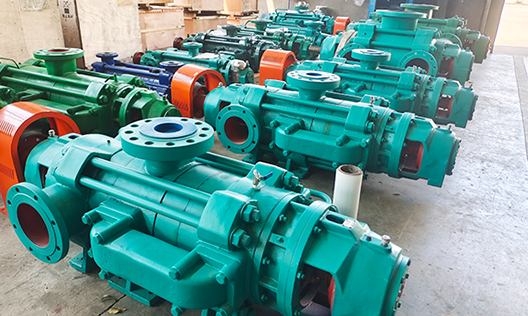
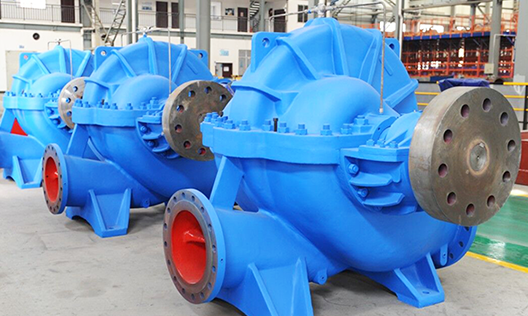
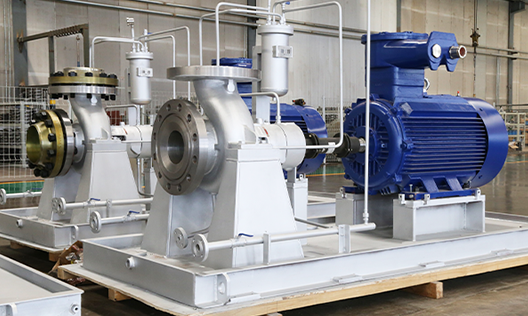
Puede fabricar 26 series de productos, incluyendo bombas de circulación para grandes centrales eléctricas, bombas de condensación para grandes centrales eléctricas, bombas petroquímicas, bombas multietapa, bombas de aguas residuales y lodo, bombas multietapa autoequilibradas, bombas de doble succión y única etapa tipo split, y bombas centrífugas de succión simple y única etapa.
-
Cases
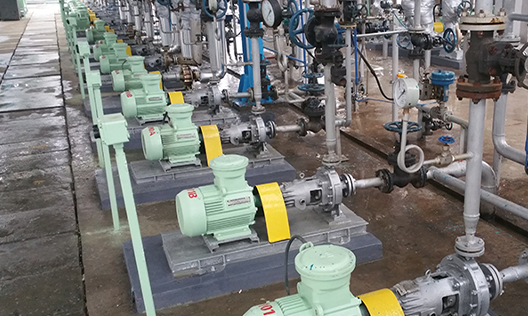
La elección de más de cientos de miles de clientes, cubriendo industrias como minería de carbón, metalurgia, química, energía, recursos hídricos, alimentos, municipalidades y protección ambiental, y exportando a Asia Sudeste, África, América y otros lugares.
-
Service
La empresa fue la primera en la industria en obtener las certificaciones internacionales del sistema de calidad ISO 9001:2008, del sistema de gestión ambiental ISO 14001 y del sistema de gestión de seguridad y salud ocupacional GB/T 28001, además de la certificación API 610 de la Asociación Estadounidense del Petróleo.
-
About us
La empresa, fundada en 1989, es una empresa nacional de alta tecnología integral que integra diseño, investigación y desarrollo, fabricación y servicios; actualmente es una empresa clave en la industria china de bombas centrífugas y una de las grandes fábricas especializadas.
-

Blogs
Con productos innovadores, calidad excepcional y servicios integrales, buscamos la verdad y la pragmática, avanzamos con iniciativa, y nos esforzamos por lograr el objetivo de ser "la marca líder en el campo de aplicación de bombas centrífugas en el país"! Raigada en Hunan, orientada a todo el país y hacia el mundo!
Reasons for the Failure to Start a Wear-Resistant Multistage Pump for Mining Applications and Corresponding Solutions
Publication Date:
2025-12-30
Author:
Source:


As a core piece of equipment used in mine hydraulic transportation, tailings management, underground drainage, and other mining applications, the reliability of starting a wear-resistant multistage pump directly affects the continuity of mine production and operational safety. In practical applications, if a wear-resistant multistage centrifugal pump for mining experiences difficulties in starting—such as no response upon startup, immediate shutdown after startup, or tripping due to excessive starting current—it is essential to systematically troubleshoot the root causes by examining each component of the pump’s core system and adopting targeted measures tailored to the specific characteristics of mining environments. Below, technical engineers from Changsha Zhonglian Pump Industry, a manufacturer of multistage pumps, share the common reasons why wear-resistant multistage pumps for mining fail to start and provide corresponding solutions for reference by user organizations.

Please click on the image to learn about the model specifications and product details of Changsha Zhonglian Pump Industry’s [mining multistage centrifugal pumps].
I. Troubleshooting the Root Cause of Startup Difficulties (with a Focus on Mining Scenarios)
1. Power supply system abnormality (highest safety priority for mining applications)
Three-phase voltage stability: Voltage fluctuations exceed the pump’s rated value by ± 5% Range, or three-phase voltage unbalance > 2% , which can lead to insufficient starting torque of the motor;
Power supply line issues: Insufficient wire gauge matching leads to excessive voltage drop during startup, or the grounding resistance exceeds the specified limit (mining requirements ≤ 4 Ω) Poor grounding causes the protective device to trip erroneously;
Power interface issues: Loose or oxidized terminal connections leading to poor contact, or failure of the sealing on explosion-proof mining plugs, resulting in water ingress and short circuits.
2. Motor system failure (mining motors must meet explosion-proof and wear-resistant requirements)
Motor body damage: Stator winding insulation aging (insulation resistance < 1M Omega /1000V ) Winding short circuit / Open circuit, or broken rotor bars, or seized bearings;
Lubrication and Sealing Issues: Bearing grease degradation and insufficient filling quantity (the standard filling amount is the bearing cavity). 2/3 ), or the wear of the explosion-proof sealing surface of mining motors leads to increased starting resistance;
Mismatch in motor parameters: The rated power and speed of the replacement motor do not match the design parameters of the pump body, resulting in a mismatch in starting load.
3. Abnormal pump body load (with particular emphasis on the impurity characteristics of the mining medium).
Import and export blockage: The inlet filter screen is clogged with coal slime and rock cuttings (impurity particle size >). 5mm This can easily cause jamming, or the outlet valve may not have been opened in advance (starting in a fully closed position can lead to overload).
Pump cavity air lock / Medium-related issues: After the pump is stopped, air remaining in the pump chamber is not fully expelled, or the viscosity of the conveyed medium exceeds the design value (e.g., the viscosity of mine wastewater >). 50mPa · s The starting resistance increases dramatically;
Internal component jamming: The impeller and flow passage become eccentric due to wear and corrosion, or the balance drum and balance sleeve get jammed, thereby obstructing rotor rotation.
4. Control system failure (mining control cabinets must meet explosion-proof rating requirements)
Wiring and circuit issues: Loose wiring, short circuits, or damage to the insulation of control wires inside the control cabinet (commonly occurring in the humid mining environment);
Protection device malfunction: The thermal relay’s set current does not match the motor’s rated value (standard is...). 1.1–1.3 Exceeding the rated current, or the emergency stop button or overcurrent protection not being reset;
Control module failure: PLC The control signal transmission is interrupted, or the frequency converter starter parameters are set incorrectly (e.g., the starting frequency is too low or the acceleration time is too short).
II. Targeted Solutions (Balancing Mine Safety and Practicality)
1. Power Supply System Rectification
Voltage and Line Optimization: Install a mine-specific voltage regulator (suitable for scenarios with voltage fluctuations), and verify that the cross-sectional area of the power supply lines meets the pump’s starting current requirements (to prevent voltage drop >). 3% );
Interface and Grounding Repair: Re-tighten the wiring terminals (following the torque specifications for mining applications), remove any oxide layers, and apply conductive grease. Re-measure the grounding resistance to ensure it meets the requirement of ≤ 4 Mine safety standards for Ω;
Emergency Support: In underground mine environments, backup power sources can be configured to prevent startup interruptions caused by a single-line failure.
2. Motor System Maintenance and Replacement
Winding and Insulation Repair: Rewind any damaged windings, and after repair, perform a withstand voltage test. 1.5 Twice the rated voltage, continuous 1min No breakdown); replace aged insulation components to ensure that the insulation resistance meets the standard;
Bearing and Seal Maintenance: Replace deteriorated grease (using mine-specific, high-temperature, wear-resistant grease); repair or replace seized bearings; grind the explosion-proof sealing surfaces of the motor to ensure that the sealing performance meets the required standards. Exd Ⅰ Explosion-proof rating requirements;
Parameter Matching and Replacement: When replacing the motor, it is essential to ensure strict matching of the pump’s rated power, speed, and installation dimensions to avoid secondary failures caused by model mismatches.
3. Load Optimization and Pump Body Cleaning
Clearance of Inlet and Outlet: Remove the inlet filter to clean out impurities and ensure unobstructed flow paths; open the outlet valve in advance before starting up. 1/3 Opening degree, reducing the starting load;
Air Lock and Media Handling: Thoroughly vent air through the exhaust valve at the top of the pump body to prevent air locks. If the media viscosity exceeds the specified limit, pre-treat the media in advance (e.g., by dilution or filtration) or switch to a pump model that is suitable for high-viscosity media.
Internal component maintenance: Disassemble and inspect the pump body, clean out any accumulated debris from the impeller and flow passages, repair eccentric impellers or replace worn balance drums and balance sleeves, ensuring that the rotor rotates smoothly and flexibly.
4. Control System Debugging and Maintenance
Circuit and Wiring Rectification: Inspect the control cabinet for short circuits and damaged wiring, rewire according to mining standards, and securely fasten all connections. Install dehumidifying devices in control cabinets located in humid environments.
Protection device calibration: Reset the current parameters of the thermal relay, reset the emergency stop button and the overcurrent protection device, and ensure that the protection logic is functioning properly.
Control module debugging: Check PLC Signal transmission line, reset the variable frequency starter parameters (starting frequency). 5-10Hz , acceleration time 10-15s ), ensuring a smooth startup process.
III. Long-term Prevention Mechanism for Mining Scenarios (Reducing the Occurrence Rate of Startup Failures)
1. Regular inspection system: Conducted monthly 1 Special inspections of the secondary power supply system, motors, and control systems shall be conducted quarterly. 1 Disassemble and inspect the secondary pump housing (with a focus on removing internal impurities and checking the wear condition of vulnerable parts);
2. Wear-Part Management: Establish a dedicated inventory of wear parts for mining applications (such as mechanical seals, impeller liners, bearings, and terminal blocks). Replace these parts promptly based on their degree of wear to prevent component failure from causing startup difficulties.
3. Environmental Adaptation and Maintenance: For mining environments that are humid, dusty, and corrosive, regularly clean the motor heat sinks and dust covers of control cabinets, and apply rust- and corrosion-resistant coatings to the metal components of the pump body.
4. Operational Procedure Training: Conduct specialized training for on-site operators to clearly define pre-startup inspection procedures (such as air venting, valve positions, and power supply status) and prevent malfunctions caused by non-compliant operations.
5. Emergency Plan: Establish an emergency response procedure for handling failures, clearly defining rapid troubleshooting steps for each type of failure. If the failure involves damage to core components (such as burned-out motor windings or a broken pump shaft), immediately contact professional technicians for on-site repairs to avoid causing secondary damage through indiscriminate disassembly.
Recommended Information


Related Products
Perhaps you also want to know?
Zoomlian Pump Industry
Address:No. 210, Environmental Protection Middle Road, Yuhua Economic Development Zone, Changsha City, Hunan Province China
All rights reserved © Changsha Zoomlian Pump Co., Ltd.
This website supports IPv4 IPv6 bidirectional access
Website construction:Zhongqi Power Changsha