

-
Products
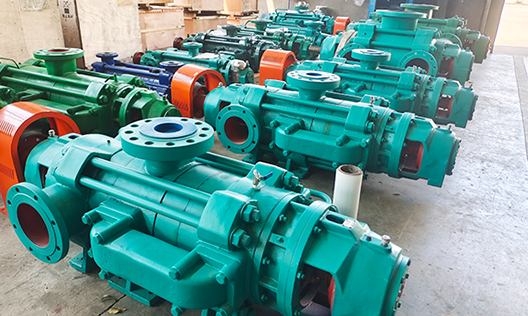
Puede fabricar 26 series de productos, incluyendo bombas de circulación para grandes centrales eléctricas, bombas de condensación para grandes centrales eléctricas, bombas petroquímicas, bombas multietapa, bombas de aguas residuales y lodo, bombas multietapa autoequilibradas, bombas de doble succión y única etapa tipo split, y bombas centrífugas de succión simple y única etapa.
-
Cases
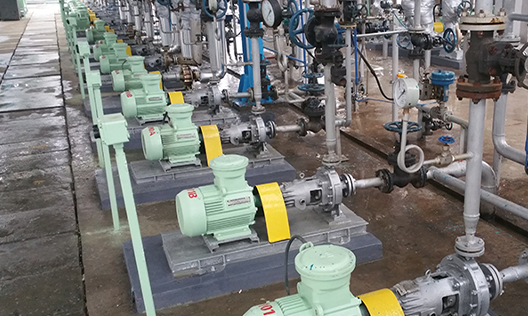
La elección de más de cientos de miles de clientes, cubriendo industrias como minería de carbón, metalurgia, química, energía, recursos hídricos, alimentos, municipalidades y protección ambiental, y exportando a Asia Sudeste, África, América y otros lugares.
-
Service
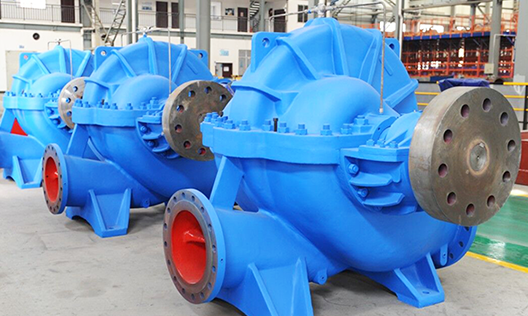
La empresa fue la primera en la industria en obtener las certificaciones internacionales del sistema de calidad ISO 9001:2008, del sistema de gestión ambiental ISO 14001 y del sistema de gestión de seguridad y salud ocupacional GB/T 28001, además de la certificación API 610 de la Asociación Estadounidense del Petróleo.
-
About us
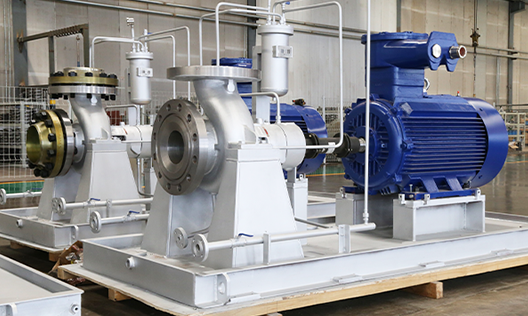
La empresa, fundada en 1989, es una empresa nacional de alta tecnología integral que integra diseño, investigación y desarrollo, fabricación y servicios; actualmente es una empresa clave en la industria china de bombas centrífugas y una de las grandes fábricas especializadas.
-

Blogs
Con productos innovadores, calidad excepcional y servicios integrales, buscamos la verdad y la pragmática, avanzamos con iniciativa, y nos esforzamos por lograr el objetivo de ser "la marca líder en el campo de aplicación de bombas centrífugas en el país"! Raigada en Hunan, orientada a todo el país y hacia el mundo!
Core Requirements and Replacement Steps for Multi-Stage Centrifugal Pump Packing Seals
Publication Date:
2025-10-27
Author:
Source:


Packing seals as Multistage centrifugal pump The classic form of dynamic sealing, with its advantages such as low cost, convenient maintenance, and suitability for media containing solid particles, is widely used in fluid transportation applications across industries like chemical engineering, petroleum, and power generation. Proper installation methods and standardized inspection procedures are crucial for ensuring the pump's sealing performance and extending the equipment's service life. In this article, a manufacturer of multistage centrifugal pumps Changsha Zoomlion Pump Industry Will combine with《 GB/T5661-2013 》、《 GB/T34875-2017 》standards, detailing the core requirements and replacement steps for multi-stage centrifugal pump packing seals, for reference by user organizations.

I. Core Component and Assembly Quality Standards for Packing Seals
1. Filler Selection Requirements
Packing, also commonly known as gland packing, should possess a flexible texture and excellent lubricating properties. The material selection must precisely match the characteristics of the working medium (such as corrosivity and temperature) as well as the operating parameters (pressure and rotational speed). Common application scenarios include asbestos packing for standard conditions, and expanded graphite packing designed for corrosion-resistant environments, among others.
2. Key component precision requirements
The surface roughness of the contact area between the bushing (or shaft) and the stuffing box must be controlled within Ra1.6 μ m Within RaI.65m "Unit-based and free of numerical errors), the surface must be smooth, free of scratches and burrs."
The diameter clearance between the packing sleeve, gland, and shaft sleeve (or shaft) should be maintained within 0.75~2 mm , and ensure uniform clearance in the circumferential direction to prevent localized wear from worsening.
The fit tolerance between the packing gland and the inner wall of the stuffing box is specified as H11/d11 (Original text “ Hill/dll "Due to a writing error, ensure proper assembly accuracy and sufficient clearance."
The diameter clearance between the liquid seal ring and the inner wall of the stuffing box is controlled to be within 0.15~0.20mm , this gap is a critical parameter that ensures both liquid seal circulation and sealing performance.
The depth to which the gland is pressed into the stuffing box must be 0.5 to 1 Packed column height, with a minimum of 5mm , while ensuring that the gland face remains parallel to the stuffing box face to prevent uneven stress distribution.
II. Practical Operation Steps for Packing Seal Maintenance and Repair Standards
1. Filler Pre-treatment and Cutting
The length of each packing ring must precisely match the shaft diameter. When cutting, it is recommended to wrap the packing around a round steel rod of the same diameter as the shaft to ensure a snug fit at the joint. The cut edges should be perfectly smooth and free of loose fibers, with angles adhering to industry-standard practices. 45 °(Original text “ 300 "Angle" indicates a numerical error; during installation, the joints of adjacent packing materials must be staggered. 120 ° ~180 °, forming a labyrinthine sealing structure.
2. Assembly Preparation and Installation Process
Thoroughly clean the shaft surface and the inner wall of the stuffing box, removing oil stains, rust, and impurities to ensure that the contact surfaces are smooth, clean, and free of particles that could cause wear on the sealing area.
Assemble the packing by pre-compressing each ring individually and installing them one by one. After each ring is installed, gently press it into place to avoid over-tightening in a single step. The initial tightening force of the packing gland should be moderate; it’s recommended to make gradual, fine adjustments based on leakage conditions after the pump is started, preventing "shaft seizure" that could lead to packing burnout or accelerated shaft wear.
3. Optimize sealing and protective measures
It is recommended to adopt a combined packing solution, such as pairing asbestos packing with expanded graphite packing. This approach not only prevents the expanded graphite packing from being squeezed into the shaft gap, which could lead to excessive wear, but also ensures an even distribution of radial pressure, thereby enhancing sealing reliability.
When installing the liquid seal ring, ensure that its groove (note: "huan gan" is a typographical error in the original text) aligns precisely with the through-hole of the liquid seal tube, guaranteeing smooth flow of the cooling and lubricating fluid while effectively providing triple functions—cooling, lubrication, and protection against impurity intrusion.
For high-wear operating conditions, the shaft surface can be built up with hard alloy welding, or the shaft (or sleeve) can undergo nitriding treatment, achieving a surface hardness of 55HRC Above, significantly enhancing wear resistance.
Throughout the entire process, prevent abrasive particles and debris from entering the assembly area—any minute impurity could scratch the sealing surfaces, ultimately leading to sealing failure.
III. Key Considerations for Inspection and Maintenance
1. In the initial operation phase, a small amount of leakage is permitted—typically, per inch of shaft diameter per second. 1 About a moment—allow the packing material to fully soak and expand before gradually adjusting the gland tightness.
2. Regularly inspect the packing for wear and leakage levels, and promptly shut down the equipment for maintenance if any abnormal leaks or temperature increases are detected, to prevent seal failure and mitigate the risk of medium leakage.
3. Different operating conditions require tailored adjustments to maintenance cycles: for conditions involving solid particle-containing media, inspection intervals should be shortened, while corrosive media necessitate regular replacement of packing materials suited to the specific environment.
Recommended Information


Related Products
Perhaps you also want to know?
Zoomlian Pump Industry
Address:No. 210, Environmental Protection Middle Road, Yuhua Economic Development Zone, Changsha City, Hunan Province China
All rights reserved © Changsha Zoomlian Pump Co., Ltd.
This website supports IPv4 IPv6 bidirectional access
Website construction:Zhongqi Power Changsha