

-
Products
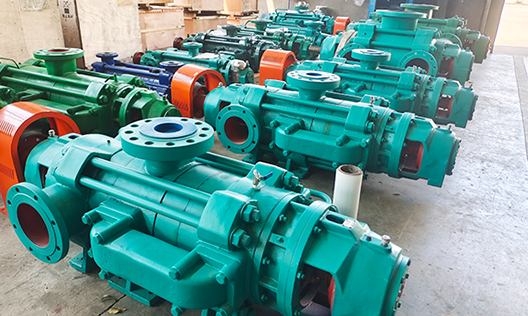
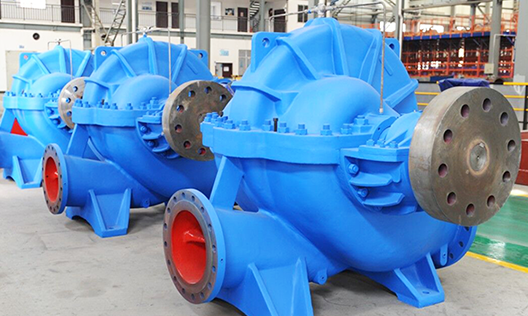
Puede fabricar 26 series de productos, incluyendo bombas de circulación para grandes centrales eléctricas, bombas de condensación para grandes centrales eléctricas, bombas petroquímicas, bombas multietapa, bombas de aguas residuales y lodo, bombas multietapa autoequilibradas, bombas de doble succión y única etapa tipo split, y bombas centrífugas de succión simple y única etapa.
-
Cases
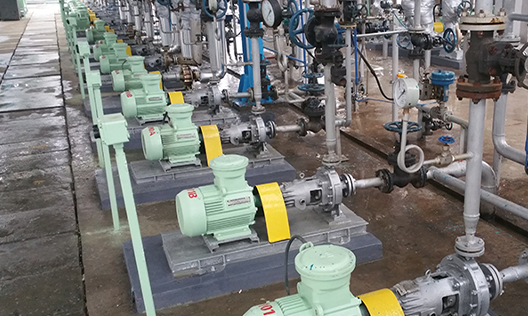
La elección de más de cientos de miles de clientes, cubriendo industrias como minería de carbón, metalurgia, química, energía, recursos hídricos, alimentos, municipalidades y protección ambiental, y exportando a Asia Sudeste, África, América y otros lugares.
-
Service
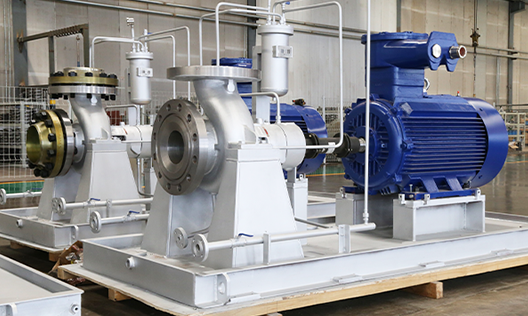
La empresa fue la primera en la industria en obtener las certificaciones internacionales del sistema de calidad ISO 9001:2008, del sistema de gestión ambiental ISO 14001 y del sistema de gestión de seguridad y salud ocupacional GB/T 28001, además de la certificación API 610 de la Asociación Estadounidense del Petróleo.
-
About us
La empresa, fundada en 1989, es una empresa nacional de alta tecnología integral que integra diseño, investigación y desarrollo, fabricación y servicios; actualmente es una empresa clave en la industria china de bombas centrífugas y una de las grandes fábricas especializadas.
-

Blogs
Con productos innovadores, calidad excepcional y servicios integrales, buscamos la verdad y la pragmática, avanzamos con iniciativa, y nos esforzamos por lograr el objetivo de ser "la marca líder en el campo de aplicación de bombas centrífugas en el país"! Raigada en Hunan, orientada a todo el país y hacia el mundo!
Stainless steel double-suction pumps in four major application scenarios within the power industry: from cooling systems in thermal power plants to auxiliary systems in nuclear power plants.
Publication Date:
2025-10-23
Author:
Source:


On the "high-temperature and high-pressure battlefield" of the power industry, pump equipment serves as the core power source akin to the "circulatory system"—particularly stainless steel mid-open pumps, which must withstand the challenges within the circulating water systems of thermal power plants. 80 Continuous high temperatures exceeding ℃, coupled with the need to withstand complex media containing chloride ions in nuclear power plant auxiliary systems—systems where stable operation under such conditions is essential. Stainless Steel Double-Door Pump It certainly wasn't luck, but rather a set of "survival conditions" that have been proven effective through real-world applications. In this article, we will introduce the Zhongkai pump manufacturer. Changsha Zoomlion Pump Industry Here are the four major operating conditions for stainless steel double-suction pumps in the power industry: from cooling systems in thermal power plants to auxiliary systems in nuclear power plants. After reading this article, you'll gain a more detailed understanding of how double-suction pumps are applied in thermal power plants.

Condition 1: Material selection must be tailored "according to the medium," rejecting a one-size-fits-all approach.
The media characteristics of the power industry can be described as "highly diverse": Circulating cooling water in thermal power plants often contains sediment and microorganisms (which readily form biofouling), while condensate from auxiliary systems in nuclear power plants may still retain trace amounts of chloride ions—concentrations that can reach 0.10.5mg/L ), and the slurry in the desulfurization system is even more in an acidic environment. pH As low as 45 ). If a uniform material is used to address this, it will not result in 3 Corrosion and perforation may occur within just one month.
The key to breaking the deadlock in stainless steel mid-open pumps lies in the precise matching of materials and media.
Thermal Power Cycle Water System 316L Stainless steel is sufficiently robust, particularly due to its molybdenum content. 23% ) Effectively resists pitting corrosion caused by chloride ions in water, etc. 300MW Case studies of thermal power units demonstrate that adopting 316L The mid-open pump with its impeller boasts a service life that surpasses that of cast-iron pumps. 8 The period has been extended to months. 3 More than one year
Auxiliary nuclear power systems (e.g., condensate water transfer): Must be upgraded. 2205 Duplex steel, a material with higher chromium, nickel, and molybdenum content. 22% Nickel 5% Molybdenum 3% ), its resistance to stress corrosion is 316L of 2 Twice, and compliant. RCCM Nuclear Power Equipment and Material Standards
Desulfurization Slurry Transfer: Required 2205 Add a tungsten carbide coating on the base, achieving high hardness. HRC60 The above measures can reduce the wear rate of gypsum particles in the slurry.
Condition Two: Structural design must "match the system conditions," and flow rate and head cannot be determined "arbitrarily."
The power system often imposes "rigid and demanding" requirements on pump flow rate and head: a single unit 600MW The circulating water pump for the thermal power unit needs to deliver per hour 2.5 Cubic meters of cooling water, yet the head requirement is minimal. 1215 Milliliters; meanwhile, the borate injection pump for nuclear power plants, though its flow rate is merely... 50m ³ /h However, the head must reach a certain level. 300 Above meters. The "double-suction impeller" design of the stainless steel center-open pump is precisely optimized structurally to meet these extreme operating conditions.
Specifically, its structural advantages are reflected in two key aspects:
High-flow scenarios (such as thermal power plant circulating water systems): The double-suction impeller draws water from both sides, effectively balancing axial forces and reducing vibration (amplitude controlled within... 0.05mm Within), a certain million-kilowatt-class thermal power plant adopts 800S32 Medium-sized pump with a single-pump flow rate reaching 3000m ³ /h , meeting the cooling demands of both units while reducing operational noise compared to a single-suction pump. 15 Decibel
Adaptability to Variable Operating Conditions (e.g., Nuclear Power Plant Auxiliary Feedwater Systems): The mid-split pump casing can accommodate adjustments by modifying the impeller diameter (cutback amount ≤ 10% ) Flexibly matches head variations as the unit load changes, 30% Rise to 100% During the process, traffic fluctuations can be controlled within ± 5% Within limits, to prevent cavitation caused by sudden changes in operating conditions.
Condition Three: Safety redundancy is "bottom-line thinking"—neither sealing nor monitoring can be compromised.
The cost of shutting down power equipment is extremely high—unplanned outages at thermal power plants can result in losses of hundreds of thousands of yuan, while nuclear power plants have "zero tolerance" for even the slightest risk of leakage. To gain a foothold in this critical market, stainless steel mid-open pumps must establish "multi-layered safety defenses."
Core measures include:
Sealed System Upgrade: Implementation of "Mechanical Seals" + "Flushing Scheme" Combination for Thermal Power Cycle Pumps PLAN23 Rinse (using external clean water for cooling), ensuring the sealing chamber temperature remains ≤ 60 ℃; Nuclear power pumps are used PLAN53A (Double-end face seal with pressure tank), ensuring continuous operation even if one side fails to maintain sealing, with leakage levels kept under strict control. 0.1ml/h The following;
Online Monitoring Implantation: Install vibration sensors at critical locations (monitoring bearing housing vibration velocity > 4.5mm/s When an alarm is triggered), temperature probe (motor winding temperature > 130 Automatic shutdown at ℃), data access to the power plant DCS System for implementing "pre-fault diagnosis." In a certain nuclear power project, this system was deployed in advance. 72 The hourly alert flagged slight wear on the impeller, preventing an unplanned shutdown.
Condition Four: Operation and maintenance design must "consider the field," as inspection efficiency determines the lifecycle.
The installation locations of power pumps are often "challenging"—some are buried within circulating water tunnels (in confined spaces), while others are situated on turbine platforms (requiring high-altitude work). When performing maintenance on conventional pump equipment, it is necessary to remove both the inlet and outlet pipes, a process that can take an extended amount of time. 3 Heaven. The "mid-opening pump casing" design of the stainless steel mid-opening pump was specifically developed to address this very pain point.
Its operational advantages are reflected in:
Quick Disassembly: The pump casing is horizontally split along the central axis, allowing removal of components such as the impeller and shaft sleeve without moving the pipelines. GS The maintenance and inspection time for mid-type open pumps is longer than that of traditional pumps. 72 Hours are shortened to 8 Hours;
Standardization of Wear Parts: Components such as impellers and sealing rings are designed with standardization in mind, achieving a high interchangeability rate with pumps of the same diameter. 90% , reducing the inventory pressure of power plant spare parts;
Simplified Corrosion Maintenance: The inner wall features an electrolytic polishing process (surface roughness ≤ Ra). Ra ≤ 0.8 μ m ), reduce medium adhesion, requiring only one pickling and passivation treatment annually, thereby lowering maintenance costs compared to cast iron pumps. 60%。
Today, as the power industry transitions from "high energy consumption" to "efficient and clean," the "operational conditions" for stainless steel centerline pumps essentially embody a smart approach of "coexisting harmoniously with the system"—combining both the "hard power" required to withstand extreme operating conditions (in terms of materials and structural design) and the "soft power" tailored to meet industry-specific demands (such as safety and maintenance efficiency). Zhonglian Pump Industry's customized solutions designed specifically for power industry applications meticulously integrate these operational challenges into every detail of their designs: 316L To 2205 The material ladder—from the dual-suction impeller to the combination of online monitoring features—ensures that the stainless steel split-case pump maintains its core competitiveness of "stable output" even under the high temperatures of thermal power plants and the rigorous conditions of nuclear power applications.
Recommended Information


Related Products
Perhaps you also want to know?
Zoomlian Pump Industry
Address:No. 210, Environmental Protection Middle Road, Yuhua Economic Development Zone, Changsha City, Hunan Province China
All rights reserved © Changsha Zoomlian Pump Co., Ltd.
This website supports IPv4 IPv6 bidirectional access
Website construction:Zhongqi Power Changsha