

-
Products
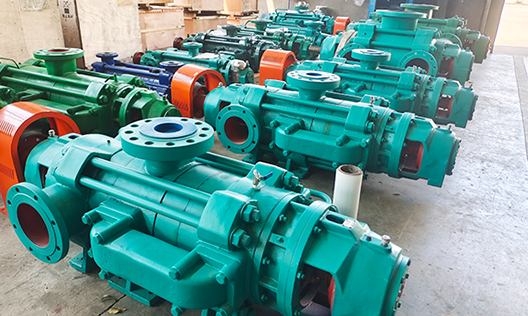
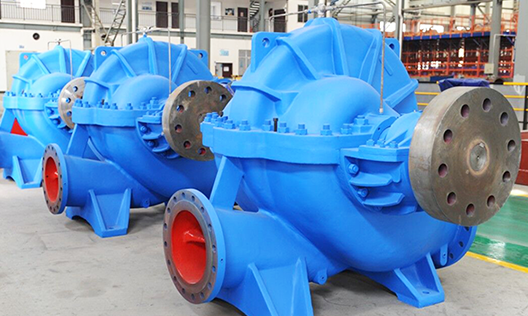
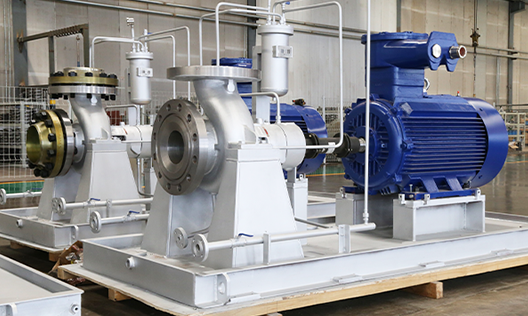
Puede fabricar 26 series de productos, incluyendo bombas de circulación para grandes centrales eléctricas, bombas de condensación para grandes centrales eléctricas, bombas petroquímicas, bombas multietapa, bombas de aguas residuales y lodo, bombas multietapa autoequilibradas, bombas de doble succión y única etapa tipo split, y bombas centrífugas de succión simple y única etapa.
-
Cases
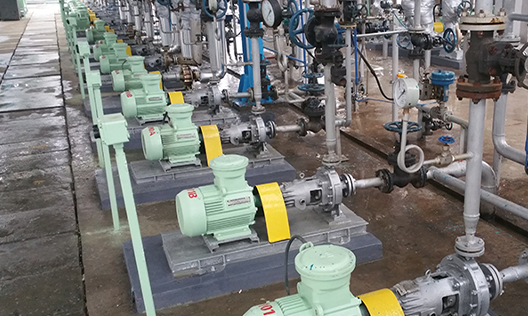
La elección de más de cientos de miles de clientes, cubriendo industrias como minería de carbón, metalurgia, química, energía, recursos hídricos, alimentos, municipalidades y protección ambiental, y exportando a Asia Sudeste, África, América y otros lugares.
-
Service
La empresa fue la primera en la industria en obtener las certificaciones internacionales del sistema de calidad ISO 9001:2008, del sistema de gestión ambiental ISO 14001 y del sistema de gestión de seguridad y salud ocupacional GB/T 28001, además de la certificación API 610 de la Asociación Estadounidense del Petróleo.
-
About us
La empresa, fundada en 1989, es una empresa nacional de alta tecnología integral que integra diseño, investigación y desarrollo, fabricación y servicios; actualmente es una empresa clave en la industria china de bombas centrífugas y una de las grandes fábricas especializadas.
-

Blogs
Con productos innovadores, calidad excepcional y servicios integrales, buscamos la verdad y la pragmática, avanzamos con iniciativa, y nos esforzamos por lograr el objetivo de ser "la marca líder en el campo de aplicación de bombas centrífugas en el país"! Raigada en Hunan, orientada a todo el país y hacia el mundo!
Solution for Addressing Negative Pressure Issues in High-Flow, High-Head Multistage Centrifugal Pumps
Publication Date:
2026-03-19
Author:
Source:


High-flow, high-head multistage centrifugal pumps are widely used in industrial and municipal water supply systems, agricultural irrigation, lake replenishment, and other applications. During operation, the occurrence of negative pressure not only significantly compromises pump performance stability—resulting in flow fluctuations and head reduction—but also accelerates wear on mechanical seals, triggers cavitation, and ultimately shortens the overall service life of the equipment. To ensure safe and efficient system operation, a systematic inspection and troubleshooting approach is required, taking into account both the pump’s structural characteristics and its operating conditions. Below, Changsha Zoomlion Pump Industry, drawing on its technical expertise, proposes the following solutions for addressing the issue of negative pressure in high-flow, high-head multistage centrifugal pumps:

I. Diagnosis of the Causes of Negative Pressure
1. Design compliance verification: Confirm that the pump model parameters match the system requirements, assess whether flow-path components such as the impeller and guide vanes are subject to cavitation risk, and ensure proper concentricity and foundation flatness during installation.
2. Piping system inspection: Identify any air leaks in the piping (air-tightness testing is recommended), as well as abnormal pressure drops caused by sudden changes in pipe diameter or valves that are not fully open. Pay particular attention to whether air remains in the suction section.
3. Operational parameter verification: Compare the flow–head curve to determine whether the current operating conditions fall outside the pump’s high-efficiency range, thereby preventing pressure fluctuations caused by overload.
II. Optimization of Operating Parameters
1. Speed and Flow Regulation: Within the motor’s rated power range, the speed is adjusted via a variable-frequency drive to maintain the flow rate within ±5% of the pump’s design flow, thereby preventing cavitation caused by mismatch between head and flow.
2. Inlet Pressure Compensation: If the system experiences pressure fluctuations, a pressure-stabilizing tank or pressure sensor can be installed at the suction inlet to provide real-time monitoring and feedback control, thereby maintaining the inlet pressure within ±0.02 MPa of the design value.
III. Sealing System Maintenance
1. Shaft seal assembly inspection: Focus on measuring the wear of the rotating and stationary rings of the mechanical seal (recommended ≤0.1 mm), checking the spring preload, and assessing the condition of the auxiliary sealing rings for signs of aging. If leakage is detected or if clearances exceed the specified limits, promptly replace the original equipment manufacturer’s seals.
2. Balance device verification: The clearance between the balance disc and balance ring of multistage pumps shall be maintained within 0.2–0.3 mm to prevent abnormal pipeline pressure caused by impeller axial movement resulting from unbalanced axial forces.
IV. Pipeline System Renovation
1. Pipe Diameter Optimization: Recalculate the pipeline diameter based on the pump’s design flow rate to ensure that the friction factor along the pipeline does not exceed 0.02 and that local head losses are limited to no more than 30% of the total head loss.
2. Exhaust System Design: An automatic air vent valve is installed at the highest point of the pump inlet to ensure complete pipeline venting prior to startup. During operation, pressure fluctuations are monitored via a PLC program, and an automatic alarm is triggered in the event of abnormalities.
V. Preventive Maintenance Plan
1. Periodic Inspection Checklist: Conduct monthly inspections of pump vibration levels (≤4.5 mm/s), bearing temperature (≤75°C), and seal chamber pressure; perform impeller cavitation inspections and pipeline scale removal quarterly.
2. Emergency Response Plan: Establish a rapid response mechanism for negative-pressure system failures, equip the facility with portable vacuum detectors, and ensure failure localization and the provision of repair solutions within 2 hours.
If the above measures fail to resolve the issue, we recommend contacting the Technical Service Center of Changsha Zoomlion Pump Industry to conduct comprehensive full-condition simulation and analysis using a pump performance test bench, thereby providing a customized solution. Systematic troubleshooting and precision maintenance can effectively address the negative-pressure problem in multistage pumps, ensuring long-term stable operation of the equipment. Changsha Zoomlion Pump Industry consistently adheres to the ISO 9001 quality management system and provides customers with end-to-end technical support across the entire lifecycle, from equipment selection to operation and maintenance.
Previous:
Recommended Information


Related Products
Perhaps you also want to know?
Zoomlian Pump Industry
Address:No. 210, Environmental Protection Middle Road, Yuhua Economic Development Zone, Changsha City, Hunan Province China
All rights reserved © Changsha Zoomlian Pump Co., Ltd.
This website supports IPv4 IPv6 bidirectional access
Website construction:Zhongqi Power Changsha