

-
Products
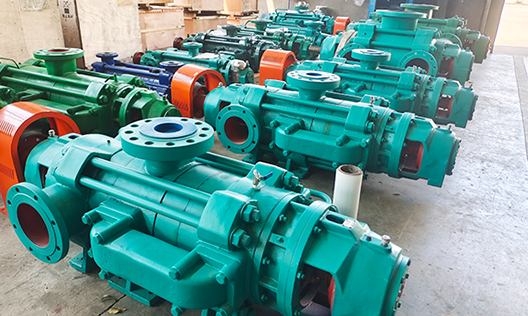
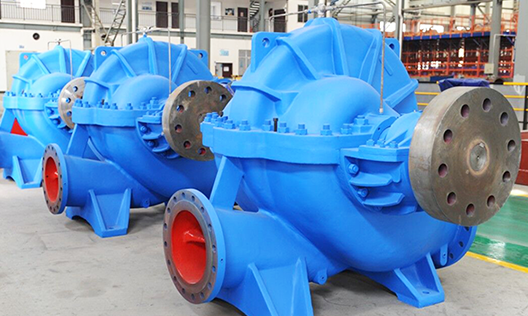
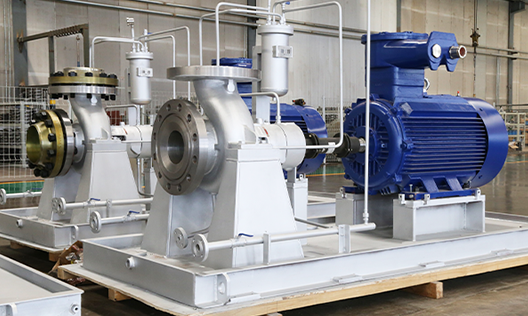
Puede fabricar 26 series de productos, incluyendo bombas de circulación para grandes centrales eléctricas, bombas de condensación para grandes centrales eléctricas, bombas petroquímicas, bombas multietapa, bombas de aguas residuales y lodo, bombas multietapa autoequilibradas, bombas de doble succión y única etapa tipo split, y bombas centrífugas de succión simple y única etapa.
-
Cases
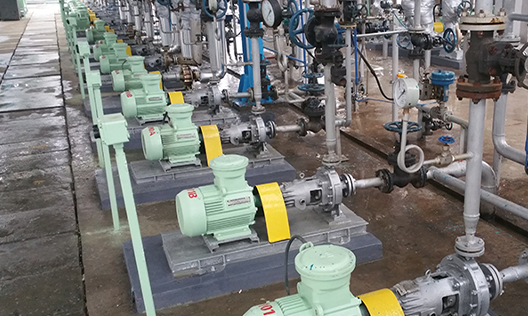
La elección de más de cientos de miles de clientes, cubriendo industrias como minería de carbón, metalurgia, química, energía, recursos hídricos, alimentos, municipalidades y protección ambiental, y exportando a Asia Sudeste, África, América y otros lugares.
-
Service
La empresa fue la primera en la industria en obtener las certificaciones internacionales del sistema de calidad ISO 9001:2008, del sistema de gestión ambiental ISO 14001 y del sistema de gestión de seguridad y salud ocupacional GB/T 28001, además de la certificación API 610 de la Asociación Estadounidense del Petróleo.
-
About us
La empresa, fundada en 1989, es una empresa nacional de alta tecnología integral que integra diseño, investigación y desarrollo, fabricación y servicios; actualmente es una empresa clave en la industria china de bombas centrífugas y una de las grandes fábricas especializadas.
-

Blogs
Con productos innovadores, calidad excepcional y servicios integrales, buscamos la verdad y la pragmática, avanzamos con iniciativa, y nos esforzamos por lograr el objetivo de ser "la marca líder en el campo de aplicación de bombas centrífugas en el país"! Raigada en Hunan, orientada a todo el país y hacia el mundo!
Operating Guide for Priming and Air Bleeding of Light-Duty Stainless Steel Multistage Centrifugal Pumps
Publication Date:
2026-03-18
Author:
Source:


Changsha Zoomlion Pump Industry Operating Procedures for Water-Filling and Air-Exhausting of Multistage Centrifugal Pumps
I. Applicable Scenarios:
When a multistage centrifugal pump is commissioned for the first time, restarted after a prolonged shutdown, or operates with excessive air entrained in the impeller (resulting in inability to draw water), it is essential to ensure that the pump casing is completely filled with liquid and thoroughly purged of air. This prevents equipment damage caused by cavitation and dry running, thereby ensuring the efficient and stable operation of the multistage centrifugal pump unit.

II. Pre-Operation Preparation:
1. Before performing the water-filling and air-venting operation, ensure that the power supply has been disconnected and that a “Do Not Close” warning sign is posted to guarantee operational safety. At the same time, prepare the necessary tools, such as wrenches and screwdrivers, as well as an appropriate amount of clean water or a fluid that meets the pump’s specifications. Inspect all components of the pump to ensure they are intact and undamaged, with particular attention to seals and connections, to eliminate any risk of leakage.
2. In addition, debris around the pump must be cleared to maintain a clean operating environment, thereby facilitating smooth water filling and air venting. For pumps that have been shut down for an extended period and are now being restarted, the motor’s insulation performance must also be inspected to ensure compliance with safety standards. Only after confirming that all preparatory work has been completed may the water-filling and air-venting procedure be initiated.
III. Operating Steps:
1. Safety Preparations: Disconnect the power supply to the pump unit and hang up a warning sign. Inspect the pump casing and the inlet and outlet piping for tight seals, with particular attention to wear-prone components such as mechanical seals and O-rings. Verify that the suction piping is free of blockages, that the foot valve’s check function is operating properly, and that the suction lift does not exceed 8 meters (in accordance with the design parameters for light-duty pumps).
2. Exhaust System Inspection Locate the water-fill port at the top of the pump housing (typically equipped with a threaded plug; on some models, it is integrated with the exhaust valve). If an independent exhaust valve is provided (such as a needle valve or ball valve), open it simultaneously. If no independent exhaust valve is available, loosen the outlet pipeline gate valve to use it as a temporary venting passage. Prepare a clean water source (fresh water is recommended; do not use water containing impurities or corrosive liquids) and use a funnel to assist with fluid injection.
3. Water-Filling and Air-Exhaustion Procedure: Unscrew the water-fill plug, align the funnel with the water-fill port, and slowly inject clean water. Continuously monitor the air-exhaustion status: If an independent air-release valve is provided, when water flows continuously and steadily from the vent without any bubbles, it indicates that all air has been purged. If no independent air-release valve is provided, loosen the outlet gate valve to about one-third open and observe the drainage condition in the outlet pipe; once the discharged water is free of bubbles, close the valve. Simultaneously tighten the air-release valve and the outlet gate valve, then reseal the water-fill port.
4. Operational Verification: Connect the power supply and start the pump for a test run. Observe the outlet flow rate and pressure stability, and listen for any abnormal vibrations (if vibration exceeds 3.5 mm/s, shut down the pump for inspection). If there are abnormalities in the water discharge (unusual noises or flow interruption), perform a second air venting: after shutting down the pump, repeat steps 1–3, with particular attention to checking the sealing of the suction piping.
5. Handling of Special Operating Conditions
1. After prolonged shutdown: Before restarting, check the residual water level in the pump chamber and top up with clean water if necessary. Do not start the pump without water, as dry running can cause overheating and deformation of the mechanical seal rings. It is recommended to inspect the condition of the water-fill port seals every quarter and to perform an air-tightness test on the vent valve annually.
2. When the pump unit is installed at high altitude or in low ambient temperature conditions, special attention must be paid to the impact of changes in air solubility on venting efficiency. At high altitudes, the thinner air results in reduced dissolved gas in water; therefore, the venting time may be appropriately extended until water continuously flows from the vent for more than 30 seconds. Under low-temperature operating conditions, it is recommended to fill the system with warm water (≤40°C) to prevent ice formation and blockage. For applications where the suction lift is close to the limit of 8 meters, the bottom valve seal must be rechecked after venting to ensure proper sealing and prevent secondary air ingress due to insufficient water intake.
3. If frequent cavitation occurs upon the first start-up of a pump unit that has been idle for an extended period, try the “intermittent start-up method”: run the pump for 10 seconds, then shut it down for 30 seconds, and repeat this cycle 3 to 5 times, leveraging the residual heat in the pump casing to accelerate the release of entrapped air. For pump units equipped with an intelligent monitoring system, prioritize assessing the venting effectiveness by analyzing the pressure fluctuation curve; when the pressure variation within a 5-second interval is less than 0.05 MPa, venting can be considered complete. After addressing all special operating conditions, the operational verification procedure must be repeated, and the handling process and any parameter changes must be documented to provide data support for subsequent maintenance.
Recommended Information


Related Products
Perhaps you also want to know?
Zoomlian Pump Industry
Address:No. 210, Environmental Protection Middle Road, Yuhua Economic Development Zone, Changsha City, Hunan Province China
All rights reserved © Changsha Zoomlian Pump Co., Ltd.
This website supports IPv4 IPv6 bidirectional access
Website construction:Zhongqi Power Changsha