

-
Products
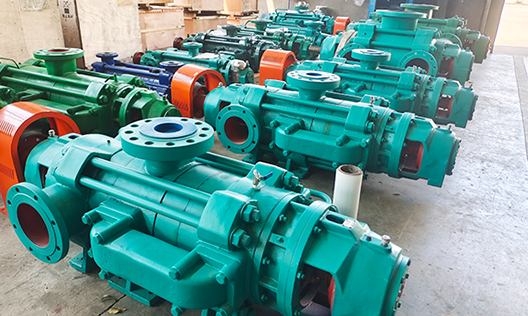
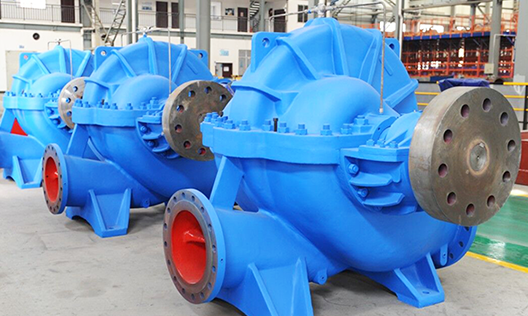
Puede fabricar 26 series de productos, incluyendo bombas de circulación para grandes centrales eléctricas, bombas de condensación para grandes centrales eléctricas, bombas petroquímicas, bombas multietapa, bombas de aguas residuales y lodo, bombas multietapa autoequilibradas, bombas de doble succión y única etapa tipo split, y bombas centrífugas de succión simple y única etapa.
-
Cases
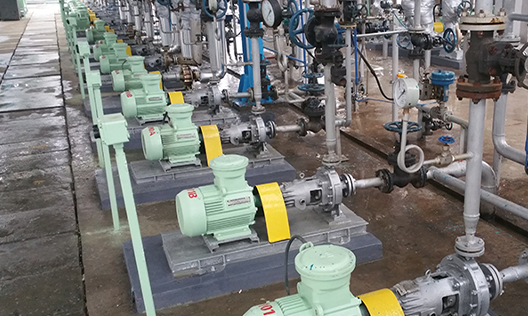
La elección de más de cientos de miles de clientes, cubriendo industrias como minería de carbón, metalurgia, química, energía, recursos hídricos, alimentos, municipalidades y protección ambiental, y exportando a Asia Sudeste, África, América y otros lugares.
-
Service
La empresa fue la primera en la industria en obtener las certificaciones internacionales del sistema de calidad ISO 9001:2008, del sistema de gestión ambiental ISO 14001 y del sistema de gestión de seguridad y salud ocupacional GB/T 28001, además de la certificación API 610 de la Asociación Estadounidense del Petróleo.
-
About us
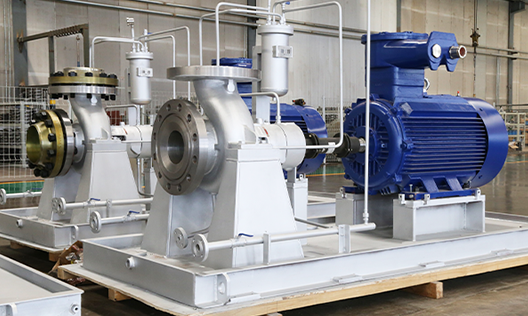
La empresa, fundada en 1989, es una empresa nacional de alta tecnología integral que integra diseño, investigación y desarrollo, fabricación y servicios; actualmente es una empresa clave en la industria china de bombas centrífugas y una de las grandes fábricas especializadas.
-

Blogs
Con productos innovadores, calidad excepcional y servicios integrales, buscamos la verdad y la pragmática, avanzamos con iniciativa, y nos esforzamos por lograr el objetivo de ser "la marca líder en el campo de aplicación de bombas centrífugas en el país"! Raigada en Hunan, orientada a todo el país y hacia el mundo!
Standardized Installation Technical Specification for Shafts and Impellers of Double-Suction Pumps (GB/T 3216-2016)
Publication Date:
2026-03-16
Author:
Source:


Changsha Zoomlion Pump Industry Based on extensive engineering practice, the technical team has developed the “Standardized Installation Technical Specification for the Shaft and Impeller of Zhongkai Double-Suction Pumps.” As a core piece of energy-efficient fluid-handling equipment, Zhongkai double-suction pumps are widely used in water conservancy, chemical processing, power generation, and other industries. The installation accuracy of the pump’s key components—the shaft and impeller—directly affects the pump’s operational efficiency, stability, and service life. The following procedure is formulated in accordance with the national standard GB/T 3216-2016 and drawing on many years of engineering experience at Changsha Zhonglian Pump Industry, with the aim of standardizing the installation process for the shaft and impeller.

I. Pre-Installation Preparation
1. Component inspection: The shaft must be inspected, Impeller 、 Bushing 、 bearing Key components shall undergo rigorous inspection to ensure there are no cracks, excessive wear, or corrosion (non-destructive testing is recommended). The surface roughness of mating surfaces must be ≤ Ra 1.6 μm, and the cleanliness level must meet ISO 4406 Class 18/15.
2. Precision Inspection: Use a laser alignment instrument to check the straightness of the shaft, with an allowable deviation of ≤0.05 mm/m; perform static balancing verification of the impeller (according to G6.3 standard, with a single-plane balance weight of ≤0.03 kg·m); and ensure that all dimensional tolerances strictly comply with the drawing requirements (e.g., the interference fit between the shaft and the impeller’s inner bore is controlled within 0.02–0.05 mm). 3. Cleaning Treatment: All metal parts shall be cleaned with anhydrous ethanol, and anti-rust agent shall be applied to the mating surfaces; non-metallic parts shall be treated with a dedicated cleaning agent.
II. Shaft and Impeller Assembly Process
1. Bushing Installation: Press-fit the bushing in accordance with the drawing requirements (hot fitting is recommended, with the heating temperature controlled between 80°C and 120°C), and secure it with a lock washer and a cotter pin for double locking.
2. Bearing Assembly: Adhere to SKF bearing housing standards, with axial clearance controlled within 0.10–0.20 mm and radial clearance precisely matched to the bearing model (e.g., for a 6314 bearing, the radial clearance is 0.03–0.06 mm); grease fill should be 1/3 to 1/2 of the bearing cavity volume (lithium-based grease L-TSA46 is recommended).
3. Impeller Installation: Using the guide sleeve for alignment, gently push the impeller onto the shaft end to ensure tight contact with the shaft shoulder (end-face runout ≤ 0.03 mm); then tighten the lock nut to a torque of 200 N·m using a torque wrench (for M30 bolts).
4. Clearance Adjustment: Radial clearance shall be matched to the specific model (e.g., 2.5–3.5 mm for the 12SH-9 type) and checked using feeler gauges; axial clearance is adjusted by modifying the bearing cover, with a total runout not exceeding 0.15 mm.
III. Key Considerations
1. Shaft Alignment: The coaxiality deviation between the motor shaft and the pump shaft shall not exceed 0.05 mm, and dynamic alignment must be performed using a laser alignment instrument (SKF TKSA41 laser alignment instrument is recommended).
2. Balance Verification: After installation, a high-speed dynamic balancing test must be performed (at 1500 r/min, vibration velocity ≤ 4.5 mm/s) using an on-site dynamic balancer (e.g., SKF Microlog).
3. Environmental Control: The cleanliness level of the installation area shall be ISO Class 5 or higher, and protection shall be provided through an air purification system and dust-proof enclosures; operations shall be avoided in environments where the dust concentration exceeds 10 mg/m³.
IV. Acceptance Criteria After Installation
1. Static Acceptance: All fastener torques shall be rechecked in accordance with GB/T 9126-2019; seal compression shall be uniform, with a deviation of no more than 0.2 mm; and a hydrostatic pressure test at 1.5 times the working pressure shall be conducted in accordance with JB/T 8097-2015, with a hold time of 30 minutes and no leakage observed.
2. Dynamic Testing: The no-load trial run shall be conducted continuously for 30 minutes, with vibration velocity not exceeding 4.5 mm/s (monitored online using vibration sensors); the loaded test shall be performed in accordance with the Q/ZL001-2023 standard, loading the pump to its design operating conditions, with monitoring parameters including flow rate (within ±2% tolerance), head (within ±3% tolerance), and efficiency (not less than 90% of the design value).
V. Long-Term Maintenance Recommendations
1. Establish operating records for the shaft and impeller, and record the vibration spectrum every 2,000 hours (with particular emphasis on monitoring the 1× and 2× frequency bands).
2. It is recommended to re-perform impeller dynamic balancing every 5,000 operating hours and to conduct a full disassembly inspection once a year.
Special Note from Changsha Zoomlion Pump Industry: Installation parameters vary among different model series (e.g., S, SH, and SA series); installation must be carried out strictly in accordance with the installation manual for the corresponding model. This solution is provided by the Changsha Zoomlion Pump Industry Technical Center and may not be used for commercial purposes without authorization.
Recommended Information


Related Products
Perhaps you also want to know?
Zoomlian Pump Industry
Address:No. 210, Environmental Protection Middle Road, Yuhua Economic Development Zone, Changsha City, Hunan Province China
All rights reserved © Changsha Zoomlian Pump Co., Ltd.
This website supports IPv4 IPv6 bidirectional access
Website construction:Zhongqi Power Changsha