

-
Products
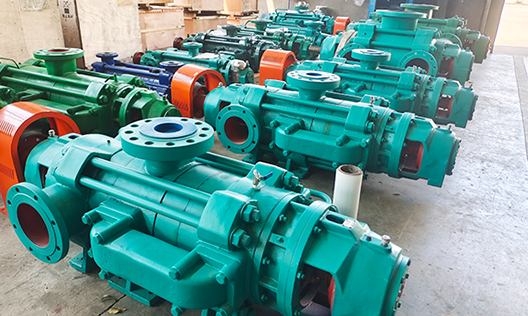
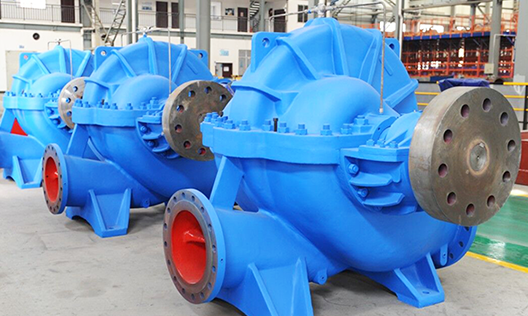
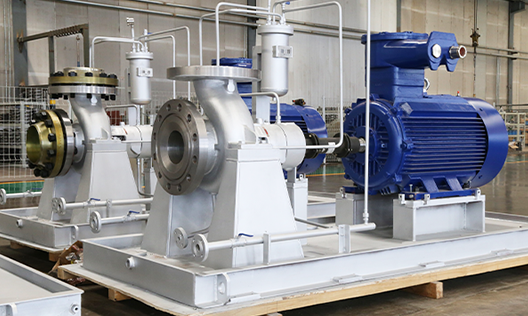
Puede fabricar 26 series de productos, incluyendo bombas de circulación para grandes centrales eléctricas, bombas de condensación para grandes centrales eléctricas, bombas petroquímicas, bombas multietapa, bombas de aguas residuales y lodo, bombas multietapa autoequilibradas, bombas de doble succión y única etapa tipo split, y bombas centrífugas de succión simple y única etapa.
-
Cases
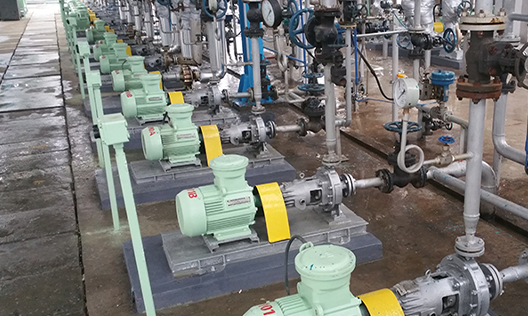
La elección de más de cientos de miles de clientes, cubriendo industrias como minería de carbón, metalurgia, química, energía, recursos hídricos, alimentos, municipalidades y protección ambiental, y exportando a Asia Sudeste, África, América y otros lugares.
-
Service
La empresa fue la primera en la industria en obtener las certificaciones internacionales del sistema de calidad ISO 9001:2008, del sistema de gestión ambiental ISO 14001 y del sistema de gestión de seguridad y salud ocupacional GB/T 28001, además de la certificación API 610 de la Asociación Estadounidense del Petróleo.
-
About us
La empresa, fundada en 1989, es una empresa nacional de alta tecnología integral que integra diseño, investigación y desarrollo, fabricación y servicios; actualmente es una empresa clave en la industria china de bombas centrífugas y una de las grandes fábricas especializadas.
-

Blogs
Con productos innovadores, calidad excepcional y servicios integrales, buscamos la verdad y la pragmática, avanzamos con iniciativa, y nos esforzamos por lograr el objetivo de ser "la marca líder en el campo de aplicación de bombas centrífugas en el país"! Raigada en Hunan, orientada a todo el país y hacia el mundo!
Some precautions for installing wear-resistant multistage centrifugal pumps for mining applications.
Publication Date:
2025-12-19
Author:
Source:


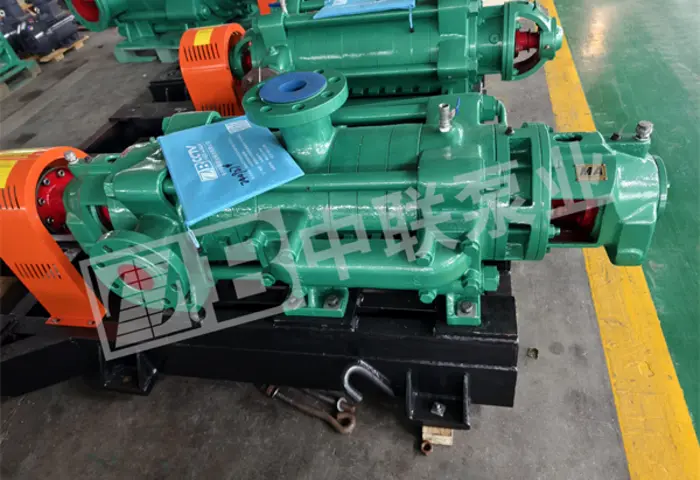
The installation quality of wear-resistant multistage centrifugal pumps for mining applications directly determines their operational efficiency, service life, and system stability. A scientific and standardized installation procedure is a prerequisite for the equipment to deliver its optimal performance. The following is from a centrifugal pump manufacturer: Changsha Zhonglian Pump Industry From three perspectives—pre-installation preparation, core installation steps, and post-installation inspection and commissioning—we provide a detailed explanation of several key considerations for installing wear-resistant multistage centrifugal pumps for mining applications. We also correct common operational misconceptions, offering valuable guidance for user organizations during pump installation.

I. Core Preparations Before Installation
1. Installation Environment and Location Confirmation: The installation area must be level, dry, and well-ventilated. It should be located away from sources of strong vibrations (such as heavy machinery) and high-temperature heat sources (such as boilers and heaters). Sufficient operational space must also be reserved to facilitate future maintenance and inspections. The installation location should avoid low-lying areas prone to water accumulation, thereby preventing the equipment from becoming damp and rusting.
2. Foundation and Supporting Infrastructure Preparation: The foundation for installation must have sufficient strength to support both the weight of the mine-resistant, wear-resistant multistage centrifugal pump itself and the vibration loads generated during operation. If necessary, vibration-damping pads or dampers can be installed to reduce the impact of vibrations on both the equipment and the foundation. Prior to installation, thoroughly clean the mounting surface to ensure it is free of debris and protrusions, thereby guaranteeing a tight fit between the base and the surface.
3. Pipeline and Interface Preprocessing: Inspect the inlet pressure pipeline, outlet pressure pipeline, and flanged connections to ensure that the pipelines are free of rust and obstructions, and that the flange sealing surfaces are smooth and undeformed. The water-inlet port must be located on the inlet pressure pipeline, approximately [distance] away from the pump body. 20cm To avoid fluctuations in the impeller speed caused by backflow, which could affect operational stability.
4. Power Supply and Cable Configuration: Based on the rated voltage and power parameters of the mine-use, wear-resistant multistage centrifugal pump, select cables that match the specifications and meet quality standards. Cable installation must comply with electrical installation codes, avoiding compression and damage to ensure wiring safety. Beforehand, verify the electrical connection diagram to clearly identify the correspondence between wiring terminals.
II. Standard Installation Procedure for Wear-Resistant Multistage Centrifugal Pumps for Mining Applications
1. Component Assembly: Assemble the pump components one by one strictly according to the equipment manual or assembly drawings. Clearly identify the locations of key parts such as the drain port, vent port, and lubrication interface, ensuring that each component is properly installed and securely connected. During assembly, take care to avoid knocking or bumping into precision components such as impellers and seals to prevent damage.
2. Equipment Positioning and Leveling: Place the assembled, wear-resistant, multistage centrifugal pump for mining applications at the pre-set installation location. Adjust the base to ensure the equipment is placed horizontally—use a spirit level to check the base’s levelness and confirm that the horizontal deviation meets the equipment’s requirements (typically ≤ 0.1mm/m ); at the same time, ensure the verticality of the pump shaft to prevent increased friction and intensified vibration during operation caused by improper installation inclination. Here, a common misconception needs to be corrected: The original statement “The base mounting surface is perpendicular to the ground” is incorrect; the actual requirement is that the base must be level and the pump shaft must be vertical.
3. Pipeline Connection Specifications: When connecting inlet and outlet pressure pipelines, ensure that the flange interfaces are parallel and horizontally aligned, with no distortion or deformation. This will prevent stress from the pipeline installation from being transferred to the pump’s connection interface. Select appropriate sealing materials (such as gaskets or O-rings), and tighten the connecting components evenly in the prescribed sequence to ensure a tight, leak-free connection. It is strictly prohibited to forcefully join the pipelines together.
4. Electrical Wiring Operation: Perform wiring according to the electrical connection diagram for the mine-use, wear-resistant multistage centrifugal pump. Adhere to the principle of "phase wires matched correctly and reliable grounding," ensuring that the wiring is neat and standardized, and that wiring terminals are securely fastened with no looseness. After completing the wiring, check the insulation performance to prevent safety hazards such as short circuits and leakage currents.
5. Pump priming and air-venting procedure: Open the shut-off valve on the inlet pressure pipeline, and fill the pump body with a clean medium (such as clear water or a suitable priming fluid that matches the pump’s intended working medium). At the same time, open the vent port to release any air trapped inside the pump until the priming fluid completely fills the pump body and no more air bubbles are expelled. Then, close the vent port. This step helps prevent vibration, abnormal noises, and damage to seals caused by dry running of the pump.
6. Predefined operating parameters: Adjust the frequency of the inverter or set an appropriate rotational speed via the gearbox according to actual operating conditions, ensuring that the motor’s operating parameters match the pump’s rated parameters and avoiding excessively high or low water flow velocities that could compromise operational efficiency.
III. Comprehensive Inspection and Commissioning After Installation
1. Appearance and Connection Inspection: Recheck the overall installation of the pump body, ensuring that the base is securely fastened and that its horizontal and vertical alignment meet the required specifications. Inspect each pipeline connection and component joint one by one to confirm that there is no looseness and no leakage. Pay particular attention to the installation status of critical components such as bearings and seals, making sure that sufficient grease has been applied and that seals are tightly fitted.
2. No-load trial run: Connect the power supply and perform a no-load test. Observe whether the motor rotates smoothly, without any abnormal noises or severe vibrations. Check whether there are any leaks at the pump body’s sealing areas, and verify that the bearing temperature is within the normal range (typically ≤ 75 ℃). If unusual noises or excessive vibrations occur, the machine must be stopped immediately for inspection and troubleshooting; operation with faults is strictly prohibited.
3. System Pressure and Flow Testing: Start up the system for loaded commissioning, and use smart instruments to record key data such as valve switch status, water flow rate, and inlet and outlet pressures. During the testing process, closely monitor the equipment’s operating condition, checking for any abnormal noises, increased vibrations, or rapid temperature rises. If any issues are detected, immediately stop the system and address them.
4. Electrical System Verification: Check whether cable connections are correct, and whether there are any signs of overheating or insulation damage. Confirm that the grounding system is reliable and that all electrical parameters meet the equipment’s operational requirements.
Key Considerations and Misconception Corrections
1. Misconceptions about Levelness and Verticality: Some installers confuse “base vertical” with “pump shaft vertical.” The correct requirement is that the base must be level and the pump shaft must be vertical. Together, these conditions ensure uniform force distribution during equipment operation, thereby reducing wear and tear.
2. Misconceptions in priming operations: Failing to completely remove air during priming can cause the pump to run dry, damaging seals and impellers. It is essential to ensure that the pump casing is fully filled with the priming liquid and all air bubbles are expelled.
3. Misconceptions about pipe connections: Forcefully joining pipes can create installation stresses, which over time may lead to interface leaks and pump body deformation. It is essential to ensure that flanges are naturally aligned and to eliminate stress by adjusting the pipe positions.
By following the above specifications when installing wear-resistant multistage centrifugal pumps for mining applications, you can effectively reduce the incidence of operational failures, improve equipment efficiency, and extend its service life. For further details on equipment application scenarios, selection of installation tools, and other related matters, please feel free to contact us at 15616442288 (WeChat number is the same). Our company can also arrange for our technical staff to provide on-site installation guidance for our customers.
Recommended Information


Related Products
Perhaps you also want to know?
Zoomlian Pump Industry
Address:No. 210, Environmental Protection Middle Road, Yuhua Economic Development Zone, Changsha City, Hunan Province China
All rights reserved © Changsha Zoomlian Pump Co., Ltd.
This website supports IPv4 IPv6 bidirectional access
Website construction:Zhongqi Power Changsha