

-
Products
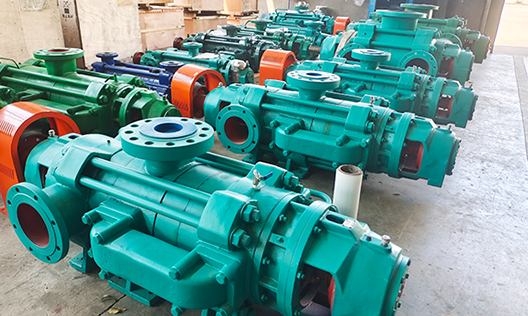
Puede fabricar 26 series de productos, incluyendo bombas de circulación para grandes centrales eléctricas, bombas de condensación para grandes centrales eléctricas, bombas petroquímicas, bombas multietapa, bombas de aguas residuales y lodo, bombas multietapa autoequilibradas, bombas de doble succión y única etapa tipo split, y bombas centrífugas de succión simple y única etapa.
-
Cases
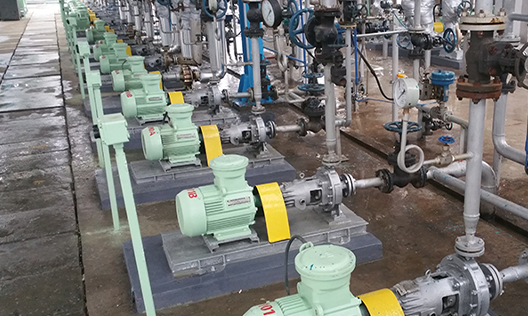
La elección de más de cientos de miles de clientes, cubriendo industrias como minería de carbón, metalurgia, química, energía, recursos hídricos, alimentos, municipalidades y protección ambiental, y exportando a Asia Sudeste, África, América y otros lugares.
-
Service
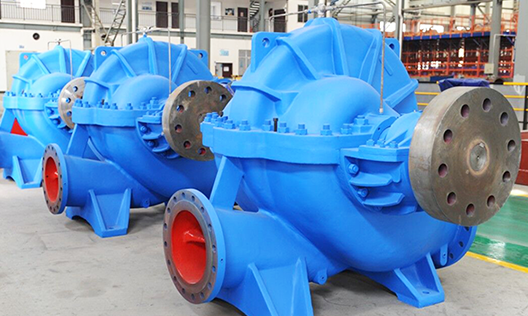
La empresa fue la primera en la industria en obtener las certificaciones internacionales del sistema de calidad ISO 9001:2008, del sistema de gestión ambiental ISO 14001 y del sistema de gestión de seguridad y salud ocupacional GB/T 28001, además de la certificación API 610 de la Asociación Estadounidense del Petróleo.
-
About us
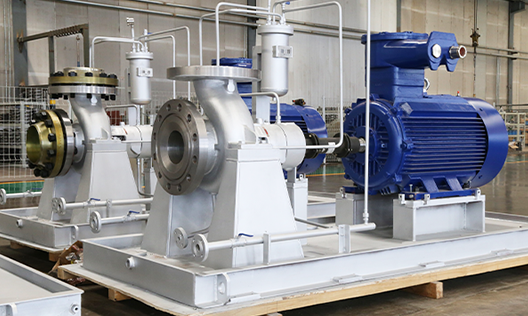
La empresa, fundada en 1989, es una empresa nacional de alta tecnología integral que integra diseño, investigación y desarrollo, fabricación y servicios; actualmente es una empresa clave en la industria china de bombas centrífugas y una de las grandes fábricas especializadas.
-

Blogs
Con productos innovadores, calidad excepcional y servicios integrales, buscamos la verdad y la pragmática, avanzamos con iniciativa, y nos esforzamos por lograr el objetivo de ser "la marca líder en el campo de aplicación de bombas centrífugas en el país"! Raigada en Hunan, orientada a todo el país y hacia el mundo!
Technical Principles and Necessity of Dynamic Balancing Inspection for Horizontal Multistage Pump Rotors
Publication Date:
2025-12-18
Author:
Source:


Dynamic balancing inspection of horizontal multistage pump rotors is a critical quality-control step in the manufacturing process of pump equipment. This inspection is performed using a specialized dynamic balancer: the pump rotor—comprising components such as impellers and shafts—is securely mounted on the balancer. By rotating the rotor, vibration signals are measured to precisely determine the magnitude and phase of any imbalance. Subsequently, balance weights are added or removed to adjust the mass distribution, ensuring that the rotor's center of gravity coincides with the axis of rotation. In this article, a manufacturer of multistage pumps... Changsha Zhonglian Pump Industry The technical principles and necessity of dynamic balancing inspection for horizontal multistage pump rotors will be introduced.

According to ISO1940-1 According to the standard “Requirements for Balancing Mass of Rotating Machinery,” the rotor of a horizontal multistage pump must undergo dynamic balancing tests to ensure stable operation of the equipment under rated conditions. The following outlines the necessity and technical basis for rotor dynamic balancing tests:
1. Manufacturing Process Precision Control
During the manufacturing and assembly of pump rotors, it is difficult to achieve ideal symmetry in mass distribution due to factors such as material homogeneity, machining errors, and assembly deviations. Dynamic balancing tests can accurately quantify the amount of imbalance, ensuring that the manufacturing quality meets design specifications and preventing premature failure caused by imbalance.
2. Balancing accuracy standard matching
According to the pump’s operating speed (typically 1480-2950r/min ) and application conditions, the corresponding balance grade must be selected (e.g., G6.3 or G2.5 ). ISO1940-1 The standard clearly specifies the balance accuracy levels that must be achieved at different rotational speeds, and dynamic balancing inspection is a crucial method for verifying compliance with the standard.
3. Extend the service life of equipment
A rotor that has not undergone dynamic balancing will generate periodic vibrations when rotating at high speeds, leading to accelerated wear of critical components such as bearings and seals. According to industry data, the service life of bearings in rotors that have not been balanced can be significantly shortened. 30%-50% Through dynamic balancing, vibration levels can be significantly reduced, thereby extending the service life of the pump unit.
4. Reduce vibration and noise levels
The centrifugal force generated by an unbalanced rotor undergoes periodic variations during rotation, leading to increased equipment vibration and noise. Dynamic balancing ensures that the rotor's center of gravity coincides with the axis of rotation, effectively eliminating the source of vibration and improving the operating environment, in compliance with... GB/T29531 Standard requirements for “Methods for Vibration Measurement and Evaluation of Pumps.”
5. Improve operational efficiency
An unbalanced rotor consumes additional energy to overcome vibration and friction, thereby reducing the pump’s efficiency. Measured data show that after dynamic balancing, the pump unit’s efficiency can be improved. 1.5%–3.0% This not only saves operating costs but also complies with the national “Minimum Energy Efficiency Values and Energy Efficiency Grades for Pumps.” (GB19762) Energy-saving requirements.
6. Meet industry regulatory requirements
According to GB/T5656 Technical Specifications for Centrifugal Pumps and API610 According to the standard “Centrifugal Pumps for the Petroleum, Petrochemical, and Natural Gas Industries,” the rotor of horizontal multistage pumps must undergo dynamic balancing tests. This is a mandatory quality inspection item that must be carried out before pumps leave the factory, ensuring that the equipment maintains stable performance during long-term operation.
Changsha Zhonglian Pump Industry strictly adheres to dynamic balancing inspection standards during the manufacturing of horizontal multistage pumps, ensuring that the rotor balance accuracy of each pump meets the required specifications. G6.3 or higher (depending on rotational speed and application requirements), ensuring that the product delivers high reliability, low vibration levels, and a long service life in actual operation. Through professional dynamic balancing treatments, we provide customers with pump units that meet international standards and offer stable performance, effectively reducing equipment maintenance costs and minimizing the risk of downtime for our clients.
Previous:
Recommended Information


Related Products
Perhaps you also want to know?
Zoomlian Pump Industry
Address:No. 210, Environmental Protection Middle Road, Yuhua Economic Development Zone, Changsha City, Hunan Province China
All rights reserved © Changsha Zoomlian Pump Co., Ltd.
This website supports IPv4 IPv6 bidirectional access
Website construction:Zhongqi Power Changsha