

-
Products
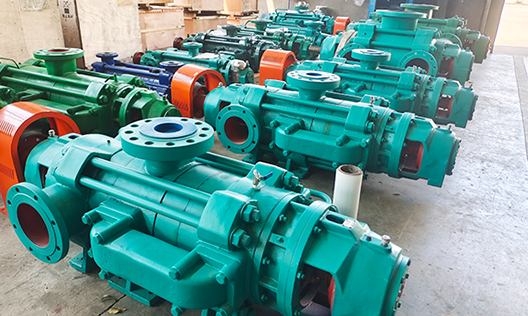
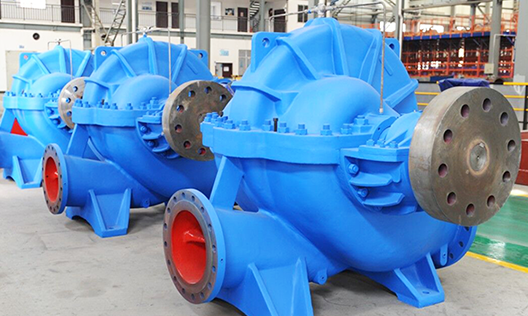
Puede fabricar 26 series de productos, incluyendo bombas de circulación para grandes centrales eléctricas, bombas de condensación para grandes centrales eléctricas, bombas petroquímicas, bombas multietapa, bombas de aguas residuales y lodo, bombas multietapa autoequilibradas, bombas de doble succión y única etapa tipo split, y bombas centrífugas de succión simple y única etapa.
-
Cases
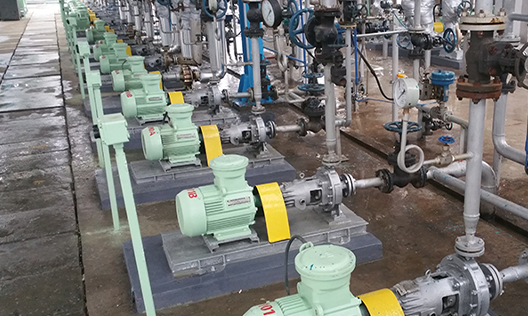
La elección de más de cientos de miles de clientes, cubriendo industrias como minería de carbón, metalurgia, química, energía, recursos hídricos, alimentos, municipalidades y protección ambiental, y exportando a Asia Sudeste, África, América y otros lugares.
-
Service
La empresa fue la primera en la industria en obtener las certificaciones internacionales del sistema de calidad ISO 9001:2008, del sistema de gestión ambiental ISO 14001 y del sistema de gestión de seguridad y salud ocupacional GB/T 28001, además de la certificación API 610 de la Asociación Estadounidense del Petróleo.
-
About us
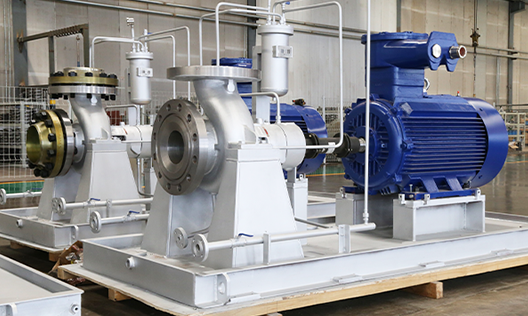
La empresa, fundada en 1989, es una empresa nacional de alta tecnología integral que integra diseño, investigación y desarrollo, fabricación y servicios; actualmente es una empresa clave en la industria china de bombas centrífugas y una de las grandes fábricas especializadas.
-

Blogs
Con productos innovadores, calidad excepcional y servicios integrales, buscamos la verdad y la pragmática, avanzamos con iniciativa, y nos esforzamos por lograr el objetivo de ser "la marca líder en el campo de aplicación de bombas centrífugas en el país"! Raigada en Hunan, orientada a todo el país y hacia el mundo!
How to Select Valves for Chemical Pumps? A Comprehensive Guide to Valve Selection for Chemical Pumps: Systematic Selection Principles Based on Process Conditions
Publication Date:
2025-12-23
Author:
Source:


The selection of chemical pump valves is directly related to the safety, stability, and operational efficiency of chemical production. The core principle is to achieve precise matching based on the specific operating conditions, thereby avoiding failures such as leakage, wear, and blockage caused by improper valve selection. In this article, a chemical pump manufacturer... Changsha Zhonglian Pump Industry Combining practical scenarios from the chemical industry, we’ll break down from key dimensions: exactly how should we select valves for chemical pumps?

The core of selecting valves for chemical pumps revolves around ensuring proper matching to the operating conditions. The first step in operational condition analysis is to clearly define the characteristics of the medium—this forms the foundation for all subsequent selection decisions. The corrosivity of the medium is the primary factor guiding material selection: for highly corrosive media (such as strong acids, strong bases, and organic solvents), valves made of corrosion-resistant alloys like Hastelloy or Monel alloy should be prioritized, or... PTFE Valves with lined or ceramic-sealed designs prevent corrosion of metallic materials, thereby avoiding sealing failure. For neutral media (such as clean water or lubricating oil), carbon steel or stainless steel valves can be selected, offering a good balance between cost-effectiveness and practicality. At the same time, it’s important to pay attention to the viscosity and solid content of the medium: for high-viscosity media (such as thick slurries), ball valves or butterfly valves with low flow resistance should be chosen to avoid stagnation caused by narrow flow passages in gate valves or globe valves. For media containing solid particles, valves made of wear-resistant materials (such as hard alloy seals) with straight-through flow paths should be used to minimize particle accumulation, reduce wear and blockage, and extend service life.
After determining the appropriate material for the medium, the working pressure and temperature become the key parameters that constrain the structural strength and sealing performance of the valve. These parameters must be precisely matched to avoid operational risks. The valve’s rated pressure must be no lower than the working pressure of the chemical pump. 1.2 times, while also taking into account the pressure fluctuation coefficient, under high-pressure operating conditions ( PN ≥ 16MPa ) Preferentially select gate valves and globe valves, as their valve stems and sealing structures are better suited for high-pressure environments; low-pressure operating conditions ( PN ≤ 6MPa ) Butterfly valves and ball valves are available options, balancing ease of installation with flow efficiency. Regarding temperature compatibility, valves with appropriate temperature resistance ratings must be selected based on the operating temperature of the medium: for low-temperature conditions (≤ -20 ℃) Low-temperature steel or stainless steel valves must be selected to prevent material embrittlement; medium-temperature service conditions ( -20 Celsius ~450 ℃) Carbon steel or chrome-molybdenum steel valves can be selected; high-temperature service conditions (≥ 450 ℃) High-temperature alloy valves must be selected, and attention should also be paid to the temperature resistance of sealing packing materials to prevent leakage at high temperatures. It is important to note here that... CV The flow coefficient is a key parameter for matching flow requirements, representing the valve’s capacity to pass fluid under a specific pressure differential. It must be calculated based on the design flow rate of the chemical pump to avoid... CV Excessive or insufficient values lead to inadequate flow regulation accuracy.
After resolving the issue of material and parameter compatibility, the valve’s functionality must align with the operational requirements of the chemical pump. Different operating scenarios place varying demands on the valve’s opening and closing characteristics and control precision. If precise flow regulation is required—for instance, in feed control for reaction vessels—regulating valves (such as sleeve-type or eccentric rotary valves) should be selected. These valves feature a long adjustment stroke and smooth flow-characteristic curves, enabling accurate control under different load conditions. If the primary purpose is to completely shut off the medium flow—for example, during equipment maintenance—the use of globe valves or gate valves is recommended, as they offer excellent sealing performance and can achieve complete shut-off. For applications involving frequent on-off cycles—such as intermittent production—ball valves are the preferred choice due to their rapid opening and closing speeds, minimal wear, and longer service life. In negative-pressure applications or when handling volatile media, valves with high-sealing-performance ratings should be selected (such as...). API6D Standard metal hard-sealed valves can effectively reduce the risk of medium leakage.
When selecting valves, it’s not only crucial to meet operational requirements; installation space and ease of subsequent maintenance also significantly impact long-term operating costs. Therefore, these factors must be carefully considered in conjunction with site-specific conditions. In situations where the on-site installation space is limited, compact butterfly valves or ball valves are ideal choices, as they occupy minimal space and are relatively easy to install. If the valve installation location is high or access for maintenance is inconvenient, valves equipped with manual operating mechanisms or electric actuators should be selected to reduce labor costs associated with maintenance. Additionally, attention should be paid to the ease of replacing vulnerable components. It’s advisable to prioritize models with standardized parts and seals that are easy to disassemble, thereby minimizing both the time and financial investment required for future maintenance.
Finally, all selection options must comply with relevant standards and safety regulations for the chemical industry—this is a fundamental prerequisite for ensuring stable equipment operation and production safety. Chemical production must adhere to: GB/T、 API 、 ANSI Comply with relevant standards to ensure that the design, manufacturing, and inspection of valves meet industry requirements. For media that are toxic, flammable, or explosive, valves with fire-resistant and anti-static structures must be selected, and these valves should also be equipped with emergency shut-off functions to satisfy safety protection requirements. In addition, when selecting valves, it is essential to take into account the enterprise’s actual production processes and ensure coordination with the models of chemical pumps and pipeline layouts, thereby avoiding operational failures caused by mismatches between valves, pump bodies, and pipelines.
In summary, the selection of chemical pump and valve models requires establishing a complete logical chain—“medium characteristics → parameter matching → functional adaptation → installation and maintenance → compliance with standards.” Each stage must involve precise decision-making based on actual operating conditions. Only by achieving comprehensive, multi-dimensional adaptation can we ensure the continuous and stable operation of chemical production while reducing operational risks and maintenance costs.
Previous:
Recommended Information


Related Products
Perhaps you also want to know?
Zoomlian Pump Industry
Address:No. 210, Environmental Protection Middle Road, Yuhua Economic Development Zone, Changsha City, Hunan Province China
All rights reserved © Changsha Zoomlian Pump Co., Ltd.
This website supports IPv4 IPv6 bidirectional access
Website construction:Zhongqi Power Changsha