

-
Products
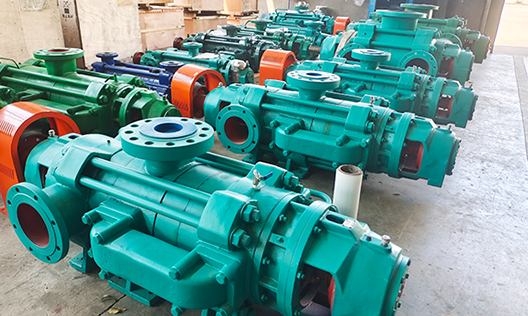
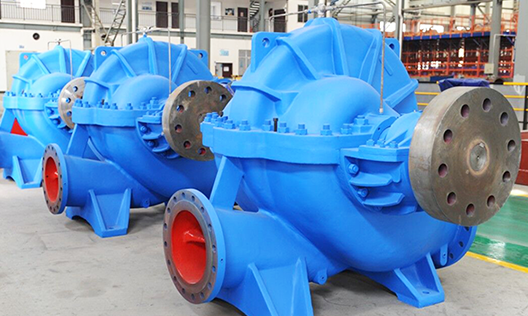
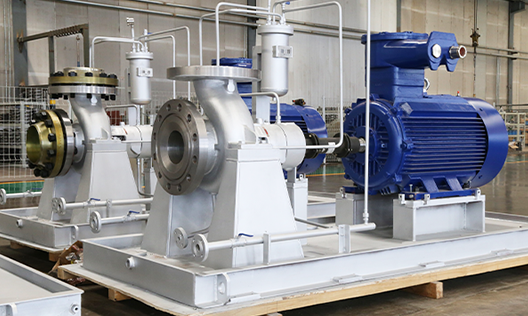
Puede fabricar 26 series de productos, incluyendo bombas de circulación para grandes centrales eléctricas, bombas de condensación para grandes centrales eléctricas, bombas petroquímicas, bombas multietapa, bombas de aguas residuales y lodo, bombas multietapa autoequilibradas, bombas de doble succión y única etapa tipo split, y bombas centrífugas de succión simple y única etapa.
-
Cases
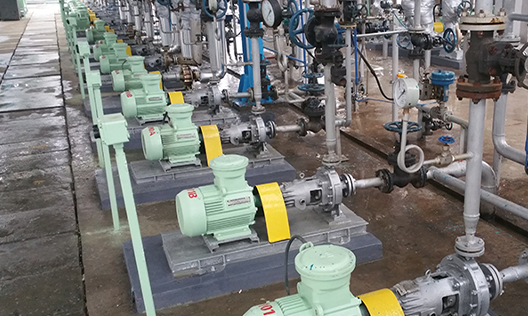
La elección de más de cientos de miles de clientes, cubriendo industrias como minería de carbón, metalurgia, química, energía, recursos hídricos, alimentos, municipalidades y protección ambiental, y exportando a Asia Sudeste, África, América y otros lugares.
-
Service
La empresa fue la primera en la industria en obtener las certificaciones internacionales del sistema de calidad ISO 9001:2008, del sistema de gestión ambiental ISO 14001 y del sistema de gestión de seguridad y salud ocupacional GB/T 28001, además de la certificación API 610 de la Asociación Estadounidense del Petróleo.
-
About us
La empresa, fundada en 1989, es una empresa nacional de alta tecnología integral que integra diseño, investigación y desarrollo, fabricación y servicios; actualmente es una empresa clave en la industria china de bombas centrífugas y una de las grandes fábricas especializadas.
-

Blogs
Con productos innovadores, calidad excepcional y servicios integrales, buscamos la verdad y la pragmática, avanzamos con iniciativa, y nos esforzamos por lograr el objetivo de ser "la marca líder en el campo de aplicación de bombas centrífugas en el país"! Raigada en Hunan, orientada a todo el país y hacia el mundo!
How does pipe length affect the selection of a centrifugal pump?
Publication Date:
2026-02-05
Author:
Source:


When selecting a centrifugal pump, many users clearly specify the flow rate and head—but strangely enough, they tend to overlook the pipeline length. As a result, after the pump is installed, either it fails to draw water at all, or the motor overheats, or even breaks down shortly after use. The root of all these problems lies precisely in the “carelessly neglected” pipeline. In fact, pipeline length directly determines the magnitude of resistance to fluid flow, which in turn affects the pump’s head, power, and efficiency. Even a single omitted calculation during the selection process can lead to serious pitfalls. In this article, Centrifugal pump Manufacturer Changsha Zoomlion Pump Industry Let’s explain in simple terms how pipe length affects the selection of a centrifugal pump.

First, the longer the pipeline, the greater the “frictional loss.” As fluid flows through a pipe, it experiences friction against the pipe walls. The longer the pipe, the more frequent this friction becomes, and the greater the resistance—this is known as “frictional resistance along the pipe.” For example, when selecting a pump with a certain head... 30m The pump, if the pipeline only... 50 Rice, the resistance may only account for 3m ; but the pipeline extends to 300 Rice, resistance could surge to 10m As mentioned above, the effective head available for actual use is insufficient, so naturally, the water cannot be drawn up. Therefore, when selecting equipment, it’s essential to calculate the resistance based on the actual pipeline length and then add an additional margin. 10%-15% Only the excess head is reliable.
Second, local resistances can “make matters worse.” In addition to length, bends, valves, and fittings in a pipeline also increase resistance—and their effects are compounded with the pipeline’s length. For example: 100 Meter pipeline plus 3 One bend, the resistance is equivalent to an increase. 50 Meter pipelines—when the valve is partially closed, the resistance doubles. That’s also why, for pipelines of the same length, some users have no problems, while others constantly run into failures—simply because local fittings weren’t factored in.
Moreover, the motor power needs to be “upgraded” accordingly. As resistance increases, the pump has to expend more energy to overcome it, leading to an inexplicable increase in the motor’s load. If the motor is selected based on ideal operating conditions, but the actual pipeline turns out to be excessively long, causing resistance to exceed the allowable limit, the motor will be overloaded for extended periods—resulting, at best, in overheating and, at worst, in motor burnout. For example, originally the motor was selected... 7.5kW If the pipeline resistance exceeds expectations, the motor may need to be replaced. 11kW Just enough.
Finally, efficiency and stability will be “compromised.” Centrifugal pumps have a fixed range of highly efficient operation. If the pipeline length is inappropriate, leading to an imbalance in resistance, the pump’s operating point will shift away from the efficient zone. This not only increases energy consumption but also causes increased vibration and noise, thereby shortening the pump’s service life.
The selection recommendation is simple: First, calculate the total actual pipe length; then, count the number of elbows and valves (you can ask the manufacturer to help you calculate the local resistance); finally, determine the required head based on these calculations. = Actual head under operating conditions + Pipe resistance + For “excess head” selection, the motor power must also be matched accordingly. If you’re unsure how to calculate your pipeline length or would like to precisely match the centrifugal pump model, feel free to call directly. 15616442288 (WeChat same number) Contact us to get a free selection proposal. We’ll carefully calculate each resistance based on the specific operating conditions, helping you avoid common pitfalls in equipment selection.
Previous:
Recommended Information


Related Products
Perhaps you also want to know?
Zoomlian Pump Industry
Address:No. 210, Environmental Protection Middle Road, Yuhua Economic Development Zone, Changsha City, Hunan Province China
All rights reserved © Changsha Zoomlian Pump Co., Ltd.
This website supports IPv4 IPv6 bidirectional access
Website construction:Zhongqi Power Changsha