

-
Products
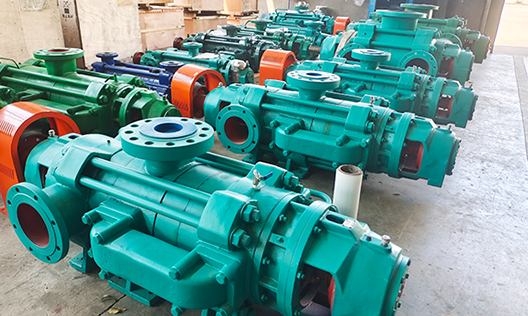
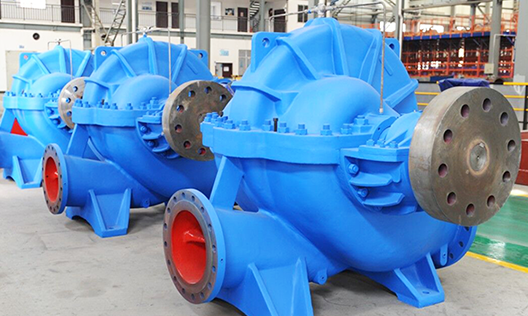
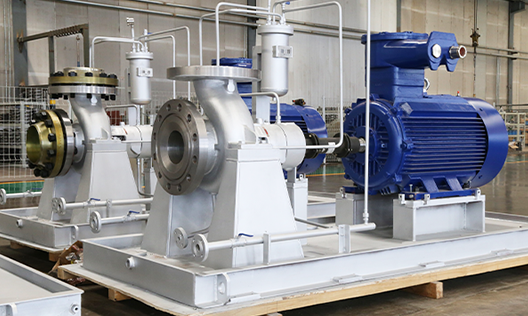
Puede fabricar 26 series de productos, incluyendo bombas de circulación para grandes centrales eléctricas, bombas de condensación para grandes centrales eléctricas, bombas petroquímicas, bombas multietapa, bombas de aguas residuales y lodo, bombas multietapa autoequilibradas, bombas de doble succión y única etapa tipo split, y bombas centrífugas de succión simple y única etapa.
-
Cases
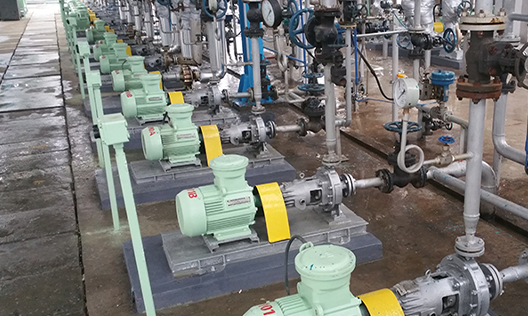
La elección de más de cientos de miles de clientes, cubriendo industrias como minería de carbón, metalurgia, química, energía, recursos hídricos, alimentos, municipalidades y protección ambiental, y exportando a Asia Sudeste, África, América y otros lugares.
-
Service
La empresa fue la primera en la industria en obtener las certificaciones internacionales del sistema de calidad ISO 9001:2008, del sistema de gestión ambiental ISO 14001 y del sistema de gestión de seguridad y salud ocupacional GB/T 28001, además de la certificación API 610 de la Asociación Estadounidense del Petróleo.
-
About us
La empresa, fundada en 1989, es una empresa nacional de alta tecnología integral que integra diseño, investigación y desarrollo, fabricación y servicios; actualmente es una empresa clave en la industria china de bombas centrífugas y una de las grandes fábricas especializadas.
-

Blogs
Con productos innovadores, calidad excepcional y servicios integrales, buscamos la verdad y la pragmática, avanzamos con iniciativa, y nos esforzamos por lograr el objetivo de ser "la marca líder en el campo de aplicación de bombas centrífugas en el país"! Raigada en Hunan, orientada a todo el país y hacia el mundo!
Professional Selection Method for Chemical Pump Mechanical Seal Flush Systems
Publication Date:
2026-02-03
Author:
Source:


As the core sealing component of chemical pumps, the operational stability of mechanical seals directly determines the equipment’s continuous operation efficiency. The scientific selection of flushing schemes is crucial for preventing failures such as mechanical seal wear, leakage, and burnout. According to industrial operations and maintenance data, approximately... 70% The failure of mechanical seals stems from a mismatch between the flushing scheme and operating conditions. In this article, the chemical pump manufacturer... Changsha Zhonglian Pump Industry Will be combined API682 The latest revised version of the shaft seal system standard provides a systematic breakdown of the professional selection method for chemical pump mechanical seal flushing schemes, covering three aspects: operational condition adaptation logic, technical details of the proposed solutions, and practical operational precautions.

I. Core Functional Positioning of the Flushing Plan
The essence of flushing the mechanical seal of a chemical pump is to achieve “triple protection” through fluid circulation: First, it removes the heat generated by friction on the sealing end faces, keeping the temperature of the sealing cavity ≤. 100 ℃ (may be relaxed for special operating conditions) 120 ℃); second, remove impurities from the sealing surfaces to prevent particle abrasion or crystallization-induced blockage; third, maintain stable pressure within the sealing cavity to prevent medium leakage or air ingress. The core differences among various flushing schemes lie in the “medium source,” “circulation method,” and “auxiliary functions.” When selecting a flushing scheme, it is crucial to precisely match it with the operating conditions and parameters.
II. Based on API682 Standard Solution Selection System
(1) Internal Irrigation Protocol ( Plan11/13/14 ): Preferred for normal operating conditions
Internal flushing directly uses the medium conveyed by a pump as the flushing fluid. The system has a simple structure and low operation and maintenance costs, making it suitable for applications involving clean, non-corrosive media with solid content below. 0.1% The medium (such as clear water, glycerol, or light hydrocarbons).
Plan11 (In-channel single-flow flushing): The most basic internal flushing scheme, which achieves medium circulation via a bypass line connecting the pump outlet to the seal chamber, requiring no additional power. Applicable conditions: Temperature 20 Celsius ~120 ℃, pressure ≤ 1.6MPa , rotational speed ≤ 3600r/min Precautions: A throttling orifice plate must be installed on the bypass line to control the flushing flow rate. 515L/min Avoid excessive medium flow velocity that could cause impact wear on the sealing surfaces.
Plan13 (Internal flushing with filtration): In Plan11 Add a filter based on the existing foundation (filtration accuracy ≤ 25 mu m ), suitable for applications where the medium contains trace amounts of soft impurities (such as fibers or colloids), helping to extend the service life of the sealing surfaces. 30% The above.
Plan14 (Reverse Internal Flush): The flushing fluid flows in a reverse direction—from the sealing chamber toward the pump chamber. This method is suitable for media containing a small amount of settleable particles (such as low-concentration slurries) and can effectively prevent particle deposition on the sealing surfaces.
(2) External Flushing Plan ( Plan21/23/24 ): Adaptation to special operating conditions
External flushing uses a flushing fluid that is independent of the conveyed medium (but must be compatible with the medium). It is suitable for high-temperature, particulate-containing, and highly corrosive operating conditions. Its key advantage is enhanced protection.
Plan21 (External Cooling and Flushing): The sealing cavity is cooled indirectly by an external cooling water source (such as circulating water); the flushing fluid does not come into contact with the medium. Applicable conditions: Medium temperature 120 Celsius ~350 ℃ (e.g., heat transfer oil, high-temperature steam condensate), pressure ≤ 2.5MPa Technical key point: The heat exchange area of the cooler must be selected based on heat calculations to ensure that the temperature of the sealed cavity is reduced to... 80 Below ℃.
Plan23 (Gas External Purging): Uses dry nitrogen or an inert gas as the purging medium, employing a blow-through method to isolate the sealing surfaces from the process medium. Applicable scenarios: The medium contains hard particles (including solid content). 0.1%~1% ) Easily crystallizable or strongly oxidizing substances (such as concentrated nitric acid and chlorine gas) can be used to avoid secondary contamination or crystallization blockage caused by liquid flushing. Key parameter: The gas pressure must be higher than the pressure in the sealing chamber. 0.05–0.1 MPa , traffic control is in 3~8 meters ³ /h。
Plan24 (Liquid External Flushing): Use a cleaning liquid compatible with the medium (such as demineralized water or dedicated flushing oil) and inject it into the sealing cavity via a pressurized pump. Suitable for highly corrosive media (such as concentrated hydrochloric acid or hydrofluoric acid) or media containing solids at concentrations exceeding... 1% Under these operating conditions, the flushing fluid must be replaced regularly to ensure cleanliness.
(3) Isolation / Buffered flushing scheme ( Plan32/52/53 ): Essential for high-risk operating conditions
This type of solution is suitable for toxic, flammable and explosive, highly toxic, or valuable media (such as methanol, benzene, and liquid ammonia). By using a barrier fluid to create double protection, it achieves the goal of zero leakage.
Plan32 (High-pressure isolation flushing): A high-pressure cleaning medium (immiscible with the conveyed medium) is injected into the isolation chamber of a double-end-face seal, at a pressure higher than that in the sealing chamber. 0.1–0.2 MPa Prevent the medium from coming into contact with the sealing surface. Applicable conditions: The medium is toxic, highly corrosive, or the pressure exceeds... 2.5MPa High-pressure operating conditions.
Plan52 (Atmospheric Buffer Rinse): The isolation chamber is filled with a buffer liquid (such as an ethylene glycol solution), which circulates by relying on the pressure differential created by the seal itself. This method is suitable for negative-pressure or low-pressure operating conditions (pressure ≤ 0.6MPa ), with low maintenance costs, suitable for small- and medium-sized chemical pumps.
Plan53 (Pressurized Buffer Rinse): Maintain the isolation fluid pressure using a fluid replenishment tank or a pressurized pump, suitable for high-pressure applications (> 4.0MPa )、high temperature (> 250 ℃) or highly volatile media can be paired with a pressure monitoring device to achieve automatic liquid replenishment, offering even greater stability.
III. Key Selection Parameters and Practical Operation Principles
1. Media characteristic priority: Solid content, corrosivity, and crystallization tendency are the primary criteria for assessment—solid content > 1% Directly exclude internal flushing; for highly corrosive media, prioritize isolation flushing; for media prone to crystallization, pair with a heating jacket. + Gas purging.
2. Operating condition parameter matching: Temperature > 120 ℃ must take cooling function into account ( Plan21/53 ), pressure > 1.6MPa Priority double-end face seal + Pressurized flushing, rotation speed > 3600r/min The flushing flow rate needs to be increased (compared to normal operating conditions). 30% ).
3. Seal Type Coordination: Single-face seals are suitable for either internal flushing or simple external flushing. Plan11/21 ), double-end face seals must be used in conjunction with a barrier. / Buffer flush ( Plan32/52/53 ), dry gas seals are only suitable for external gas flushing ( Plan23 ).
4. Compatibility Principle: The flushing fluid and the conveyed medium must meet the requirements of “non-miscibility, non-reactivity, and non-contamination.” For example, avoid using alkaline flushing fluids with acidic media, and when dealing with organic solvent-based media, select a compatible flushing oil of the same type.
5. Economic suitability: Conventional cleaning media should be preferred. Plan11 (Cost is minimized), and special operating conditions avoid “over-sizing”—for example, in the case of mildly corrosive media under normal temperature and pressure. Plan24 This is sufficient to meet your needs—no need to choose blindly. Plan53。
IV. Common Selection Pitfalls and Their Corrections
Misconception 1 “High-end solutions are more reliable”—for example, when selecting materials for cleaning ambient-temperature media. Plan53 , leading to doubled costs and complex operations and maintenance, in practice Plan11 This can meet the demand.
Misconception 2 Ignore the control of rinse liquid pressure—pressure lower than the seal chamber pressure can cause media backflow, while pressure higher than... 0.2MPa The above can easily cause impact damage to the sealing surfaces; precise control of the pressure differential is required. 0.05–0.15 MPa It's crucial.
Misconception 3 For solid-containing media, use internal flushing—particles will directly erode the sealing end face. The correct approach is to select... Plan23 (Gas purging) or Plan32 (High-voltage isolation).
The core of selecting a flushing scheme for mechanical seals in chemical pumps is “matching the operating conditions.” + "Implementing the standard," requires... API682 The assessment is based on standards and takes into account core parameters such as medium, pressure, and temperature for a comprehensive evaluation. For complex operating conditions—such as those involving multiple parameters or special media—we recommend collaborating with the pump manufacturer’s technical team to develop customized solutions, thereby avoiding seal failure caused by improper selection. Leveraging its many years of experience in chemical pump operation and maintenance, Zhonglian Pump Industry can provide end-to-end technical support—from condition surveys to solution optimization—helping enterprises reduce equipment failure rates.
Recommended Information


Related Products
Perhaps you also want to know?
Zoomlian Pump Industry
Address:No. 210, Environmental Protection Middle Road, Yuhua Economic Development Zone, Changsha City, Hunan Province China
All rights reserved © Changsha Zoomlian Pump Co., Ltd.
This website supports IPv4 IPv6 bidirectional access
Website construction:Zhongqi Power Changsha