

-
Products
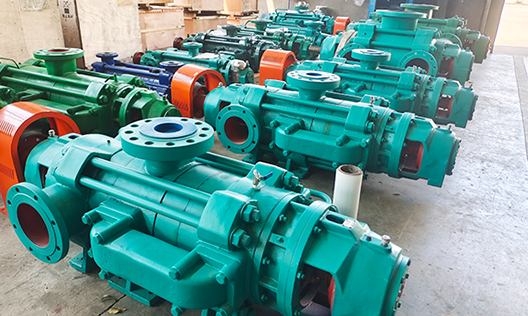
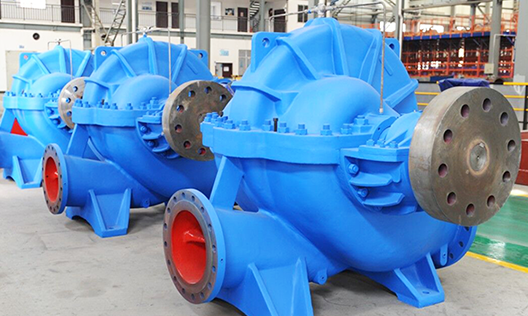
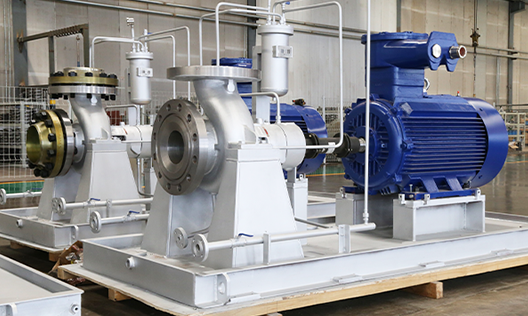
Puede fabricar 26 series de productos, incluyendo bombas de circulación para grandes centrales eléctricas, bombas de condensación para grandes centrales eléctricas, bombas petroquímicas, bombas multietapa, bombas de aguas residuales y lodo, bombas multietapa autoequilibradas, bombas de doble succión y única etapa tipo split, y bombas centrífugas de succión simple y única etapa.
-
Cases
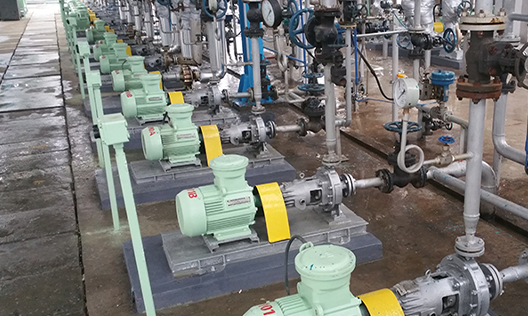
La elección de más de cientos de miles de clientes, cubriendo industrias como minería de carbón, metalurgia, química, energía, recursos hídricos, alimentos, municipalidades y protección ambiental, y exportando a Asia Sudeste, África, América y otros lugares.
-
Service
La empresa fue la primera en la industria en obtener las certificaciones internacionales del sistema de calidad ISO 9001:2008, del sistema de gestión ambiental ISO 14001 y del sistema de gestión de seguridad y salud ocupacional GB/T 28001, además de la certificación API 610 de la Asociación Estadounidense del Petróleo.
-
About us
La empresa, fundada en 1989, es una empresa nacional de alta tecnología integral que integra diseño, investigación y desarrollo, fabricación y servicios; actualmente es una empresa clave en la industria china de bombas centrífugas y una de las grandes fábricas especializadas.
-

Blogs
Con productos innovadores, calidad excepcional y servicios integrales, buscamos la verdad y la pragmática, avanzamos con iniciativa, y nos esforzamos por lograr el objetivo de ser "la marca líder en el campo de aplicación de bombas centrífugas en el país"! Raigada en Hunan, orientada a todo el país y hacia el mundo!
Daily Maintenance Methods and Tips for Vertical Multistage Centrifugal Pumps
Publication Date:
2026-01-09
Author:
Source:


As a critical fluid-handling device used in industrial production, municipal water supply and drainage, agricultural irrigation, and other fields, the long-term stable operation of vertical multistage centrifugal pumps directly affects production efficiency and operational maintenance costs. Scientific and standardized maintenance and upkeep of vertical multistage centrifugal pumps are essential for preventing equipment failures, improving operational efficiency, and extending service life. These devices undergo professional adjustments before leaving the factory, so users do not need to disassemble or adjust them themselves. The following is... Centrifugal pump Manufacturer Changsha Zhonglian Pump Industry Multi-stage centrifugal pump daily maintenance methods and tips, verified through industry practice, are provided for reference by user organizations.

Please click on the image to learn about the various [ Vertical multistage centrifugal pump 】Model Specifications and Product Details
I. Core Points for Daily Routine Inspections (Must-Do Daily)
1. Keep the body of the vertical multistage centrifugal pump and its surrounding environment clean and dry, free from accumulated oil stains and covered with debris. Ensure that all sealing surfaces and joints are leak-free.
2. After startup, monitor the operating sound— it should be smooth and uniform, with no abnormal extraneous noises. At the same time, check the vibration amplitude of the pump body. If any violent vibrations or unusual noises are detected, immediately stop the machine and perform a thorough inspection.
3. Regularly check the oil level in the suspension oil chamber and ensure it remains within the oil-level markings. 1/3-2/3 Meanwhile, an oil level that is too low can lead to insufficient bearing lubrication, while a level that is too high can easily cause the oil temperature to rise.
4. Inspect the support structures for the inlet and outlet pipelines, pipe fittings, and valves to ensure they are securely fastened and free of looseness. Avoid allowing the weight of the pipelines to directly bear on the pump body, which could damage the connections.
5. Check the locking status of the foundation bolts for the equipment to prevent bolt loosening caused by long-term operational vibration, which could affect the equipment's coaxiality.
II. Operational Procedure Requirements (Avoiding Abnormal Losses)
1. It is strictly prohibited to run the pump idly after the liquid in the sump (or storage container) has been drained. Idling not only causes severe vibration in the pump body but also leads to rapid damage of components such as the impeller and shaft seals due to lack of cooling and lubrication.
2. Strictly control the purity of the conveyed medium and prohibit foreign objects such as metal particles, rubber, cotton yarn, plastic sheeting, and the like from entering the pump body, thereby preventing blockage of the impeller passages or damage to the flow components.
3. For packing-sealed vertical multistage centrifugal pumps, it is necessary to monitor the leakage rate of the stuffing box. The normal leakage standard is: 10-20 Drop / If the leakage is excessive or insufficient, adjust the tightness of the packing gland.
4. Monitor bearing temperature changes in real time; during operation, the maximum bearing temperature must not exceed. 70-75 ℃. If the temperature continues to rise, check the lubrication condition or whether there are any assembly deviations.
III. Lubrication System Maintenance Standards (Extending Bearing Life)
1. First-time operation of the new pump 100 Hours later, the lubricating oil in the suspension oil chamber must be completely replaced. Thereafter, every cumulative operating hours... 500 Change the lubricating oil once an hour;
2. Lubricant selection must match the operating conditions of the equipment. It is recommended to use anti-wear hydraulic oil or mechanical oil that meets the manufacturer’s specifications. When replacing the lubricant, be sure to clean out any residual impurities from the oil chamber to prevent mixing of old and new oils, which could compromise the lubrication performance.
IV. Regular Inspection and Component Replacement (Periodic Maintenance)
1. Cumulative equipment operation 2000 Around the hour mark, a comprehensive periodic inspection is required. This involves disassembling and inspecting key components such as impellers, seals, and bearings for signs of wear, and promptly repairing or replacing any damaged parts.
2. Regularly check the concentricity of the claw coupling. If the concentricity deviation exceeds the allowable tolerance, it will increase bearing load and vibration, and the motor position must be adjusted to correct the issue.
V. Shutdown and Maintenance of Standby Pumps (Long-term Storage) / Backup Management)
1. Equipment has been idle for a long period (over 1 After six months, the device should be thoroughly disassembled and cleaned. Metal components should be treated with rust-preventive measures (such as applying rust-inhibiting oil). After reassembly, store the device properly in a dry, well-ventilated environment.
2. The standby pump requires regular operational checks; manually rotate the pump shaft weekly. 1/4 The circle ensures even distribution of load on the bearing, preventing deformation or rusting of components caused by prolonged static placement.
VI. Key Procedures After Installation and Maintenance
1. For a newly installed or overhauled vertical multistage centrifugal pump, the motor must first be run separately in no-load mode to confirm that its rotation direction matches the pump body’s requirements. Only after confirming this should the coupling pin be installed, to prevent reverse rotation from causing damage to the equipment.
2. When the pressure difference of the conveyed medium is significant, a check valve must be installed on the outlet pipeline to effectively prevent backflow of liquid in the pipeline after the motor power is cut off, thereby avoiding damage to the shaft seal caused by the pump body’s sudden reversal. Impeller Loosening and other malfunctions.
Recommended Information


Related Products
Perhaps you also want to know?
Zoomlian Pump Industry
Address:No. 210, Environmental Protection Middle Road, Yuhua Economic Development Zone, Changsha City, Hunan Province China
All rights reserved © Changsha Zoomlian Pump Co., Ltd.
This website supports IPv4 IPv6 bidirectional access
Website construction:Zhongqi Power Changsha