

-
Products
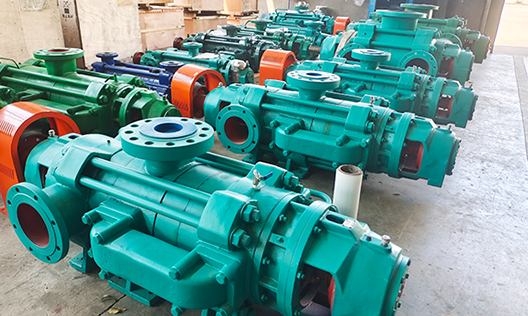
Puede fabricar 26 series de productos, incluyendo bombas de circulación para grandes centrales eléctricas, bombas de condensación para grandes centrales eléctricas, bombas petroquímicas, bombas multietapa, bombas de aguas residuales y lodo, bombas multietapa autoequilibradas, bombas de doble succión y única etapa tipo split, y bombas centrífugas de succión simple y única etapa.
-
Cases
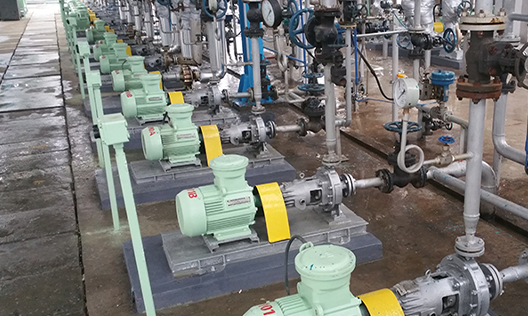
La elección de más de cientos de miles de clientes, cubriendo industrias como minería de carbón, metalurgia, química, energía, recursos hídricos, alimentos, municipalidades y protección ambiental, y exportando a Asia Sudeste, África, América y otros lugares.
-
Service
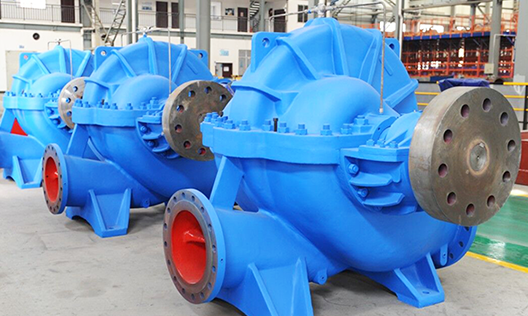
La empresa fue la primera en la industria en obtener las certificaciones internacionales del sistema de calidad ISO 9001:2008, del sistema de gestión ambiental ISO 14001 y del sistema de gestión de seguridad y salud ocupacional GB/T 28001, además de la certificación API 610 de la Asociación Estadounidense del Petróleo.
-
About us
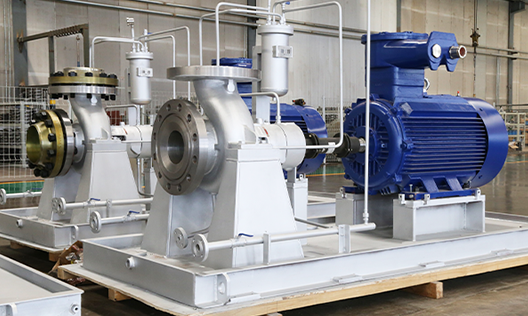
La empresa, fundada en 1989, es una empresa nacional de alta tecnología integral que integra diseño, investigación y desarrollo, fabricación y servicios; actualmente es una empresa clave en la industria china de bombas centrífugas y una de las grandes fábricas especializadas.
-

Blogs
Con productos innovadores, calidad excepcional y servicios integrales, buscamos la verdad y la pragmática, avanzamos con iniciativa, y nos esforzamos por lograr el objetivo de ser "la marca líder en el campo de aplicación de bombas centrífugas en el país"! Raigada en Hunan, orientada a todo el país y hacia el mundo!
How do the pipeline material and the number of elbows in a multistage centrifugal pump affect the head?
Publication Date:
2026-01-08
Author:
Source:


After installing multistage centrifugal pumps, many users encounter the issue of actual head not meeting the design specifications. Despite repeatedly inspecting the pump itself, they fail to pinpoint the root cause. In fact, this problem is very likely related to two often-overlooked details in the piping system—namely, the selection of pipe material and the number and configuration of elbows. These seemingly minor factors can directly lead to hidden head losses. In this article, Centrifugal pump Manufacturer Changsha Zhonglian Pump Industry We will provide a detailed introduction on how the pipeline material and the number of elbows in multistage centrifugal pumps affect the head, enabling user organizations to better select and match pipelines and elbows.

Please click on the image to learn about the model specifications and product details of various [multistage centrifugal pumps] from Changsha Zhonglian Pump Industry.
Let’s first talk about the core impact of pipe material: As fluid flows through a pipe, it encounters frictional resistance against the pipe wall. The difference in friction coefficients among various materials directly determines the magnitude of this resistance, which in turn affects the head. For example, common steel pipes have moderate inner-wall smoothness and moderate friction resistance, making them suitable for most industrial applications. PE Pipe and PVC The inner wall of the pipe is smoother, and its coefficient of friction is lower than that of steel pipes. 15%-25% This can reduce fluid losses and bring the head closer to the design value. In contrast, the inner walls of old cast-iron pipes are rough, and may even develop scale or rust, significantly increasing frictional resistance. Under the same operating conditions, head loss could reach as high as... 10%-30% In addition, the pressure resistance of the material can also indirectly affect the head. If the pipeline’s pressure resistance is insufficient and slight deformation occurs, this will further increase resistance, leading to a decrease in head.
Next, let’s examine the impact of the number of elbows: Elbows are essential components for changing the direction of pipelines; however, each additional elbow introduces a redirection shock to the fluid, creating localized resistance. In particular, 90 When turning a right-angle bend, the local resistance is significantly greater. 45 When bending elbows are used, and multiple right-angle bends are connected in series, the resistance accumulates and increases progressively. Data shows that for each additional elbow added... 90 For standard standard elbows, the head loss in a multistage centrifugal pump is approximately: 3%-5% , if the number of elbows in the piping system exceeds 5 One, the cumulative head loss could exceed 15% In addition, the installation angle and connection accuracy of elbows can also affect resistance. If misalignment or poor sealing occurs during installation, this will further exacerbate head loss.
Practical advice: When selecting pipe materials, prioritize choosing types with smooth inner walls and pressure resistance that matches the medium being conveyed (such as clear water, sewage, corrosive liquids, etc.). For example, for clear-water conveyance, you can opt for... PE For pipes conveying corrosive media, stainless steel pipes are recommended. When planning the pipeline routing, minimize the use of elbows as much as possible. If bends are unavoidable, prioritize elbows with larger bend radii. 45 Bend elbows at appropriate angles and avoid arranging them too closely together.
If your multistage centrifugal pump is experiencing insufficient head and relatively high energy consumption, you might want to start by examining the pipe material and bend configurations. Alternatively, feel free to send us a private message for a personalized pipe optimization solution that will help fully unleash the pump’s performance.
Recommended Information


Related Products
Perhaps you also want to know?
Zoomlian Pump Industry
Address:No. 210, Environmental Protection Middle Road, Yuhua Economic Development Zone, Changsha City, Hunan Province China
All rights reserved © Changsha Zoomlian Pump Co., Ltd.
This website supports IPv4 IPv6 bidirectional access
Website construction:Zhongqi Power Changsha