

-
Products
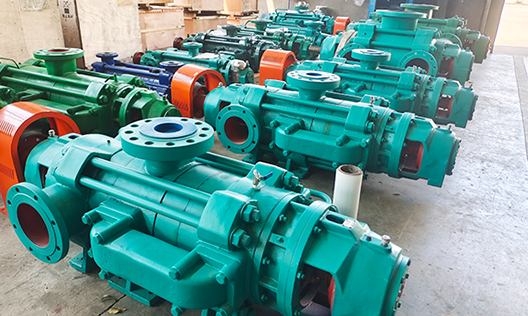
Puede fabricar 26 series de productos, incluyendo bombas de circulación para grandes centrales eléctricas, bombas de condensación para grandes centrales eléctricas, bombas petroquímicas, bombas multietapa, bombas de aguas residuales y lodo, bombas multietapa autoequilibradas, bombas de doble succión y única etapa tipo split, y bombas centrífugas de succión simple y única etapa.
-
Cases
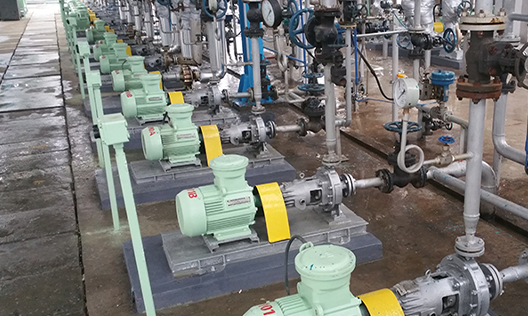
La elección de más de cientos de miles de clientes, cubriendo industrias como minería de carbón, metalurgia, química, energía, recursos hídricos, alimentos, municipalidades y protección ambiental, y exportando a Asia Sudeste, África, América y otros lugares.
-
Service
La empresa fue la primera en la industria en obtener las certificaciones internacionales del sistema de calidad ISO 9001:2008, del sistema de gestión ambiental ISO 14001 y del sistema de gestión de seguridad y salud ocupacional GB/T 28001, además de la certificación API 610 de la Asociación Estadounidense del Petróleo.
-
About us
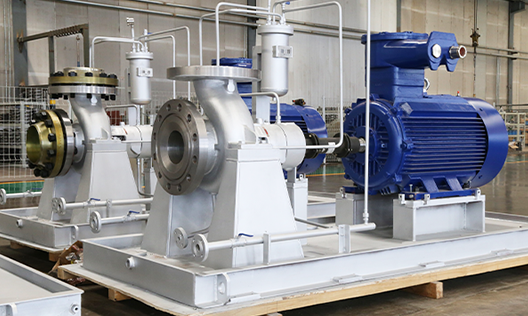
La empresa, fundada en 1989, es una empresa nacional de alta tecnología integral que integra diseño, investigación y desarrollo, fabricación y servicios; actualmente es una empresa clave en la industria china de bombas centrífugas y una de las grandes fábricas especializadas.
-

Blogs
Con productos innovadores, calidad excepcional y servicios integrales, buscamos la verdad y la pragmática, avanzamos con iniciativa, y nos esforzamos por lograr el objetivo de ser "la marca líder en el campo de aplicación de bombas centrífugas en el país"! Raigada en Hunan, orientada a todo el país y hacia el mundo!
What are the advantages and disadvantages of a single-stage, double-suction, center-split centrifugal pump?
Publication Date:
2025-12-10
Author:
Source:


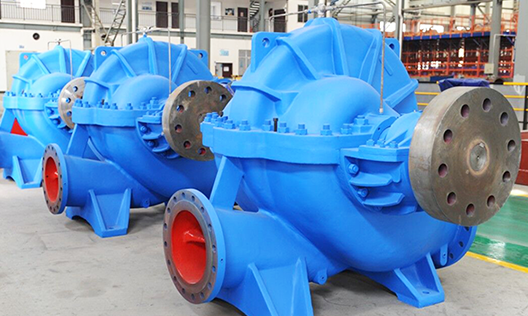
The single-stage, double-suction, mid-open centrifugal pump (commonly referred to as a mid-open pump or double-suction pump) is the main equipment for high-flow clear water transportation in both industrial and municipal applications. Its structural design and hydraulic characteristics ensure that it performs exceptionally well under specific conditions; however, it also has clearly defined application limitations. In this article, Centrifugal pump Manufacturer Changsha Zhonglian Pump Industry Starting from engineering practice, let’s objectively introduce the advantages and disadvantages of single-stage double-suction split-case centrifugal pumps, helping users determine whether they are suitable for their specific operating conditions when making a purchase and selecting the right model.

I. Core Advantages: Why Are They Widely Adopted?
1. Axial force self-balancing, ensuring smooth and reliable operation.
The double-suction impeller features symmetrical water inlets on both sides, which essentially cancels out the axial thrust and significantly reduces the bearing load. Measured results show that its vibration levels are typically kept within: 2.8mm/s Within this range, the noise level is lower than that of a single-suction pump with the same specifications. 5 – 8dB Suitable for applications with high requirements for operational stability, such as power plant circulating water systems or urban main water supply networks.
2. Its anti-cavitation performance is significantly superior to that of single-suction pumps.
Bilateral water intake reduces the inlet flow velocity by approximately. 40% This effectively reduces the risk of localized low-pressure zone formation. Combined with the smooth flow channels achieved through precision casting, it ensures the necessary cavitation margin ( NPSHr ) It is lower than that of a single-suction pump with the same head. 0.5 – 1.2 This model is particularly suitable for water intake at low water levels, long suction pipelines, or high-altitude areas.
3. Easy maintenance, short downtime.
The horizontal split-case design allows the rotor assembly to be removed simply by lifting the pump cover, without the need to disconnect the inlet and outlet pipelines or the motor. Typical maintenance time is shorter compared to that of monobloc pumps. 50% The above advantages are particularly prominent in continuous water supply systems where prolonged downtime is not permitted.
4. High efficiency and energy saving, with low operating costs.
The optimized double-suction impeller hydraulic model achieves generally high efficiency. 78% – 82.7% , wide efficient operating range (flow coverage at rated values) 60% – 120% ). With one machine Q = 2000 m ³ /h、 H = 50 m Take the pump as an example; annual power savings can reach 15,000 – 20,000 kWh Significantly reduces the total lifecycle cost.
5. Compact structure, flexible installation
The pump body and pump cover feature an integrated design with a neat and compact外形. They support both horizontal installation (the mainstream configuration) and, for certain models, vertical arrangement. The inlet and outlet flanges are located below the pump shaft axis and oriented horizontally, making pipe connections convenient.
II. Inherent Limitations: Which operating conditions should be avoided?
1. Strictly prohibited for use with media containing solid particles.
Its annular clearance is typically ≤ 0.5mm The impeller passage is narrow and highly precise. When the solid content of the medium exceeds... 80mg/L or particle size > 0.5mm When handling fluids such as mud, mine water, and sewage, the flow-path components will wear out rapidly, and efficiency will decline within a few weeks. 20% Above, the sealing life has sharply decreased in sync. [ty-reference](3) Note: This pump is suitable only for clean water or clean liquids with physicochemical properties similar to those of water.
2. Not suitable for high-viscosity or corrosive media (unless made of special materials).
Standard cast iron material ( HT250 ) Resistant only to weak acids and bases; if conveying pH < 5 or > 10 The liquid requires an upgrade to stainless steel (e.g., CF8M ) or duplex steel, with increased costs 30% – 50% Meanwhile, the medium viscosity > 20cP At this point, the efficiency will significantly deviate from the performance curve and needs to be re-verified. [ty-reference](9) 。
3. High installation space requirements.
The horizontal split structure requires a预留 space of ≥ on the pump body. 1.2 The vertically high space provided by the booster pump is designed for easy access and maintenance with the cover removed. However, in confined environments such as underground pump rooms or pipe corridor mezzanines, it may not be possible to meet maintenance requirements.
4. The economic performance is poor under low-flow conditions.
Design flow rate is typically ≥ 200m ³ /h If actual demand < 100m ³ /h Not only is it inefficient (and may even fall out of the efficient range), but its procurement cost is also higher than that of a single-stage, single-suction pump with the same specifications. 15% – 25% Insufficient cost-effectiveness [ty-reference](4) 。
5. The sealing system relies on a clean medium.
Both mechanical seals and packing seals require that the medium be free of abrasive particles. If used incorrectly with liquids containing impurities, the mechanical seal faces are prone to scratches, while the packing gland may experience increased leakage due to particle embedment. Although some manufacturers offer flushing solutions, these solutions increase system complexity and introduce additional potential failure points. [ty-reference](1) 。
III. Selection and Application Recommendations
Recommended application scenarios:
Large-flow applications such as municipal tap water plants, circulating cooling water for thermal power plants, large-scale agricultural irrigation, primary networks for HVAC systems, and water diversion projects in hydraulic engineering. 200 – 16000m ³ /h )、medium- and low-head applications ( 8 – 125m ) Clean medium operating conditions.
Scenarios that must be avoided:
Mine drainage (including sand), wastewater treatment, chemical processes involving crystallizing media, transportation of high-viscosity oils, and pump stations with extremely limited space.
Key verification steps:
1. Water quality testing: Confirm solid content ≤ 80mg/L , particle size < 0.5mm,pH6 – 9 (铸铁 pump);
2. Cavitation Check: Ensure Adequate Net Positive Suction Head NPSHa ≥ NPSHr + 0.5 m ;
3. Space assessment: Reserve a top inspection height ≥ 1.2 × Pump body height;
4. Flow matching: The actual operating point should be within the high-efficiency range (typically at the rated flow). 70% – 110% ).
A single-stage, double-suction, mid-open centrifugal pump is not universally suitable for all operating conditions. However, within its optimal operating range, it still offers irreplaceable advantages in terms of stability, energy efficiency, and ease of maintenance. Only by clearly identifying the pump’s operational boundaries can its full potential be realized. Before selecting a pump, it’s essential to conduct a triple verification—assessing water quality, available space, and cavitation risks—to avoid using an excellent pump in the wrong application. If you require a quotation service for selecting mid-open pumps, please feel free to consult us. Online customer service Or call us at 15616442288 (same number on WeChat).
Recommended Information


Related Products
Perhaps you also want to know?
Zoomlian Pump Industry
Address:No. 210, Environmental Protection Middle Road, Yuhua Economic Development Zone, Changsha City, Hunan Province China
All rights reserved © Changsha Zoomlian Pump Co., Ltd.
This website supports IPv4 IPv6 bidirectional access
Website construction:Zhongqi Power Changsha