

-
Products
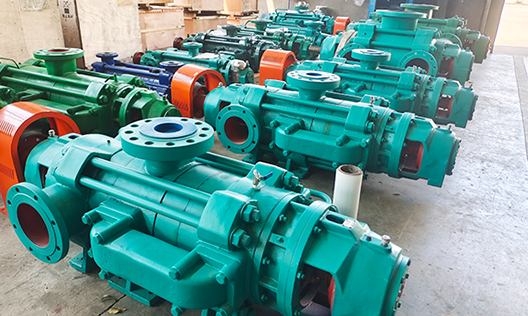
Puede fabricar 26 series de productos, incluyendo bombas de circulación para grandes centrales eléctricas, bombas de condensación para grandes centrales eléctricas, bombas petroquímicas, bombas multietapa, bombas de aguas residuales y lodo, bombas multietapa autoequilibradas, bombas de doble succión y única etapa tipo split, y bombas centrífugas de succión simple y única etapa.
-
Cases
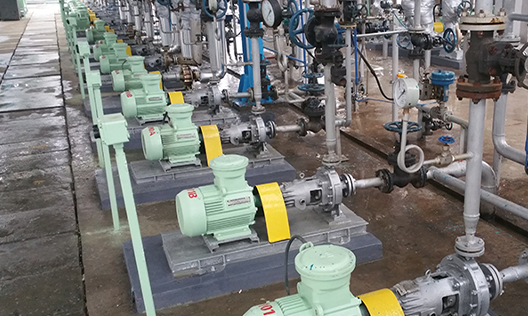
La elección de más de cientos de miles de clientes, cubriendo industrias como minería de carbón, metalurgia, química, energía, recursos hídricos, alimentos, municipalidades y protección ambiental, y exportando a Asia Sudeste, África, América y otros lugares.
-
Service
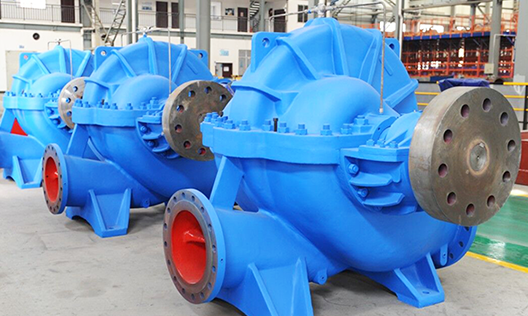
La empresa fue la primera en la industria en obtener las certificaciones internacionales del sistema de calidad ISO 9001:2008, del sistema de gestión ambiental ISO 14001 y del sistema de gestión de seguridad y salud ocupacional GB/T 28001, además de la certificación API 610 de la Asociación Estadounidense del Petróleo.
-
About us
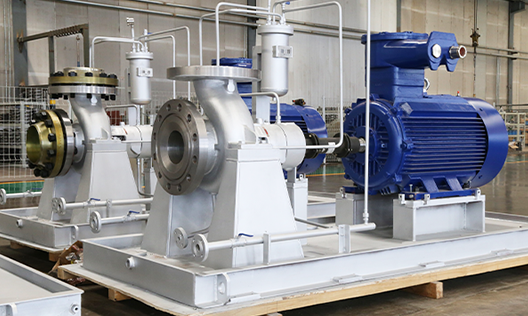
La empresa, fundada en 1989, es una empresa nacional de alta tecnología integral que integra diseño, investigación y desarrollo, fabricación y servicios; actualmente es una empresa clave en la industria china de bombas centrífugas y una de las grandes fábricas especializadas.
-

Blogs
Con productos innovadores, calidad excepcional y servicios integrales, buscamos la verdad y la pragmática, avanzamos con iniciativa, y nos esforzamos por lograr el objetivo de ser "la marca líder en el campo de aplicación de bombas centrífugas en el país"! Raigada en Hunan, orientada a todo el país y hacia el mundo!
Centrifugal Pump Head Selection for the Chemical, Municipal, and Water Supply Industries: Influencing Factors and Compliance Considerations
Publication Date:
2025-12-11
Author:
Source:


As a core performance parameter of fluid transport systems, the head of a centrifugal pump directly determines the pump's efficiency in imparting energy to the liquid. The magnitude of this parameter is closely related to the liquid’s lifting height, system operational efficiency, and application scope. In modern industrial engineering, building water supply, municipal water utilities, and other fields, the scientific design and optimized selection of centrifugal pump heads are critical steps for ensuring stable operation of pumping stations and achieving energy savings and reduced consumption. Moreover, these factors directly influence the overall reliability of the fluid transport system as well as the control of its full lifecycle costs. In this article, centrifugal pump manufacturers... Changsha Zhonglian Pump Industry This presentation will introduce the factors influencing the selection of head ratings for centrifugal pumps in the chemical, municipal, and water supply industries, as well as key compliance considerations, for reference by users of centrifugal pumps.

I. Definition and Core Value of Centrifugal Pump Head
The head of a centrifugal pump refers to the total energy increment gained by a unit weight of liquid after it passes through the pump body. This energy can be used to overcome potential energy differences, pressure losses, and kinetic energy requirements encountered during liquid transport. It is the core indicator for measuring the pumping capacity of a centrifugal pump. Unlike the simple “height to which liquid is lifted,” the head encompasses multiple factors, including the increase in static pressure, the replenishment of dynamic kinetic energy, and the compensation for frictional losses in the piping system. Precise matching of the head is a prerequisite for the efficient operation of a centrifugal pump.
In engineering applications, the appropriateness of a centrifugal pump’s head directly affects the operational status of the equipment: if the head is too high, the pump body will operate under excessive load, increasing energy consumption and mechanical wear; if the head is too low, the pump will fail to meet the system’s delivery requirements, leading to insufficient flow, unstable pressure, and even disrupting the continuity of the entire production process. Therefore, the scientific selection of head parameters is of great practical significance for improving equipment efficiency, extending service life, and reducing operation and maintenance costs.
II. The Three Key Factors Affecting the Head of a Centrifugal Pump
1. Pump Body Structural Design
The structural characteristics of a centrifugal pump are the core factors determining its head. Among these, the impeller-related parameters have the most significant impact: the larger the impeller diameter, the stronger the centrifugal force generated during rotation, and the higher the head produced. The blade angle, number, and shape directly affect the efficiency of liquid flow within the impeller; optimizing the blade design can enhance energy conversion efficiency. Furthermore, structural details such as the curvature of the pump casing’s flow passages and the degree of matching between the inlet and outlet cross-sectional areas also indirectly influence the head value by affecting the fluid flow resistance.
2. Working Principle and Operating Parameters
The head of a centrifugal pump follows the principles of fluid mechanics and has a clear relationship with its operating parameters: the head is directly proportional to the square of the pump shaft speed (as the speed increases, the head rises significantly). The stability of the inlet pressure and changes in the resistance of the outlet piping directly affect the actual head performance; excessive resistance can easily lead to a reduction in effective head. Meanwhile, flow rate and head exhibit an inverse relationship. Therefore, during design and selection, it’s crucial to strike a balance between these two parameters, avoiding system imbalance caused by optimizing only one parameter at a time.
3. Medium Properties and Operating Conditions
The physicochemical properties of the conveyed medium directly affect the head of a centrifugal pump: When the density of the medium increases, the inertial resistance that the pump body needs to overcome also rises, causing the actual head to slightly decrease at the same power level. An increase in the medium’s viscosity leads to greater flow resistance, which not only reduces the head but may also increase the risk of cavitation within the pump body. Furthermore, changes in operating temperature can affect the medium’s viscosity and saturation vapor pressure, indirectly impacting the stability of the head. Therefore, in scenarios involving the conveyance of high-temperature, high-viscosity media, it is necessary to optimize head parameters specifically for such conditions.
III. Principles for Matching Centrifugal Pump Head with Applicable Scenarios
The selection of head for centrifugal pumps must be tailored to the specific delivery requirements of the application scenario, achieving “on-demand matching.”
High-head centrifugal pump (typically referring to a single-stage head ≥ 50m ) Suitable for scenarios with high demands on liquid pressure and delivery height, such as water supply for high-rise buildings, long-distance pipeline transportation, and high-pressure industrial systems—including raw material transportation in the petrochemical industry and pressurized pumping stations for secondary urban water supply.
Medium- and low-head centrifugal pumps (single-stage head ≤ 50m It is more suitable for applications such as household water supply, agricultural irrigation, and general industrial circulating water systems—including factory cooling water networks and municipal sewage lifting systems. Its advantages lie in its low energy consumption and high operational stability.
By precisely matching the head parameters, fluid delivery efficiency can be maximized, energy waste can be reduced, and the impact and wear caused by equipment start-ups and shutdowns can be minimized, thereby extending the system's service life.
IV. Key Points for Head Selection and Optimization in Engineering Applications
Comprehensive Parameter Balancing: When selecting equipment, it is essential to simultaneously consider the three core parameters—head, flow rate, and power—and, in conjunction with calculations of pipeline system resistance, use hydraulic simulation analysis to determine the optimal head range, thereby avoiding situations where a large-capacity pump is used for a small application or where the pump’s capacity falls short of the required demand.
Dynamic adaptation to operating conditions: A margin is reserved to accommodate fluctuations in operating parameters such as medium temperature, viscosity, and pressure. 10%-15% The head margin ensures that the system can still operate stably even under extreme operating conditions.
Standard compliance: Follow GB/T3215-2019 Centrifugal Pumps for the Petroleum, Petrochemical, and Natural Gas Industries JB/T8059-2020 Industry standards such as “Technical Specifications for Centrifugal Pumps” ensure that head design and selection comply with safety regulations.
Professional Technical Support: Under complex operating conditions (such as high temperature, high corrosion, and conveying media containing particulates), it is recommended to collaborate with the pump manufacturer for customized head calculations and, combined with optimized pump body design, achieve maximum efficiency.
The scientific design and selection of head for centrifugal pumps represent a core technical component in fluid transport system engineering. The rationality of this process directly affects the project’s operational efficiency, energy-saving performance, and return on investment. If you require customized head-selection solutions or technical support tailored to specific operating conditions, feel free to consult with professional centrifugal pump manufacturers. By achieving precise matching, you can ensure efficient and stable system operation.
Recommended Information


Related Products
Perhaps you also want to know?
Zoomlian Pump Industry
Address:No. 210, Environmental Protection Middle Road, Yuhua Economic Development Zone, Changsha City, Hunan Province China
All rights reserved © Changsha Zoomlian Pump Co., Ltd.
This website supports IPv4 IPv6 bidirectional access
Website construction:Zhongqi Power Changsha