

-
Products
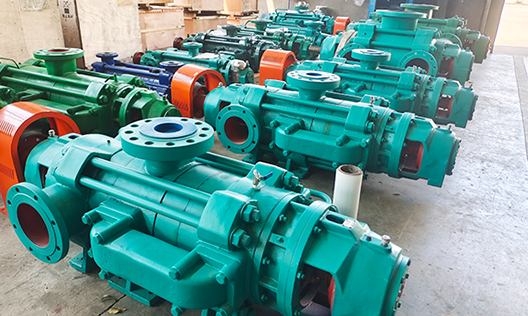
Puede fabricar 26 series de productos, incluyendo bombas de circulación para grandes centrales eléctricas, bombas de condensación para grandes centrales eléctricas, bombas petroquímicas, bombas multietapa, bombas de aguas residuales y lodo, bombas multietapa autoequilibradas, bombas de doble succión y única etapa tipo split, y bombas centrífugas de succión simple y única etapa.
-
Cases
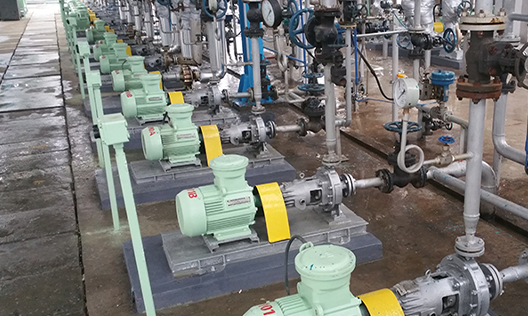
La elección de más de cientos de miles de clientes, cubriendo industrias como minería de carbón, metalurgia, química, energía, recursos hídricos, alimentos, municipalidades y protección ambiental, y exportando a Asia Sudeste, África, América y otros lugares.
-
Service
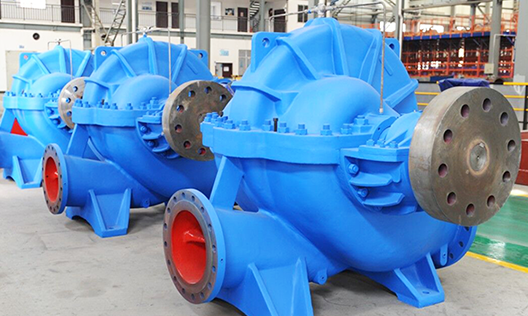
La empresa fue la primera en la industria en obtener las certificaciones internacionales del sistema de calidad ISO 9001:2008, del sistema de gestión ambiental ISO 14001 y del sistema de gestión de seguridad y salud ocupacional GB/T 28001, además de la certificación API 610 de la Asociación Estadounidense del Petróleo.
-
About us
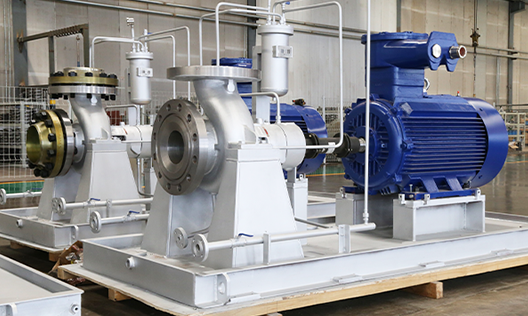
La empresa, fundada en 1989, es una empresa nacional de alta tecnología integral que integra diseño, investigación y desarrollo, fabricación y servicios; actualmente es una empresa clave en la industria china de bombas centrífugas y una de las grandes fábricas especializadas.
-

Blogs
Con productos innovadores, calidad excepcional y servicios integrales, buscamos la verdad y la pragmática, avanzamos con iniciativa, y nos esforzamos por lograr el objetivo de ser "la marca líder en el campo de aplicación de bombas centrífugas en el país"! Raigada en Hunan, orientada a todo el país y hacia el mundo!
Why the inlet water temperature of a centrifugal pump must be strictly controlled and the hazards of excessively high temperatures.
Publication Date:
2025-12-03
Author:
Source:


When using a centrifugal pump, an excessively high inlet water temperature is definitely not... “ Small issue ” rather, it serves as the direct trigger for cavitation, whose destructive power far exceeds conventional understanding. It can systematically shorten the service life of pump units, cause cascading failures, and result in irreversible economic losses. In this article, the centrifugal pump manufacturer... Changsha Zhonglian Pump Industry From micro-level mechanisms to macro-level impacts, a deep analysis of why... Centrifugal pump The reasons why the inlet water temperature must be strictly controlled and the hazards of excessively high temperatures.

The destructive chain of cavitation: from microscopic implosion to system failure
At the inlet of a centrifugal pump, a negative pressure is maintained (typically 0.5 to 0.8 bar), causing the boiling point of water to drop sharply to between 40 and 60°C (the lower the pressure, the lower the boiling point). When the incoming water temperature approaches or exceeds this critical point, the water instantly vaporizes in the negative-pressure zone, forming steam bubbles. As these bubbles are carried by the flow into the high-pressure region of the impeller—where the pressure rises above 1.5 bar—the steam rapidly condenses, leading to the collapse of the bubbles within just 10 microseconds. The localized impact pressure generated at the moment of collapse can reach as high as 100 to 300 MPa—equivalent to the crushing force exerted by a 3-ton weight pressing down on every square centimeter.
Hazard 1: Structural breakdown of the impeller (microscopic-level damage)
- Initial stage : The depth of metal micro-area spalling on the impeller surface caused by a single bubble collapse reaches 0.05mm (Microscopic examination reveals pitting corrosion), 72 Continuous operation for hours can result in the formation of dense pitting clusters.
- Mid-term deterioration The contiguous erosion pits lead to a reduction in the flow passage cross-sectional area. 5%~8% Hydraulic efficiency plummets. 20% Above (measured at a certain power plant) 75℃ Under operating conditions, the pump efficiency ranges from 82% Fall to 65% ).
- Serious consequences The impeller blades fractured due to stress concentration (Case: Inlet water at a certain chemical plant) 78℃ Caused impeller fracture, resulting in shutdown. 144 Hours later, leaf debris clogged the pump body.
Harm No. 2: A complete collapse of system performance (medium-scale impact)
- Flow and head collapse simultaneously. Cavitation zone formation “ Air resistance ” resulting in an actual flow rate lower than the design value. 15 %(For example, if a pump is designed for 100 m³/h but actually delivers only 60–80 m³/h), the process system cannot maintain its design capacity.
- Uncontrolled vibration and noise The impeller erosion caused severe imbalance, causing the vibration amplitude to surge to... 4.5mm/s (Far exceeds) ISO 10816 Standard limit 2.8mm/s ), triggering interlock shutdown (a municipal pump station experiences annual average shutdowns due to cavitation-induced vibration). 6.2次)。
- Secondary injury cascade The metal debris generated by cavitation clogs the impeller clearance, exacerbating bearing wear and ultimately causing the generator to trip due to overload. (Case in point: At a certain power plant, uncontrolled temperature led to cavitation-induced debris that burned out the bearings, resulting in maintenance costs exceeding...) $15,000 ).
Harm No. 3: A Catastrophic Surge in Full Lifecycle Costs (Macro-Level Loss)
Indicator
|
Temperature compliance (<55℃)
|
Temperature exceeds the limit (>55℃)
|
Impeller replacement cycle
|
36 months
|
8 to 10 months
|
Average annual maintenance hours
|
12 hours
|
48 hours
|
System downtime loss
|
$2,500
|
$38,000
|
Key Truth : 75℃ of the “ Safety threshold ” This is the industry’s biggest misconception. The actual critical temperature is dynamically determined by the inlet pressure:
- Pressure 0.6 bar (Typical deep-well operating conditions) → Critical point 55℃ → 75℃ The risk of cavitation increases sharply. 5 Twice;
- Pressure 0.9 bar (High-pressure system) → Critical point 65℃ → 75℃ Still exceeds the limit 20%;
- Pressure 1.0 bar (Near atmospheric pressure) → Critical point 75℃ → 75℃ Already on the brink.
Why is excessive temperature a “fatal” issue?
Cavitation is by no means “ Decreased efficiency ” not a simple question, but rather Systemic Destruction Engine :
- Irreversible material damage The high-pressure shockwave generated by bubble collapse causes fatigue fracture on the metal surface, making it impossible to restore the original condition through simple repairs (after repair, the impeller’s lifespan is reduced to only...). 60% ).
- Chained failure amplification effect Impeller damage → Insufficient traffic → System pressure imbalance → Motor overload → The entire pump unit has completely failed, with the average downtime per single failure exceeding... 100 Hour.
- Economic black hole : Each 1℃ Excessive temperatures increase annual maintenance costs. $2,800 (Based on 300kW Pump unit calculation). 75℃ Under conditions exceeding the standard, the equipment's full lifecycle cost is higher than that of compliant operation. 3.2 Twice.
An excessively high inlet water temperature is absolutely not... “ Controllable minor issues ”,隐性成本 Continuous erosion undermines system reliability—each degree of temperature exceeding the standard accelerates impeller degradation, system failure, and economic collapse. Understanding the destructive chain of cavitation is the starting point for ensuring the long-term stable operation of pump units. —— Temperature is never just a number—it’s the lifeline of a centrifugal pump.
Recommended Information


Related Products
Perhaps you also want to know?
Zoomlian Pump Industry
Address:No. 210, Environmental Protection Middle Road, Yuhua Economic Development Zone, Changsha City, Hunan Province China
All rights reserved © Changsha Zoomlian Pump Co., Ltd.
This website supports IPv4 IPv6 bidirectional access
Website construction:Zhongqi Power Changsha