

-
Products
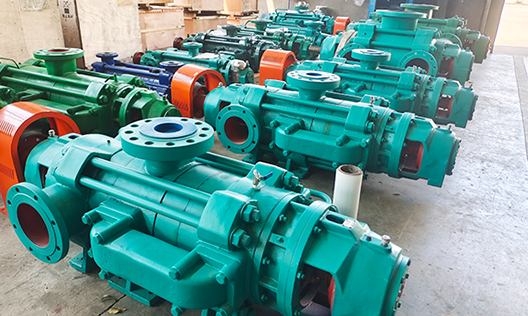
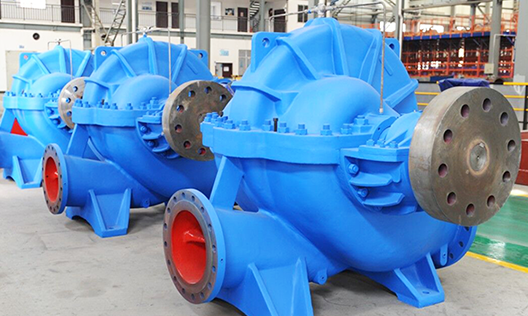
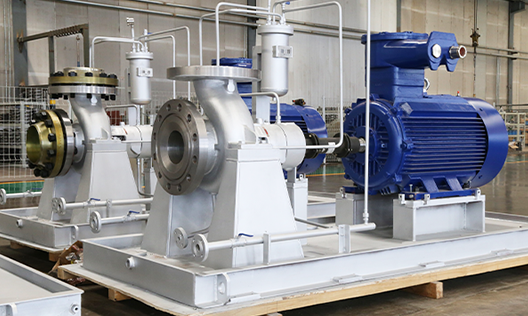
Puede fabricar 26 series de productos, incluyendo bombas de circulación para grandes centrales eléctricas, bombas de condensación para grandes centrales eléctricas, bombas petroquímicas, bombas multietapa, bombas de aguas residuales y lodo, bombas multietapa autoequilibradas, bombas de doble succión y única etapa tipo split, y bombas centrífugas de succión simple y única etapa.
-
Cases
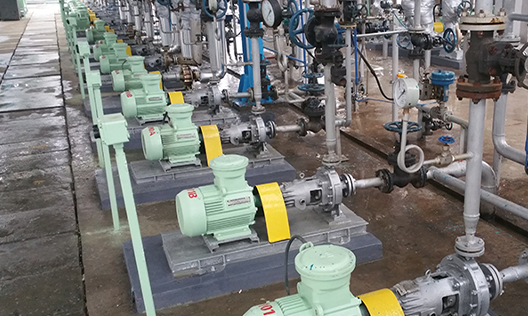
La elección de más de cientos de miles de clientes, cubriendo industrias como minería de carbón, metalurgia, química, energía, recursos hídricos, alimentos, municipalidades y protección ambiental, y exportando a Asia Sudeste, África, América y otros lugares.
-
Service
La empresa fue la primera en la industria en obtener las certificaciones internacionales del sistema de calidad ISO 9001:2008, del sistema de gestión ambiental ISO 14001 y del sistema de gestión de seguridad y salud ocupacional GB/T 28001, además de la certificación API 610 de la Asociación Estadounidense del Petróleo.
-
About us
La empresa, fundada en 1989, es una empresa nacional de alta tecnología integral que integra diseño, investigación y desarrollo, fabricación y servicios; actualmente es una empresa clave en la industria china de bombas centrífugas y una de las grandes fábricas especializadas.
-

Blogs
Con productos innovadores, calidad excepcional y servicios integrales, buscamos la verdad y la pragmática, avanzamos con iniciativa, y nos esforzamos por lograr el objetivo de ser "la marca líder en el campo de aplicación de bombas centrífugas en el país"! Raigada en Hunan, orientada a todo el país y hacia el mundo!
Functions, Principles, and Selection Recommendations for Valves in Multi-stage Pump Systems
Publication Date:
2025-12-02
Author:
Source:


In fluid delivery systems composed of multistage pumps—pumps with relatively complex structures and broad ranges for both flow rate and head in their performance curves—valves are far from being mere pipeline switches. They serve as the system’s “intelligent commander,” precisely regulating the lifeblood of the multistage pump unit: flow rate and pressure. Moreover, valves act as a critical defense against cavitation damage. Under off-design operating conditions, valve control can even help resolve numerous issues. Selecting and using the right valve is directly linked to the overall efficiency, stability, and service life of the entire pumping system.

In this article, multi-stage pump manufacturers Changsha Zhonglian Pump Industry We will provide you with an in-depth analysis of the core role valves play under high-flow, low-cavitation conditions, as well as the sophisticated working principles behind them. We’ll also offer expert guidance on equipment selection and system optimization tailored to your needs.
I. The Four Core Functions of Valves
In multi-stage pump systems, valves do much more than simply start and stop flow—they integrate critical functions that ensure the system operates safely, efficiently, and intelligently:
1. Precise Flow Regulation and Pump Efficiency Protection: The valve continuously adjusts the flow rate by varying its opening degree, thereby meeting the diverse requirements of the process. More importantly, during pump startup, low-load operation, or sudden drops in system demand, the valve ensures that a portion of the liquid is routed through a bypass return, keeping the pump’s flow rate consistently above its minimum safe operating threshold—typically at least a certain percentage of the rated flow rate. 25%-35% ). This effectively prevents the pump from overheating, experiencing severe vibrations, and suffering cavitation due to excessively low flow rates, ensuring that the pump always operates within its efficient range.
2. Multi-stage pressure reduction and pressure stabilization: In the face of high pressure at the outlet of multi-stage pumps, valves play a crucial role in stabilizing system pressure. Particularly under conditions of high-pressure differential backflow, advanced valves—such as self-actuated recirculation valves—employ a multi-stage pressure-reduction design. By means of labyrinthine flow paths or multi-stage sleeves, the high-pressure fluid is gradually and smoothly relieved step by step, thereby avoiding the significant pressure drop and intense turbulence that would otherwise result from single-stage throttling, and providing a stable foundation for precise pressure control.
3. Reliable Backflow Prevention for System Safety: The valve’s built-in check function automatically shuts off when the pump stops or system pressure becomes abnormal, preventing backflow from impacting the pump impeller. This protection not only avoids water hammer damage but also ensures unidirectional flow in the process, thereby maintaining the overall safety of the system.
4. Intelligent Condition Switching and Functional Integration: Modern high-end valve designs integrate multiple functions into a single unit. For example, self-powered recirculation valves or multifunction pump protection valves require no external power or complex control systems; relying solely on the fluid’s own energy, they can simultaneously achieve flow sensing, check-valve functionality, bypass recirculation control, and multi-stage pressure reduction. This integrated design significantly simplifies piping and control systems, enhancing both reliability and response speed.
II. Core Technical Principles: How to Achieve Control and Corrosion Resistance
To fulfill the above mission, valves rely on a series of sophisticated fluid mechanics and materials engineering designs:
Traffic - Pressure sensing and self-powered actuation—this is the core of intelligent valves, such as self-powered recirculation valves. The main valve disc can directly and sensitively detect changes in flow rate in the main pipeline. When the main flow decreases, the valve disc automatically adjusts its position under the combined action of a spring and fluid dynamics, simultaneously controlling the opening of the bypass to achieve fully mechanical, automatic feedback control.
Multi-stage pressure reduction and energy dissipation technology: To cope with large pressure differentials, the valve incorporates a special internal structure. For example, by means of a series of small orifices in a multi-stage cage sleeve or through multi-stage valves connected in series, the total pressure differential is divided into several smaller pressure drops. This significantly reduces the fluid flow velocity, allowing the kinetic energy of the fluid to be dissipated in an orderly manner, thereby preventing the formation of high-speed jets, intense vortices, and cavitation noise.
Active and Passive Anti-Cavitation Design: Valves address cavitation primarily from two aspects:
Eliminate cavitation conditions: By employing the multi-stage pressure reduction described above, ensure that when the fluid passes through any throttling section, the local pressure remains no lower than the vaporization pressure at the corresponding temperature, thereby fundamentally preventing bubble formation.
Enhance corrosion resistance: On throttling components—such as valve cages and valve seats—that are highly susceptible to cavitation, apply surface hardening treatments using cavitation-resistant alloys (e.g., Stellite alloys) or design special flow-guiding structures to balance pressure, thereby directly improving the durability of critical parts.
III. Valve Selection and System Optimization Recommendations for Specialized Applications
1. Integrated Intelligent Solutions: For newly constructed or retrofitted critical pumping systems, prioritize the use of self-actuated recirculation valves or multifunction pump protection valves that integrate flow control, check valves, and bypass protection into a single unit. This approach is typically more efficient than using manual valves. + Flow-limiting orifice plate + Independent check valve + Traditional solutions for complex control loops are more reliable, more economical, and more energy-efficient.
2. Pay attention to key performance parameters: When selecting valves, it is essential to rigorously verify that the valve’s nominal bore and pressure rating are compatible with the system. In particular, pay close attention to the maximum differential pressure the valve can withstand, the minimum flow rate setting range, and the number of stages for bypass pressure reduction. For applications involving high differential pressures, it is imperative to select specialized multi-stage pressure-reducing valves.
3. Material and structure determine service life: In applications prone to cavitation and erosion, it is essential to explicitly specify that internal valve components (such as the valve core, valve seat, and sleeve) be made of cavitation-resistant hardened alloys. At the same time, it is preferable to adopt a structure that combines metal hard seals with soft seals, thereby balancing wear resistance and sealing performance.
In summary, valves in self-balancing multistage pump systems have evolved from mere auxiliary components to core control units that ensure system safety, enhance efficiency, and extend service life. A deep understanding of their integrated functions as well as the principles behind multistage pressure reduction and corrosion-resistant design is essential for making scientifically sound equipment selections and optimizing system performance. Properly applying these high-performance valves not only effectively safeguards your pump equipment assets but also brings significant stability and energy-saving benefits to the entire fluid conveyance process.
Recommended Information


Related Products
Perhaps you also want to know?
Zoomlian Pump Industry
Address:No. 210, Environmental Protection Middle Road, Yuhua Economic Development Zone, Changsha City, Hunan Province China
All rights reserved © Changsha Zoomlian Pump Co., Ltd.
This website supports IPv4 IPv6 bidirectional access
Website construction:Zhongqi Power Changsha