

-
Products
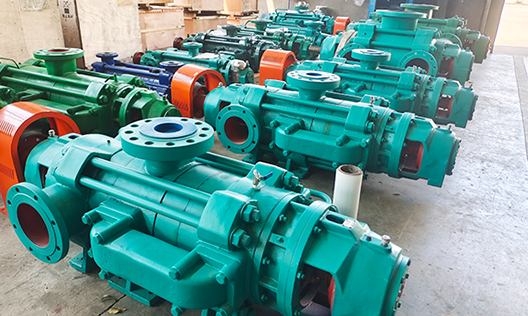
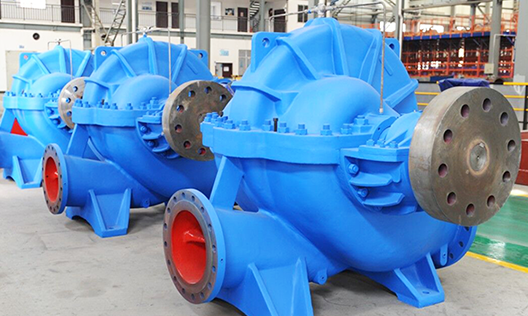
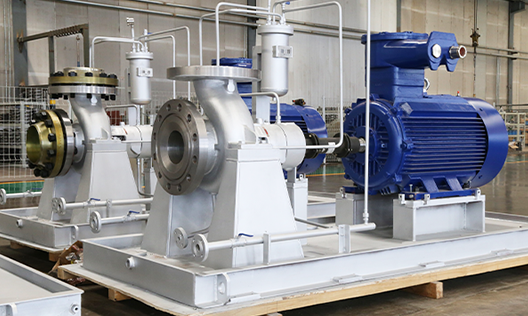
Puede fabricar 26 series de productos, incluyendo bombas de circulación para grandes centrales eléctricas, bombas de condensación para grandes centrales eléctricas, bombas petroquímicas, bombas multietapa, bombas de aguas residuales y lodo, bombas multietapa autoequilibradas, bombas de doble succión y única etapa tipo split, y bombas centrífugas de succión simple y única etapa.
-
Cases
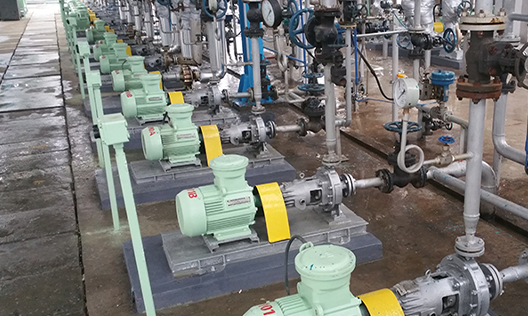
La elección de más de cientos de miles de clientes, cubriendo industrias como minería de carbón, metalurgia, química, energía, recursos hídricos, alimentos, municipalidades y protección ambiental, y exportando a Asia Sudeste, África, América y otros lugares.
-
Service
La empresa fue la primera en la industria en obtener las certificaciones internacionales del sistema de calidad ISO 9001:2008, del sistema de gestión ambiental ISO 14001 y del sistema de gestión de seguridad y salud ocupacional GB/T 28001, además de la certificación API 610 de la Asociación Estadounidense del Petróleo.
-
About us
La empresa, fundada en 1989, es una empresa nacional de alta tecnología integral que integra diseño, investigación y desarrollo, fabricación y servicios; actualmente es una empresa clave en la industria china de bombas centrífugas y una de las grandes fábricas especializadas.
-
Blogs
Con productos innovadores, calidad excepcional y servicios integrales, buscamos la verdad y la pragmática, avanzamos con iniciativa, y nos esforzamos por lograr el objetivo de ser "la marca líder en el campo de aplicación de bombas centrífugas en el país"! Raigada en Hunan, orientada a todo el país y hacia el mundo!
In-depth Analysis of Causes for Overheating Bearings in Wear-Resistant Multistage Centrifugal Pumps, along with Troubleshooting and Prevention Methods
Publication Date:
2025-11-20
Author:
Source:


Changsha Zhonglian Pump Industry At Mining drainage pump Having deeply cultivated the field for over 20 years, Wear-resistant multi-stage centrifugal pump Possesses extensive experience in production and engineering applications, and through years of field experience, has mastered wear-resistant multi-stage… Centrifugal pump Abnormal temperature rise in bearings has always been a typical failure mode that requires our utmost attention and precise troubleshooting. This issue not only affects equipment efficiency but also plays a critical role in ensuring the continuous and safe operation of pump stations. At its core, bearing overheating stems from an imbalance between frictional forces and heat generation. Drawing on our deep understanding of fluid dynamics and mechanical sealing principles, this article provides an in-depth analysis of the causes behind bearing overheating in wear-resistant multistage centrifugal pumps, along with practical methods for diagnosis, troubleshooting, and prevention.

First, the core mechanical friction heat source often revolves around lubrication and installation accuracy.
The "health" of lubricants and their role in quantitative management: Lubricating oil is the "blood" of bearings. Contamination, aging, or even simple oil-level deviations—whether excessive, leading to heat generation from agitation, or insufficient, causing dry friction—can all directly compromise the oil film, dramatically increasing frictional heat. Meanwhile, don’t overlook the importance of smooth oil return flow; if the return oil groove becomes clogged, it may result in falsely high oil levels or prevent the lubricant from circulating effectively.
Suggestion: Strictly adhere to the oil testing cycle and ensure the use of the specified grade. Oil levels must be precisely maintained at the centerline indicated by the dipstick or oil mark. Regularly inspect and clean the return oil tank.
Strict alignment precision requirements: Improper alignment between the driver and the pump body coupling is the primary culprit behind mechanical friction. Even minor angular or parallel misalignments can translate into substantial radial or axial loads during high-speed operation, leading to abnormal wear and overheating of the bearing raceways.
Suggestion: Use a laser alignment tool for high-precision calibration to achieve minimal cold-state misalignment. For high-temperature, high-pressure pumps, obtain accurate thermal expansion data to allow for proper hot-state alignment corrections.
Secondly, the pump's operational status and environmental factors are indispensable indirect drivers.
The "penalty" for operating far from the design conditions: When the pump's actual flow rate and head significantly deviate from the optimal efficiency point, BEP ) can trigger hydraulic instability within the pump body. This typically manifests as intensified internal backflow and vortex formation, generating strong radial forces. Such hydraulic imbalance does not directly cause overheating; instead, it exerts lateral thrust on the shaft, ultimately transferring this excessive load—far beyond the design capacity—to the bearings, indirectly leading to temperature rise.
The "moisture-proof" project for the bearing chamber: Water molecules entering the bearing chamber—whether through seal leaks or condensation from ambient humidity—can lead to lubricant emulsification, compromising the oil film strength and ultimately causing rusting and a sharp increase in frictional heat.
Suggestion: Inspect and improve the bearing housing seals (such as labyrinth seals or oil seals) to ensure isolation from the surrounding environment.
The "test" of medium-induced heat transfer and ambient cooling: When transporting high-temperature media, heat tends to propagate along the pump shaft toward the bearing housing. If this accumulated heat cannot be dissipated promptly—and if the pump design lacks effective cooling or thermal isolation measures (such as cooling water jackets or heat sinks)—the bearing temperature will exceed safe limits. Additionally, excessively high ambient temperatures in the pump room, combined with significant dust accumulation or oil buildup on the surface of the bearing housing, can severely reduce cooling efficiency.
Suggestion: Ensure the cooling system (if equipped) is functioning properly, and keep the bearing housing surfaces clean to improve ventilation in the pump room.
Finally, the quality of the bearing itself ultimately bears the brunt of all the problems.
The reliability and lifespan of the bearing body: Whether it's an inherent quality defect in the bearing or severe wear after prolonged operation under high loads, both ultimately lead to temperature rise. Wear results in changes in clearance and a loss of geometric precision, directly manifesting as increased heat generation.
Suggestion: Perform preventive replacements according to the manufacturer's recommended schedule, and use high-quality bearings from authorized channels.
Recommended Information


Related Products
Perhaps you also want to know?
Zoomlian Pump Industry
Address:No. 210, Environmental Protection Middle Road, Yuhua Economic Development Zone, Changsha City, Hunan Province China
All rights reserved © Changsha Zoomlian Pump Co., Ltd.
This website supports IPv4 IPv6 bidirectional access
Website construction:Zhongqi Power Changsha