

-
Products
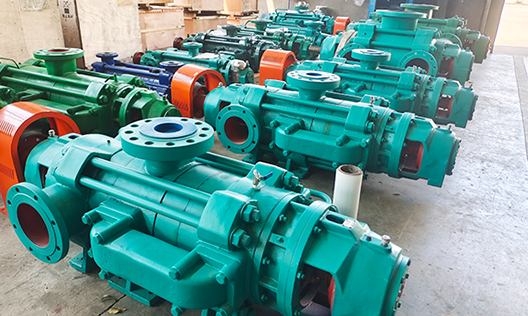
Puede fabricar 26 series de productos, incluyendo bombas de circulación para grandes centrales eléctricas, bombas de condensación para grandes centrales eléctricas, bombas petroquímicas, bombas multietapa, bombas de aguas residuales y lodo, bombas multietapa autoequilibradas, bombas de doble succión y única etapa tipo split, y bombas centrífugas de succión simple y única etapa.
-
Cases
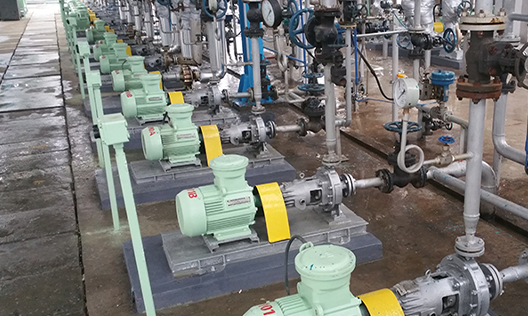
La elección de más de cientos de miles de clientes, cubriendo industrias como minería de carbón, metalurgia, química, energía, recursos hídricos, alimentos, municipalidades y protección ambiental, y exportando a Asia Sudeste, África, América y otros lugares.
-
Service
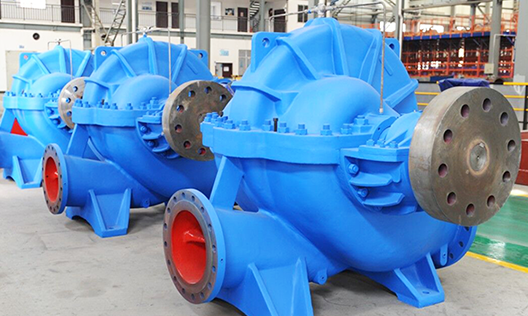
La empresa fue la primera en la industria en obtener las certificaciones internacionales del sistema de calidad ISO 9001:2008, del sistema de gestión ambiental ISO 14001 y del sistema de gestión de seguridad y salud ocupacional GB/T 28001, además de la certificación API 610 de la Asociación Estadounidense del Petróleo.
-
About us
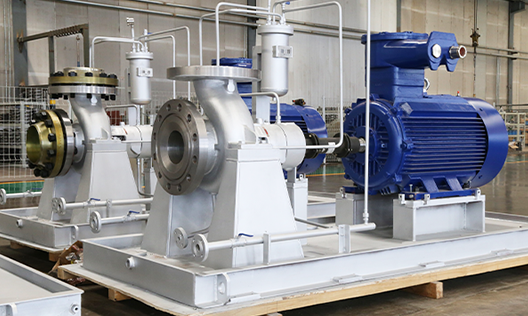
La empresa, fundada en 1989, es una empresa nacional de alta tecnología integral que integra diseño, investigación y desarrollo, fabricación y servicios; actualmente es una empresa clave en la industria china de bombas centrífugas y una de las grandes fábricas especializadas.
-

Blogs
Con productos innovadores, calidad excepcional y servicios integrales, buscamos la verdad y la pragmática, avanzamos con iniciativa, y nos esforzamos por lograr el objetivo de ser "la marca líder en el campo de aplicación de bombas centrífugas en el país"! Raigada en Hunan, orientada a todo el país y hacia el mundo!
Reasons for Medium Backflow in Horizontal Multistage Pumps and Preventive Measures
Publication Date:
2025-11-21
Author:
Source:


In industrial fields such as chemical engineering, water treatment, and metallurgy, horizontal multistage pumps serve as the core equipment for fluid transportation, and their operational stability directly affects production efficiency. Medium backflow is a frequent and challenging issue in these pump systems, characterized by the reverse flow of the conveyed medium, which not only reduces pump efficiency 15%-30% , which is more likely to trigger cascading failures such as impeller cavitation and mechanical seal burnout, and may even lead to an imbalance in system pressure. In this article, the manufacturer of horizontal multistage pumps Changsha Zoomlion Pump Industry Let's share the reasons behind medium backflow in horizontal multistage pumps, along with preventive measures.

I. Identifying the Core Causes of Medium Backflow
Media backflow is not caused by a single factor; instead, it requires tracing back from multiple dimensions, including system design, equipment operation, and operational management.
Inherent defects in the piping system: The pipeline layout is often unreasonable, such as having closely spaced bends or abrupt changes in pipe diameter, which lead to sudden increases in local resistance. Additionally, insufficient straight sections at inlets can create vortices, disrupting the intended directional flow of the medium. In some scenarios, the absence of backflow prevention devices makes the system particularly vulnerable to siphoning or backpressure-induced reflux during pressure fluctuations.
Valve Operation and Selection Errors: The incorrect sequence of opening and closing the outlet valves led to an instantaneous imbalance in system pressure. Additionally, valves were not selected based on the specific characteristics of the medium—for instance, using standard gate valves under high-pressure conditions—which can easily result in leakage and subsequent backflow due to inadequate sealing. Important note: The pump inlet valve should only be used for isolation purposes. Adjusting the inlet valve to control flow is strictly prohibited, as this could inadvertently trigger backflow.
Pump unit operating conditions deviate: Operating continuously at the design flow rate 70% The following or 120% The above operation has resulted in an imbalance between the pump outlet pressure and the system pressure. Particularly under variable-flow conditions, failing to promptly adjust the speed or outlet opening can significantly increase the risk of backflow.
Missing or malfunctioning backflow prevention devices: Key components such as check valves are either not installed, or existing devices have lost their one-way sealing function due to wear and tear or mechanical jamming, failing to block reverse flow paths.
II. Systematic Prevention Plan: Comprehensive Control Across the Entire Process, from Design to Operation
(1) Source Optimization: Compliance Design for Pipeline and Valve Systems
Pipeline layout standardization: Based on GB50275 Standard: The bend radius of the pump outlet pipe elbow shall not be less than the pipe diameter. 3 Double, reducing local resistance; leave a clearance of no less than before the inlet. 3 A straight pipe section with twice the diameter to prevent vortex formation. When conveying special media such as potable drinking water, it is necessary to comply with GB50015-2003 Air gaps or backflow preventers must be installed to prevent contaminated water from flowing backward.
Valve Selection and Installation Standardization: The pump outlet valve assembly is configured as "flexible connector → check valve → gate valve." / "Butterfly valves" should be installed in sequence to facilitate water shut-off during maintenance. Caliber DN ≤ 50mm Choose a lift-type check valve, DN ≥ 50mm When selecting swing check valves, prioritize slow-closing check valves for large-diameter pipelines to minimize water hammer effects.
(2) Device Upgrade: Configuration of Key Anti-Backflow Components
Check valves with precise fit: Select models based on the medium's temperature and pressure—e.g., choose stainless steel check valves for high-temperature applications, and opt for wear-resistant valve flap designs when handling media containing particles. During installation, ensure the flow direction indicator aligns with the actual medium flow; for horizontal pipelines, prioritize swing-type check valves, while vertical pipelines should use lift-type designs.
Pressure monitoring system interlock: Install pressure sensors at the pump outlet and critical nodes throughout the system, and set pressure fluctuation thresholds (typically ± of the design pressure). 10% ), automatically triggers an alarm when abnormalities occur, and initiates coordinated actions such as adjusting the outlet valve or activating shutdown protection.
Enhanced Backflow Prevention for Special Applications: In hazardous medium transport systems such as chemical plants, a backflow preventer is added downstream of the check valve. Additionally, variable-frequency speed control systems are equipped with pressure compensation devices to maintain stable outlet pressure.
(III) Operational Control: Optimization of Operating Conditions and Procedures
Precise matching of pump unit operating conditions: By using variable-frequency speed control or outlet valve adjustment, the operating flow rate is maintained within the designed conditions. 80%-110% Ensure the outlet pressure is balanced with system resistance within the specified range. Regularly inspect the pump unit’s performance curves and adjust operating parameters promptly as needed.
Standardized valve operation procedures: Establish operating guidelines such as "Open the inlet valve first → Start the pump → Gradually open the outlet valve," and "Close the outlet valve first → Stop the pump → Close the inlet valve," to prevent pressure surges that could cause backflow. After each start-up or shutdown, inspect the valve's sealing performance.
III. Prevention System: Dual Assurance Through Maintenance and Management
Establish a tiered inspection system: Conduct daily checks on the sealing condition of check valves and pressure sensor data; perform weekly inspections of pipeline flange sealing points and valve operation flexibility; and, once a month, test the performance of the backflow prevention device according to the "Maintenance and Repair Procedures for Multistage Centrifugal Pumps," with a particular focus on examining wear conditions of the check valve disc.
Professional maintenance procedures: Filters are cleaned monthly to prevent debris from blocking the check valves; check valves undergo sealing tests quarterly, and any leaks detected result in immediate replacement of the valve disc or seals; pipelines are subjected to annual pressure testing to identify hidden damage.
Personnel Capability Enhancement Training: Conducting "Return Flow Identification" + "Specialized training" on emergency response, focusing on practical skills such as identifying abnormal pressure conditions and mastering check valve maintenance techniques. Only those who pass the assessment will be allowed to work, ensuring that operators can swiftly address potential backflow hazards.
Controlling and preventing medium backflow in horizontal multistage pumps requires adhering to the principles of "compliant source design, precise operational control, and thorough maintenance management." By standardizing pipeline configurations, scientifically selecting anti-backflow devices, and establishing a comprehensive lifecycle maintenance system, we can not only avoid equipment wear and increased energy consumption caused by backflow but also ensure the continuous and safe operation of industrial systems—providing critical support for enterprises to reduce costs and enhance efficiency.
Recommended Information


Related Products
Perhaps you also want to know?
Zoomlian Pump Industry
Address:No. 210, Environmental Protection Middle Road, Yuhua Economic Development Zone, Changsha City, Hunan Province China
All rights reserved © Changsha Zoomlian Pump Co., Ltd.
This website supports IPv4 IPv6 bidirectional access
Website construction:Zhongqi Power Changsha