

-
Products
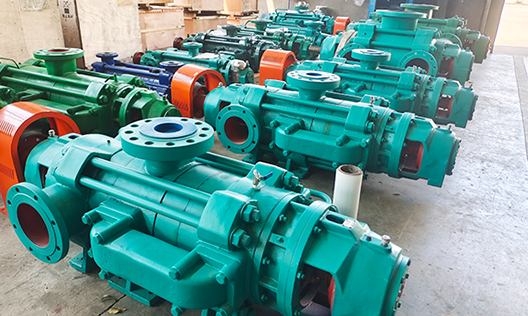
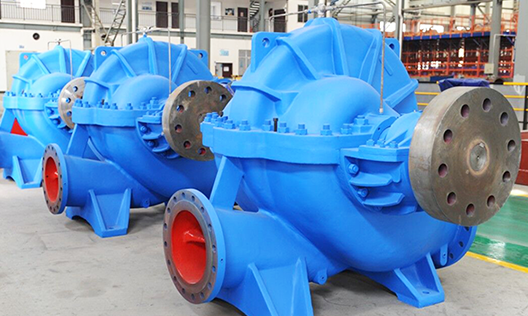
Puede fabricar 26 series de productos, incluyendo bombas de circulación para grandes centrales eléctricas, bombas de condensación para grandes centrales eléctricas, bombas petroquímicas, bombas multietapa, bombas de aguas residuales y lodo, bombas multietapa autoequilibradas, bombas de doble succión y única etapa tipo split, y bombas centrífugas de succión simple y única etapa.
-
Cases
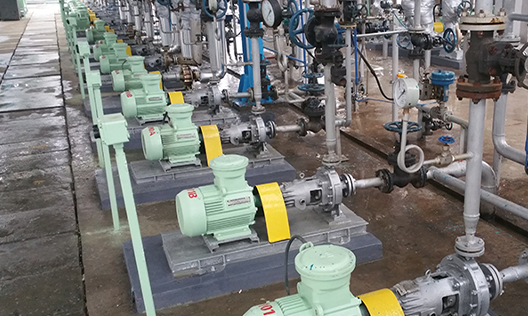
La elección de más de cientos de miles de clientes, cubriendo industrias como minería de carbón, metalurgia, química, energía, recursos hídricos, alimentos, municipalidades y protección ambiental, y exportando a Asia Sudeste, África, América y otros lugares.
-
Service
La empresa fue la primera en la industria en obtener las certificaciones internacionales del sistema de calidad ISO 9001:2008, del sistema de gestión ambiental ISO 14001 y del sistema de gestión de seguridad y salud ocupacional GB/T 28001, además de la certificación API 610 de la Asociación Estadounidense del Petróleo.
-
About us
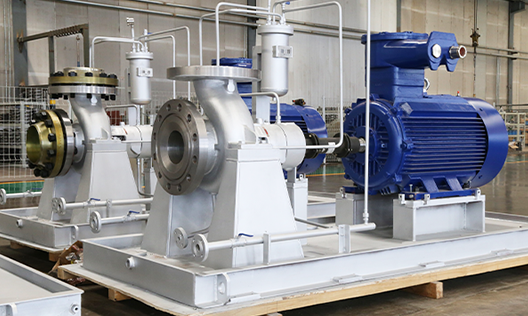
La empresa, fundada en 1989, es una empresa nacional de alta tecnología integral que integra diseño, investigación y desarrollo, fabricación y servicios; actualmente es una empresa clave en la industria china de bombas centrífugas y una de las grandes fábricas especializadas.
-

Blogs
Con productos innovadores, calidad excepcional y servicios integrales, buscamos la verdad y la pragmática, avanzamos con iniciativa, y nos esforzamos por lograr el objetivo de ser "la marca líder en el campo de aplicación de bombas centrífugas en el país"! Raigada en Hunan, orientada a todo el país y hacia el mundo!
Methods and Precautions for Starting a Horizontal Single-Stage Double-Suction Centrifugal Pump
Publication Date:
2025-11-19
Author:
Source:


As a seasoned manufacturer of horizontal single-stage double-suction centrifugal pumps, I deeply understand that every successful fluid transfer begins with a meticulous and professional startup procedure—this is not just about operation, but also the foundation for ensuring the equipment’s long-term, efficient performance. In this article, Changsha Zhonglian Pump Industry Let me share with our users the startup method and precautions for double-suction centrifugal pumps. I’m sure after reading this article, you’ll gain a relatively clear understanding of how to start and stop the pump.

Phase One: Static Safety Preparation
First of all, all operations must be based on sufficient input conditions. Therefore, our first step is to prepare the water source and fill the horizontal single-stage double-suction centrifugal pump casing—this is the physical prerequisite to prevent the pump from running dry and getting damaged. Only after ensuring proper water filling can we proceed to the second step: precisely switching the pipeline system according to the trial operation conditions, thereby guaranteeing the correct fluid flow path. This step represents the logical preparation at the system level. Once the pipeline switching is complete, the safety of the mechanical components becomes the immediate focus; hence, it’s crucial to promptly activate the shaft seal and bearing cooling water, effectively establishing a thermal management safeguard in anticipation of the high-speed operation ahead.
Phase Two: Dynamic Performance Testing
Once preparations are complete, the process moves into the dynamic testing phase. Instead of immediately running the system at full load, we first perform a brief "jog" start—just long enough to quickly verify that the motor rotates smoothly and that there’s no binding or sticking in the mechanical components. This "jog" test serves as a preliminary, rapid health check for the equipment. Only after confirming that no initial issues are present do we proceed with a second startup, gradually ramping up the flow rate. This incremental loading process is crucial—it helps prevent water hammer effects and ensures that the operating point of the horizontal single-stage double-suction centrifugal pump transitions smoothly from its current state to the designed working conditions.
Phase Three: Multidimensional Data Monitoring
Once the horizontal single-stage double-suction centrifugal pump enters the loaded state, the focus of operation shifts to multi-dimensional, real-time monitoring. All monitored parameters form a feedback loop that helps assess the equipment's operational condition. From a mechanical dynamics perspective, it’s crucial to closely observe the vibration intensity of both the water pump and the motor—this serves as a direct indicator of rotor alignment and balancing. Meanwhile, from a thermodynamic standpoint, continuous monitoring of bearing lubrication and temperature rise is essential to ensure that mechanical friction remains under control. Additionally, from an electrical safety perspective, it’s necessary to verify the motor’s current levels and temperature rise to prevent overloading during operation.
Phase Four: Decision-Making and Closed-Loop Management
Finally, all the collected data will lead to a clear operational decision. We also need to make the final adjustments to the sealing system:
If using a packing seal: the drip rate of the shaft seal cooling water must be carefully controlled to ensure a steady, continuous flow—such as less than one drop per minute. 40-60 It is advisable to ensure proper cooling and lubrication; also, use your sense of touch to check for any temperature rise in the packing.
If it's a mechanical seal:冲洗 needs to be checked. / Isolation fluid system (such as API The pressure, flow rate, and temperature of the pipeline ensure a stable operating environment for the sealing surfaces.
Only when the four core indicators—vibration, lubrication, current, and temperature rise—are all within their designed, permissible normal ranges can the equipment logically proceed to continuous operation. Conversely, if any one of these parameters deviates from the norm, it triggers an immediate shutdown signal, requiring the machine to be halted immediately. Only after professional technicians have conducted a thorough fault diagnosis and addressed all identified defects can the equipment be safely restarted and reintegrated into production, ensuring a closed-loop management system for safe operations.
Recommended Information


Related Products
Perhaps you also want to know?
Zoomlian Pump Industry
Address:No. 210, Environmental Protection Middle Road, Yuhua Economic Development Zone, Changsha City, Hunan Province China
All rights reserved © Changsha Zoomlian Pump Co., Ltd.
This website supports IPv4 IPv6 bidirectional access
Website construction:Zhongqi Power Changsha