

-
Products
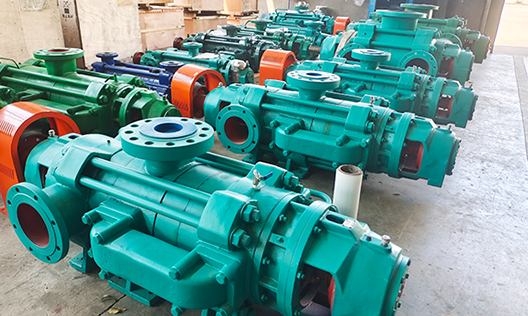
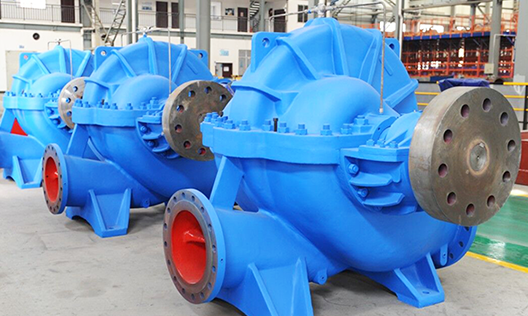
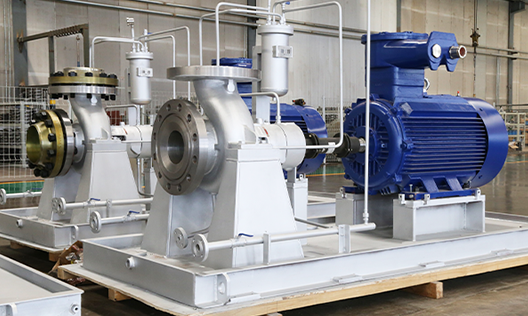
Puede fabricar 26 series de productos, incluyendo bombas de circulación para grandes centrales eléctricas, bombas de condensación para grandes centrales eléctricas, bombas petroquímicas, bombas multietapa, bombas de aguas residuales y lodo, bombas multietapa autoequilibradas, bombas de doble succión y única etapa tipo split, y bombas centrífugas de succión simple y única etapa.
-
Cases
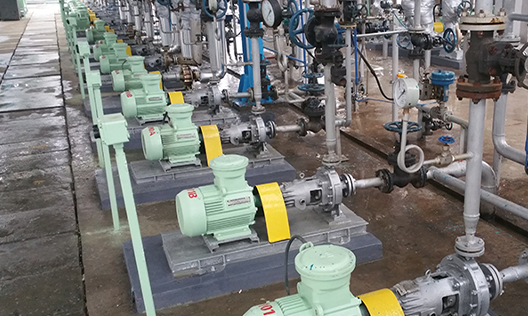
La elección de más de cientos de miles de clientes, cubriendo industrias como minería de carbón, metalurgia, química, energía, recursos hídricos, alimentos, municipalidades y protección ambiental, y exportando a Asia Sudeste, África, América y otros lugares.
-
Service
La empresa fue la primera en la industria en obtener las certificaciones internacionales del sistema de calidad ISO 9001:2008, del sistema de gestión ambiental ISO 14001 y del sistema de gestión de seguridad y salud ocupacional GB/T 28001, además de la certificación API 610 de la Asociación Estadounidense del Petróleo.
-
About us
La empresa, fundada en 1989, es una empresa nacional de alta tecnología integral que integra diseño, investigación y desarrollo, fabricación y servicios; actualmente es una empresa clave en la industria china de bombas centrífugas y una de las grandes fábricas especializadas.
-

Blogs
Con productos innovadores, calidad excepcional y servicios integrales, buscamos la verdad y la pragmática, avanzamos con iniciativa, y nos esforzamos por lograr el objetivo de ser "la marca líder en el campo de aplicación de bombas centrífugas en el país"! Raigada en Hunan, orientada a todo el país y hacia el mundo!
Analysis of Why Centrifugal Pumps Fail to Draw Water
Publication Date:
2025-11-14
Author:
Source:


In scenarios such as agricultural irrigation and industrial fluid transportation, centrifugal pumps are widely used due to their simple structure, convenient maintenance, and relatively high efficiency. However, the common issue of "being unable to lift water" frequently troubles users—disrupting production schedules and often leaving them feeling helpless as they struggle to pinpoint the root cause. In fact, the inability of a centrifugal pump to draw water is not entirely mysterious; it usually stems from problems like air intake, insufficient rotational speed, inadequate suction lift, pipeline resistance, or component wear. Below, we present insights from a centrifugal pump manufacturer. China United Pump Industry Based on the experience gained from operating pumps on-site, we’ll systematically analyze and pinpoint the causes, helping our users quickly identify why their centrifugal pumps are failing to draw water.

1. Inlet Pipe / Pump body intake: The vacuum environment is disrupted, naturally leading to failed water suction.
Centrifugal pumps rely on creating a vacuum to draw water. However, if air enters the inlet pipe or the pump body, the vacuum environment is disrupted, directly leading to failure in water suction.
1. Before starting, insufficient priming water was added, or even though the vent hole was already overflowing with water, the pump shaft wasn’t rotated to thoroughly expel the air trapped inside, leaving a small amount of air remaining in the suction pipe and pump body.
2. The horizontal section of the inlet pipe is installed improperly, and the reverse flow direction is not maintained. 0.5% The above-mentioned downward slope (with the pump inlet end positioned at the highest point) can lead to air accumulation inside the pipe if it curves upward, thereby reducing the suction vacuum efficiency.
3. After prolonged use, the stuffing box may experience wear, or the packing may have been installed too loosely, causing significant water to spray out from the gap between the packing and the pump shaft sleeve. Meanwhile, external air can seep into the pump body through these same gaps.
4. The inlet pipe has been submerged underwater for an extended period, causing corrosion that has created holes in the pipe walls. As the pump operates, the water level gradually drops—and once these holes emerge above the water surface, air begins to enter the pipe through them.
5. Cracks at the bend of the inlet pipe and tiny gaps where it connects to the pump could both become pathways for air to seep in.
2. Abnormal Rotational Speed: Power output is mismatched, resulting in a significant drop in water absorption capacity.
The water suction performance of a centrifugal pump is directly related to its rotational speed—when the speed fails to meet the standard, it can lead to reduced flow rate and head, or even prevent water from being lifted altogether.
1. After the original electric motor breaks down, many users casually find another motor to replace it—only to discover, due to poor compatibility between the new motor’s power output and the water pump, that flow rates decrease, head levels become insufficient, or even water fails to be pumped at all.
2. Large centrifugal pumps driven by belt transmission experience wear and loosening of the drive belt over time, leading to slippage. As a result, the actual speed of the water pump drops below its rated speed.
3. Installation deviations such as insufficient center distance between two pulleys, shafts being non-parallel, the tight side of the drive belt facing upward resulting in an excessively small wrap angle, or excessive eccentricity between the two shafts during coupling transmission can all lead to abnormal pump speeds.
4. Mechanical failures of the pump itself, such as loose fastening nuts between the impeller and pump shaft, deformation or bending of the pump shaft causing impeller misalignment and friction with the pump casing, or bearing damage, can all directly reduce the rotational speed.
5. Improper motor maintenance, such as winding burnout and demagnetization, or altering the number of winding turns during repairs. / Wire diameter / Improper wiring or failure to thoroughly troubleshoot the issue can both cause the pump speed to deviate from the normal range.
3. Excessive Suction Lift: Exceeding the equipment's allowable range, resulting in a complete inability to draw water.
Many users overlook the pump's "maximum allowable suction lift" during installation, ultimately leading to difficulties—or even an inability—to draw water.
The vacuum degree that a water pump's suction port can achieve has a limit; theoretically, under absolute vacuum conditions, the suction lift would be approximately 10 A column of water, but in practice, no pump can achieve absolute vacuum. Moreover, excessive vacuum levels can cause the water inside the pump to vaporize, disrupting normal operation. Therefore, all types of centrifugal pumps have a clearly specified maximum allowable suction lift, typically at 3 ~ 8.5 Between meters, installation must strictly follow these requirements—do not prioritize convenience at the expense of ignoring suction head limitations.
4. Excessive Pipeline Resistance: Too much head loss results in naturally weak water lift.
Some users found after measurement that the vertical distance from the reservoir (or water tower) to the water source’s surface was slightly less than the pump’s head—but they still experienced low water output or even a complete failure to lift water. The core reason is excessive resistance loss in the pipeline system.
1. Excessively long pipelines and numerous bends can significantly increase water flow resistance— 90 The resistance of bending the pipe is far greater than 120 Bend the pipe, one by one 90 Bending the pipe will cause 0.5 ~ 1 The head loss of the pump, per 20 A meter-long pipe produces approximately 1 The head loss of the pump;
2. Randomly changing the diameter of the pump's inlet and outlet pipes will alter the water flow velocity within the pipeline, disrupting flow stability and subsequently affecting the head, ultimately leading to a decline in water-lifting efficiency.
5. Component Failure: A critical component "goes on strike," causing the water-absorption process to grind to a halt.
In addition to the issues mentioned above, failures in key components of the water pump can also directly lead to the problem of being unable to lift water.
1. The bottom valve fails to open properly, often because the pump has been left idle for an extended period, causing the valve seat washer to become stuck; alternatively, a bottom valve without a washer may get jammed due to rust.
2. The bottom valve filter screen is clogged—either because the screen is entangled with debris, or the bottom valve has sunk into the underwater sludge layer, preventing the screen from allowing water to flow through normally.
3. The impeller is severely worn, and the blades have developed wear and deformation after prolonged use, directly reducing the pump's hydraulic performance and making it unable to meet water intake requirements.
4. Faults or blockages in gate valves and check valves—such as valve sticking or internal buildup—can lead to reduced flow, or even prevent water from being pumped altogether.
5. A leak in the export pipeline will cause pressure loss, which in turn affects the water lift volume.
If you're still unable to pinpoint the cause while troubleshooting a centrifugal pump that isn’t lifting water, feel free to provide details such as the pump model, installation conditions, and the type of fluid being conveyed. We’ll then offer you a tailored troubleshooting plan to help resolve the issue efficiently—preventing any disruptions to your production schedule.
Recommended Information


Related Products
Perhaps you also want to know?
Zoomlian Pump Industry
Address:No. 210, Environmental Protection Middle Road, Yuhua Economic Development Zone, Changsha City, Hunan Province China
All rights reserved © Changsha Zoomlian Pump Co., Ltd.
This website supports IPv4 IPv6 bidirectional access
Website construction:Zhongqi Power Changsha