

-
Products
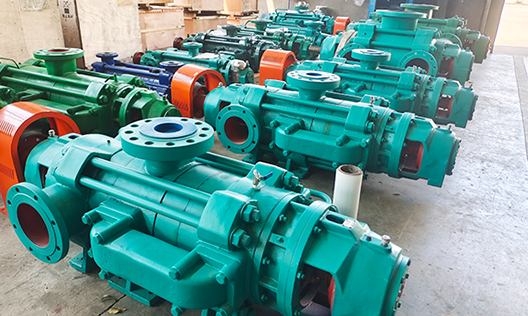
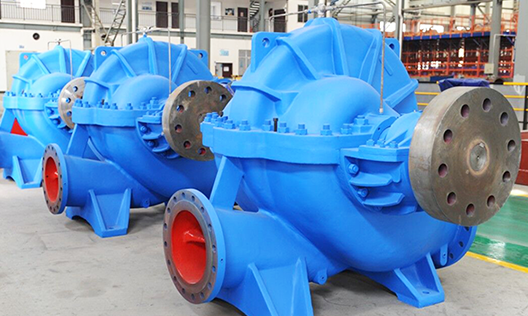
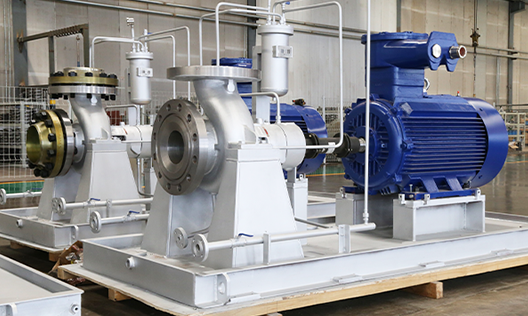
Puede fabricar 26 series de productos, incluyendo bombas de circulación para grandes centrales eléctricas, bombas de condensación para grandes centrales eléctricas, bombas petroquímicas, bombas multietapa, bombas de aguas residuales y lodo, bombas multietapa autoequilibradas, bombas de doble succión y única etapa tipo split, y bombas centrífugas de succión simple y única etapa.
-
Cases
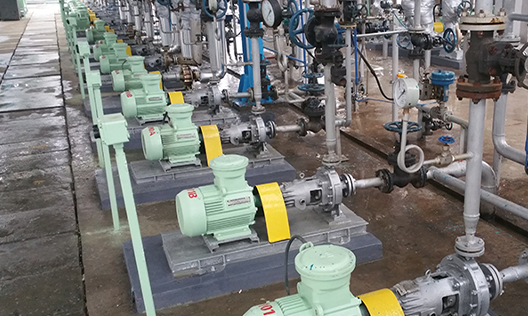
La elección de más de cientos de miles de clientes, cubriendo industrias como minería de carbón, metalurgia, química, energía, recursos hídricos, alimentos, municipalidades y protección ambiental, y exportando a Asia Sudeste, África, América y otros lugares.
-
Service
La empresa fue la primera en la industria en obtener las certificaciones internacionales del sistema de calidad ISO 9001:2008, del sistema de gestión ambiental ISO 14001 y del sistema de gestión de seguridad y salud ocupacional GB/T 28001, además de la certificación API 610 de la Asociación Estadounidense del Petróleo.
-
About us
La empresa, fundada en 1989, es una empresa nacional de alta tecnología integral que integra diseño, investigación y desarrollo, fabricación y servicios; actualmente es una empresa clave en la industria china de bombas centrífugas y una de las grandes fábricas especializadas.
-

Blogs
Con productos innovadores, calidad excepcional y servicios integrales, buscamos la verdad y la pragmática, avanzamos con iniciativa, y nos esforzamos por lograr el objetivo de ser "la marca líder en el campo de aplicación de bombas centrífugas en el país"! Raigada en Hunan, orientada a todo el país y hacia el mundo!
Wear-resistant mining multistage centrifugal pump
Publication Date:
2025-09-05
Author:
Source:


Introduction to Wear-Resistant Multi-Stage Centrifugal Pumps for Mining
MD-Type Wear-Resistant Mining Multistage Pump It is a horizontal single-suction type. Multistage centrifugal pump It adopts the hydraulic model of a nationally recommended, highly efficient and energy-saving product, placing it at the forefront of technology within the industry. This pump boasts advantages such as high efficiency, a wide performance range, safe and smooth operation, low noise levels, and an extended service life, along with convenient installation and maintenance. The MD-type wear-resistant, multi-stage mining pump is available in two models: the standard MD version and the MDP self-balancing version.
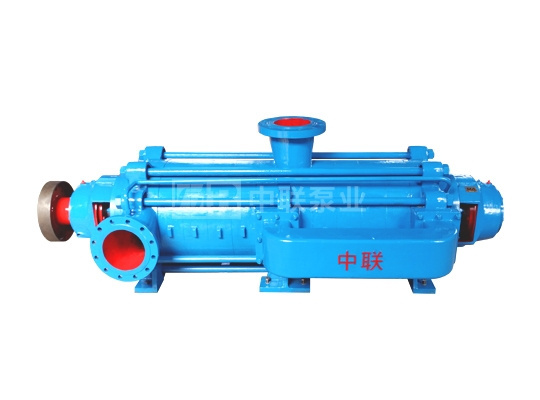
Applications for Wear-Resistant Mining Multistage Centrifugal Pumps
The MD-type wear-resistant mining multistage pump is designed for conveying neutral mineral water containing solid particles at a concentration of no more than 1.5% (with particle size smaller than 0.5 mm) and other similar wastewater. The temperature of the medium being pumped must not exceed 80°C, making it suitable for applications such as steel plants, mine drainage, and sewage transportation.
The MDP-type wear-resistant mining multistage pump is designed for conveying medium-mining water and other similar wastewater containing particles of up to 1.5% by volume, with particle sizes no larger than 1.3 mm, and operating at temperatures ranging from -20°C to 80°C.

Meaning of Wear-Resistant Mining Multistage Pump Models

MDP-Type Self-Balancing Multistage Centrifugal Pump The suction inlet can be arranged vertically upward or horizontally, while the discharge outlet is positioned vertically upward. The pump primarily consists of components such as the suction section, middle section, discharge section, secondary suction section, forward guide vanes, reverse guide vanes, forward impeller, reverse impeller, shaft, throttling device, pressure-reducing unit, sleeve, bearing housing, transition pipe, and more. The middle section is securely connected to the suction and discharge sections via high-strength through-bolts. Additionally, the sealing surfaces between the pump’s suction, middle, and discharge sections are designed with a robust metal-to-metal hard seal, lubricated by molybdenum disulfide grease. The rotor assembly includes key components mounted on the shaft: the forward impeller, the throttling and pressure-reducing device, the reverse impeller, the shaft sleeve, and the bearing sleeve. The bearings employ a "fixed-floating" dry-oil lubrication design—specifically, a cylindrical roller bearing at the drive end and an angular-contact ball bearing at the opposite end. The pump's working chamber comprises the suction section, middle section, discharge section, secondary suction section, forward guide vanes, reverse guide vanes, transition pipe, and other components. To ensure optimal performance, the rotor assembly is sealed against the stationary parts using elements like sealing rings and guide vane sleeves. If these seals or guide vane sleeves show signs of wear that begin to compromise the pump’s efficiency, they should be replaced promptly.


Previous:
Recommended Information


Related Products
Perhaps you also want to know?
Zoomlian Pump Industry
Address:No. 210, Environmental Protection Middle Road, Yuhua Economic Development Zone, Changsha City, Hunan Province China
All rights reserved © Changsha Zoomlian Pump Co., Ltd.
This website supports IPv4 IPv6 bidirectional access
Website construction:Zhongqi Power Changsha