

-
Products
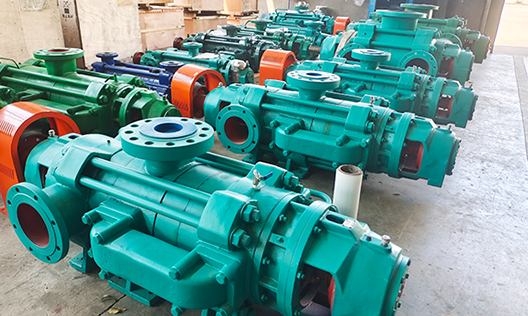
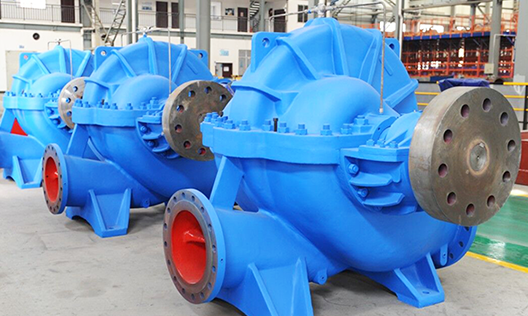
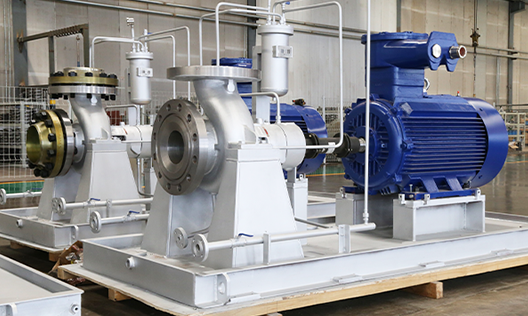
Puede fabricar 26 series de productos, incluyendo bombas de circulación para grandes centrales eléctricas, bombas de condensación para grandes centrales eléctricas, bombas petroquímicas, bombas multietapa, bombas de aguas residuales y lodo, bombas multietapa autoequilibradas, bombas de doble succión y única etapa tipo split, y bombas centrífugas de succión simple y única etapa.
-
Cases
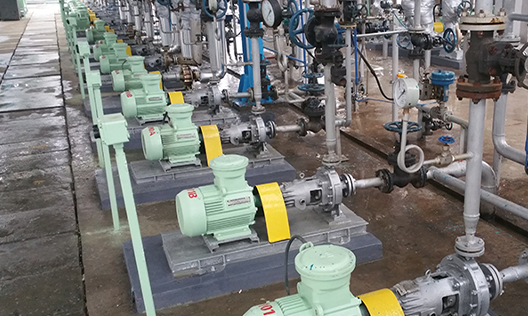
La elección de más de cientos de miles de clientes, cubriendo industrias como minería de carbón, metalurgia, química, energía, recursos hídricos, alimentos, municipalidades y protección ambiental, y exportando a Asia Sudeste, África, América y otros lugares.
-
Service
La empresa fue la primera en la industria en obtener las certificaciones internacionales del sistema de calidad ISO 9001:2008, del sistema de gestión ambiental ISO 14001 y del sistema de gestión de seguridad y salud ocupacional GB/T 28001, además de la certificación API 610 de la Asociación Estadounidense del Petróleo.
-
About us
La empresa, fundada en 1989, es una empresa nacional de alta tecnología integral que integra diseño, investigación y desarrollo, fabricación y servicios; actualmente es una empresa clave en la industria china de bombas centrífugas y una de las grandes fábricas especializadas.
-

Blogs
Con productos innovadores, calidad excepcional y servicios integrales, buscamos la verdad y la pragmática, avanzamos con iniciativa, y nos esforzamos por lograr el objetivo de ser "la marca líder en el campo de aplicación de bombas centrífugas en el país"! Raigada en Hunan, orientada a todo el país y hacia el mundo!
Technical Specifications and Application Guide for Rust Prevention in Multistage Centrifugal Pumps
Publication Date:
2026-03-20
Author:
Source:


Changsha Zoomlion Multistage Pumps Centrifugal pump It is widely used in the industrial sector; however, its complex structure and operating environment readily lead to corrosion, which directly affects pump performance and service life. To address the anti-corrosion requirements of multistage pumps, in conjunction with Changsha Zoomlion Pump Industry Drawing on years of technical expertise, we have developed a set of technical specifications and application guidelines for rust prevention in multistage centrifugal pumps, intended as a reference for user organizations.

I. Environmental Control System
1. Maintain a dry storage and operating environment: Avoid prolonged exposure of the pump to humid conditions with relative humidity exceeding 65%, particularly during underwater operations or in high-humidity service conditions. A dehumidification system should be installed to ensure that the pump surface’s relative humidity is maintained within the 40%–60% range.
2. Storage Requirements: Idle pumps shall be stored in a dry, well-ventilated warehouse, packaged in moisture-proof materials (such as vapor-phase rust-inhibiting bags combined with silica gel desiccants), and elevated at least 15 cm above the floor to prevent moisture from the ground from penetrating.
II. Surface Protection Technologies
1. Cleaning Procedure: Regularly clean the pump casing surface and impeller passages with an industrial-grade degreasing agent (such as a neutral phosphate ester) to remove oil, scale, and residues of corrosive media; after cleaning, thoroughly dry the components using compressed air with a dew point ≤ –40°C, and wipe critical parts with anhydrous ethanol.
2. Application of rust inhibitors: For metal surfaces, long-lasting vapor-phase rust-preventive oil (such as Type 7014) is preferred; the coating thickness should be controlled at 0.02–0.05 mm to form a continuous protective film. For stainless steel components, passivation treatment (with a chromate concentration of 0.5–1.0%) can be applied to enhance corrosion resistance.
III. Optimization of Material Selection
1. Corrosion-resistant design of core components: Flow-path components are made of 316L stainless steel (Cr ≥ 17%, Ni ≥ 12%) or duplex stainless steel (e.g., F51), and the shaft seal is made of Hastelloy C276; non-critical structural parts may be cast iron components coated with polytetrafluoroethylene.
2. Selection and matching principle: Choose pump materials that are compatible with the characteristics of the conveyed medium (such as pH and dissolved oxygen). For highly corrosive fluids (e.g., pH < 2 or > 12), it is recommended to use pumps with monolithic cast bodies made of titanium alloy or Hastelloy.
IV. Operation Parameter Control
1. Fluid parameter control: Install online pH meters and dissolved oxygen sensors for real-time monitoring, and inject corrosion inhibitors (e.g., molybdate at a concentration of 50–100 ppm) as needed; maintain the medium temperature at or below 150°C (for high-temperature service, use high-temperature-resistant anti-corrosion coatings).
2. Start-up and shutdown procedures: Prior to prolonged shutdown, perform a purging and flushing procedure; during the shutdown period, start the pump at low speed for 10 minutes every 72 hours to maintain internal circulation.
V. Operations and Maintenance Management Mechanism
1. Regular Inspections: Conduct monthly assessments of surface rust severity in accordance with GB/T 18618; upon detection of any rust spots (area > 10 mm²), immediately apply electrochemical rust removal using a current density of 0.5–1.0 A/dm². Perform quarterly coating adhesion tests using the grid method, ensuring results are ≥ Grade 4.
2. Maintenance of Wear Parts: Focus on inspecting the wear of the rotating ring of the mechanical seal (≤0.1 mm) and the clearance between the impeller shroud rings (≤0.2 mm). When the seal fails, replace the shaft sleeve and sealing ring simultaneously to prevent secondary corrosion caused by leakage.
Changsha Zoomlion Pump Industry recommends establishing a four-dimensional corrosion protection system—encompassing environment, materials, processes, and operations and maintenance—for multistage pumps. Implementing these measures can extend the pump’s rust-proof service life to 3–5 years, thereby comprehensively reducing the total lifecycle cost of industrial equipment.
Recommended Information


Related Products
Perhaps you also want to know?
Zoomlian Pump Industry
Address:No. 210, Environmental Protection Middle Road, Yuhua Economic Development Zone, Changsha City, Hunan Province China
All rights reserved © Changsha Zoomlian Pump Co., Ltd.
This website supports IPv4 IPv6 bidirectional access
Website construction:Zhongqi Power Changsha