

-
Products
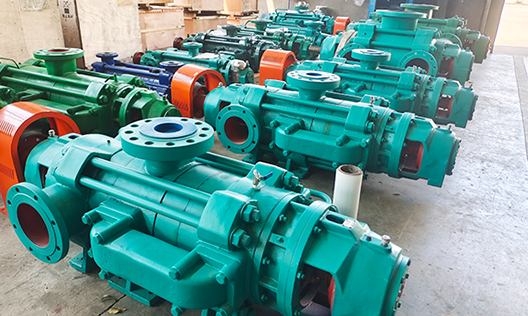
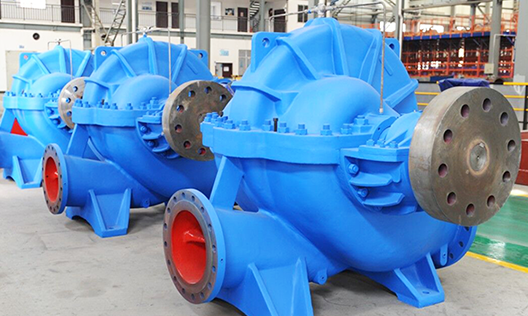
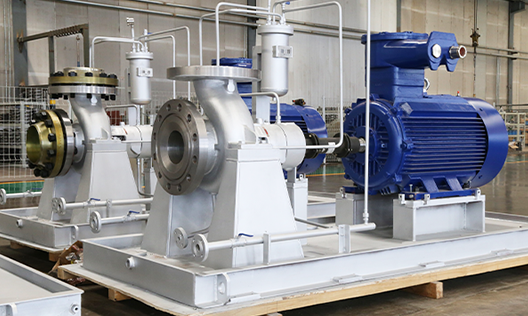
Puede fabricar 26 series de productos, incluyendo bombas de circulación para grandes centrales eléctricas, bombas de condensación para grandes centrales eléctricas, bombas petroquímicas, bombas multietapa, bombas de aguas residuales y lodo, bombas multietapa autoequilibradas, bombas de doble succión y única etapa tipo split, y bombas centrífugas de succión simple y única etapa.
-
Cases
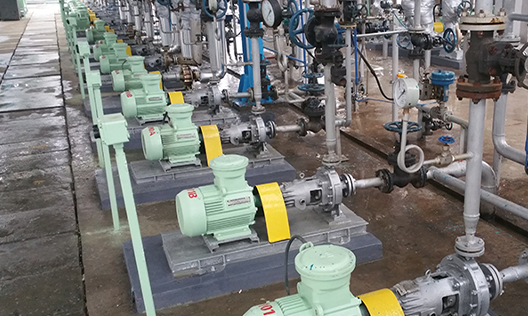
La elección de más de cientos de miles de clientes, cubriendo industrias como minería de carbón, metalurgia, química, energía, recursos hídricos, alimentos, municipalidades y protección ambiental, y exportando a Asia Sudeste, África, América y otros lugares.
-
Service
La empresa fue la primera en la industria en obtener las certificaciones internacionales del sistema de calidad ISO 9001:2008, del sistema de gestión ambiental ISO 14001 y del sistema de gestión de seguridad y salud ocupacional GB/T 28001, además de la certificación API 610 de la Asociación Estadounidense del Petróleo.
-
About us
La empresa, fundada en 1989, es una empresa nacional de alta tecnología integral que integra diseño, investigación y desarrollo, fabricación y servicios; actualmente es una empresa clave en la industria china de bombas centrífugas y una de las grandes fábricas especializadas.
-

Blogs
Con productos innovadores, calidad excepcional y servicios integrales, buscamos la verdad y la pragmática, avanzamos con iniciativa, y nos esforzamos por lograr el objetivo de ser "la marca líder en el campo de aplicación de bombas centrífugas en el país"! Raigada en Hunan, orientada a todo el país y hacia el mundo!
Causes of Unstable Water Pressure in Horizontal Multistage Centrifugal Pumps and Corresponding Solutions
Publication Date:
2026-03-30
Author:
Source:


During operation, horizontal multistage centrifugal pumps can experience unstable water pressure, which not only significantly reduces the overall system efficiency but may also trigger a cascade of secondary failures, such as equipment vibration and pipeline leaks, thereby jeopardizing the stable operation of the entire system. To address this critical issue, Centrifugal pump Manufacturer Changsha Zoomlion Pump Industry This article analyzes the causes of unstable water pressure in horizontal multistage centrifugal pumps from two perspectives—fault diagnosis and system optimization—and provides corresponding solutions for reference by user organizations.

I. In-Depth Root-Cause Analysis of the Fault
1. Core failures in the pump system: The decline in the hydraulic performance of multistage pumps is primarily attributable to the deterioration of three key components: impeller wear alters the flow passage geometry, reducing hydraulic efficiency by 5%–15%; bearing clearance exceeding the specified limit (≤0.15 mm) leads to rotor eccentricity, resulting in pressure fluctuations of up to ±0.08 MPa; and when the wear of the mechanical seal stationary ring exceeds 0.2 mm, the leakage rate will surpass the design threshold of 0.5 L/min. It is recommended to use a three-coordinate measuring machine to inspect impeller blade profile deviations, a laser alignment instrument to verify bearing concentricity, and an online monitoring system to track real-time changes in seal face temperature.
2. Hidden defects in piping systems: Pipeline joint leaks frequently occur at flanged connections. It is recommended to use an infrared thermal imaging leak detector for non-contact leak localization, which can achieve a detection accuracy of 0.01 L/min. Regarding pipe diameter matching, when the pump outlet pipe diameter is less than 80% of the diameter corresponding to the system’s design flow rate, the flow velocity will exceed the allowable limit (v > 3 m/s), resulting in a 15%–20% increase in friction head loss along the pipeline. Internal fouling can be addressed through endoscopic inspection (with an inspection depth of ≥10 m) combined with chemical cleaning (citric acid circulation cleaning) or high-pressure water jet unclogging (pressure ≥ 50 MPa).
3. Abnormal operating conditions of control components: Sticking of check valves can cause water hammer pressures to increase by a factor of 3 to 5; it is recommended to conduct a sealing test at 1.5 times the working pressure every quarter, with a pressure-holding duration of no less than 10 minutes. Water tank level sensors shall be calibrated regularly to ensure accuracy within ±5 mm, thereby preventing frequent pump start–stop cycles caused by level fluctuations. Valve opening adjustments shall be calculated and matched based on the system characteristic curve; when the actual flow–head curve deviates from the design value by more than 10%, the valve CV value must be recalibrated.
4. Impact of Fluctuations in External Water Sources: When municipal water supply pressure fluctuates by more than ±0.05 MPa, an accumulator-type pressure-stabilizing tank (with an effective volume of at least 5% of the system flow rate) or a variable-frequency pressure-stabilizing pump unit shall be installed. When the sand content of the water source is ≥50 mg/L, a cyclonic pre-filter (filtration accuracy ≤0.1 mm) must be installed upstream of the pump inlet, and an automatic backwash system (with a backwash cycle of no more than 8 hours) shall be provided.
II. System Optimization and Upgrade Plan
1. Intelligent Dynamic Pressure Regulation: An intelligent pressure-regulating module is installed on the pump discharge pipeline, employing a PID control algorithm to achieve closed-loop regulation with a response time of ≤1 second and a steady-state error of ≤±0.02 MPa. The accompanying pressure transmitter shall have an accuracy class of ±0.2% FS and be equipped with the HART communication protocol for remote parameter tuning. For high-flow systems, a multi-pump parallel cascaded control strategy is recommended, utilizing pressure-gradient control to achieve energy-efficient operation.
2. Establishment of a Preventive Maintenance System: A three-tier maintenance mechanism shall be implemented. Daily routine inspections must record key parameters such as bearing temperature (≤75°C) and vibration amplitude (≤4.5 mm/s). Monthly maintenance shall include verification of flow sensors (with an accuracy tolerance of ±0.5%) and pressure switches (with an actuation-point deviation of ≤±1%). Quarterly major overhauls shall involve replacement of mechanical seals (with a rotating-ring end-face roughness of Ra ≤ 0.2 μm) and dynamic balancing tests (with a balance accuracy of G2.5). All maintenance data shall be integrated into the Equipment Asset Management (EAM) system for trend analysis.
3. System Matching Technology Upgrade: For high-head operating conditions (H > 150 m), variable-frequency drive (VFD) speed control is recommended to achieve continuous flow–head matching by adjusting the motor speed, resulting in energy savings of 25%–40%. For long-distance water transmission networks (L > 5 km), it is advised to install booster pump stations at intermediate nodes and equip them with intelligent sleep-mode functionality that enables automatic start-up and shut-down based on network pressure.
The technical team at Changsha Zoomlion Pump Industry is capable of conducting CFD-based flow-field analysis to optimize piping layouts, reducing local resistance coefficients by 15%–20%, and delivering a detailed retrofit plan that includes AutoCAD piping drawings. By implementing these technical measures, multi-stage pumps can maintain operational reliability exceeding 98% across a wide temperature range from –20°C to +60°C, in plateau regions at altitudes below 2,000 meters, and under special operating conditions with an air content of no more than 3%.
Recommended Information


Related Products
Perhaps you also want to know?
Zoomlian Pump Industry
Address:No. 210, Environmental Protection Middle Road, Yuhua Economic Development Zone, Changsha City, Hunan Province China
All rights reserved © Changsha Zoomlian Pump Co., Ltd.
This website supports IPv4 IPv6 bidirectional access
Website construction:Zhongqi Power Changsha