

-
Products
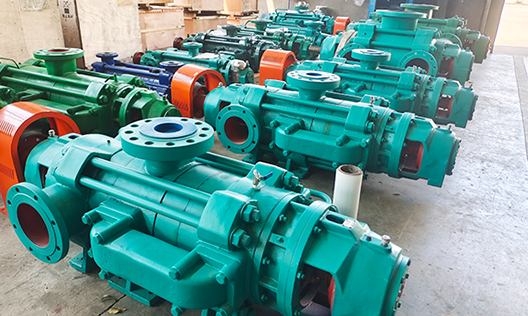
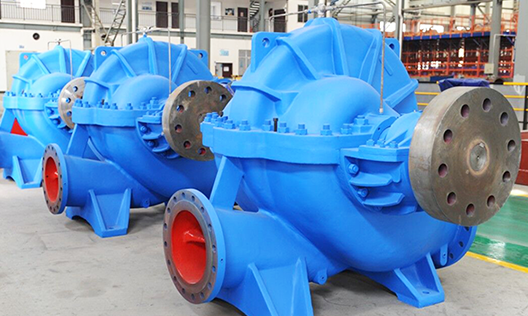
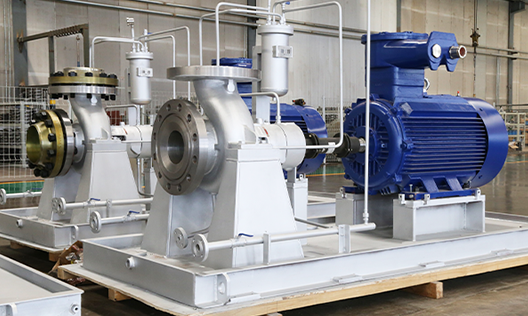
Puede fabricar 26 series de productos, incluyendo bombas de circulación para grandes centrales eléctricas, bombas de condensación para grandes centrales eléctricas, bombas petroquímicas, bombas multietapa, bombas de aguas residuales y lodo, bombas multietapa autoequilibradas, bombas de doble succión y única etapa tipo split, y bombas centrífugas de succión simple y única etapa.
-
Cases
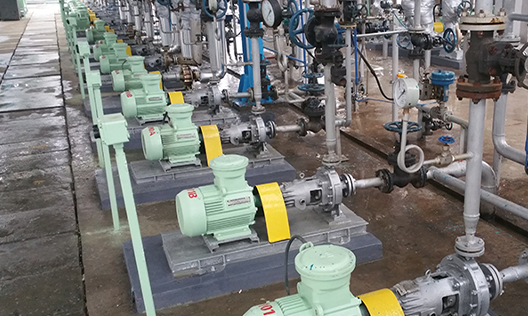
La elección de más de cientos de miles de clientes, cubriendo industrias como minería de carbón, metalurgia, química, energía, recursos hídricos, alimentos, municipalidades y protección ambiental, y exportando a Asia Sudeste, África, América y otros lugares.
-
Service
La empresa fue la primera en la industria en obtener las certificaciones internacionales del sistema de calidad ISO 9001:2008, del sistema de gestión ambiental ISO 14001 y del sistema de gestión de seguridad y salud ocupacional GB/T 28001, además de la certificación API 610 de la Asociación Estadounidense del Petróleo.
-
About us
La empresa, fundada en 1989, es una empresa nacional de alta tecnología integral que integra diseño, investigación y desarrollo, fabricación y servicios; actualmente es una empresa clave en la industria china de bombas centrífugas y una de las grandes fábricas especializadas.
-

Blogs
Con productos innovadores, calidad excepcional y servicios integrales, buscamos la verdad y la pragmática, avanzamos con iniciativa, y nos esforzamos por lograr el objetivo de ser "la marca líder en el campo de aplicación de bombas centrífugas en el país"! Raigada en Hunan, orientada a todo el país y hacia el mundo!
Solution for Oil Leakage in Multistage Centrifugal Pumps (Technical Specification Version)
Publication Date:
2026-03-29
Author:
Source:


Multistage centrifugal pumps, as a commonly used general-purpose fluid-handling machinery, inevitably encounter various problems in practical applications. Among these, oil leakage is a relatively minor issue that can nonetheless affect both operational performance and the pump’s service life. Prolonged oil leakage degrades pump performance and shortens its service life. To address this problem, Centrifugal pump Manufacturer Changsha Zoomlion Pump Industry Drawing on years of technical expertise, we offer multi-level centrifugal pump oil-leakage troubleshooting solutions for client organizations, provided for reference only.
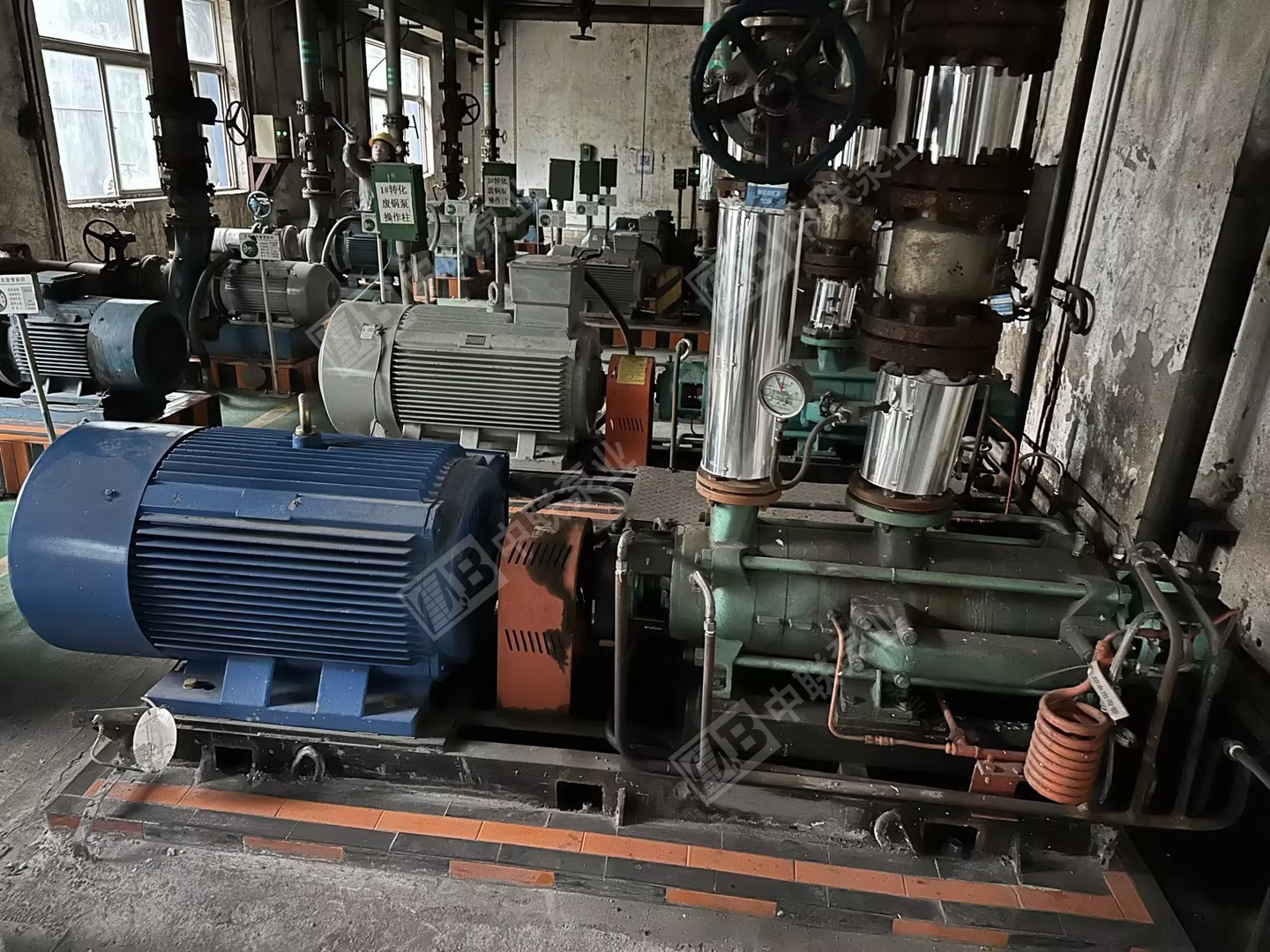
I. Optimization of Sealing Material Selection
The performance of sealing materials directly determines sealing reliability; therefore, the appropriate material should be selected based on the characteristics of the conveyed medium (such as corrosivity and temperature range) and the operating pressure. For example, when conveying media containing solid particles, nitrile rubber–polytetrafluoroethylene composite seals are preferred. In applications with temperatures ≥150°C, fluororubber sealing rings are recommended to ensure wear resistance, aging resistance, and chemical stability, thereby preventing leakage caused by material degradation.
II. Regular Inspection and Maintenance of Critical Components
Establish a three-tier maintenance system: daily inspections (daily checks to ensure bearing temperature rise does not exceed 40°C and to inspect for any oil leakage from the oil seals); weekly inspections (measurement of the radial clearance of the sealing rings, which must be ≤0.2 mm); and monthly inspections (disassembly and inspection of the mechanical seal spring’s elastic coefficient and the degree of aging of the O-rings). If issues such as sealing-ring wear exceeding the design limit by more than 15% or cracks in the oil-seal lip are detected, original manufacturer parts must be replaced immediately to prevent medium leakage caused by excessive component clearances.
III. Control of Operating Environment Parameters
The ambient temperature shall be maintained within the range of –20°C to 45°C; under extreme operating conditions, a cooling jacket or thermal insulation shield must be installed. Vibration intensity shall not exceed 4.5 mm/s (monitored in real time using vibration sensors) to prevent relative displacement of the sealing surfaces due to resonance. The piping system shall be equipped with flexible joints to reduce impact from rigid connections between the pump casing and the piping, thereby lowering the cyclic stress on the seals.
IV. Compliance with Installation and Operation Standards
Prior to installation, the coaxiality between the pump shaft and the motor shaft must be aligned (radial deviation ≤ 0.05 mm/m). The foundation anchor bolts shall be tightened to the specified torque using a torque wrench (refer to the standard torque values in the Changsha Zoomlion Pump Industry Technical Manual). During operation, frequent starts and stops are prohibited (a continuous running interval of ≥30 minutes is recommended). When the load changes abruptly, a variable-frequency drive must be used to ensure smooth transitions, thereby preventing pressure surges in the sealing system that could cause water hammer and subsequent leakage.
V. Lubrication System Management
Select a lubricant that conforms to the ISO VG grade (e.g., ISO 46 anti-wear hydraulic oil is suitable for normal operating conditions). The initial oil-change interval is 500 hours of operation, with subsequent changes required every 2,000 hours, accompanied by filtration. During oil filling, three-stage filtration must be employed (filter mesh accuracy ≤ 10 μm) to prevent contaminants from entering the sealing chamber and causing abrasive wear.
VI. Process Improvements in Structural Design
The pump employs a dual-face mechanical seal design independently developed by Changsha Zoomlion Pump Industry. The rotating ring is made of silicon carbide with a hardness of ≥HRA85, while the stationary ring’s auxiliary sealing element is a metal bellows, enhancing tracking performance under high-speed rotation. The pump casing is manufactured using the lost-foam casting process, ensuring tight dimensional accuracy of the seal chamber (Ra ≤ 1.6 μm). Finite-element simulation is used to optimize the specific pressure on the sealing faces, keeping it within the range of 0.3–0.5 MPa to minimize the risk of leakage.
Through the aforementioned technical measures, Changsha Zoomlion Pump Industry can effectively reduce the leakage rate of multistage pumps to below 0.05%, thereby significantly extending equipment service life. It is recommended that purchasers establish a comprehensive quality traceability system spanning the entire value chain—materials, installation, and operation & maintenance—and ensure the long-term reliability of the sealing system by using original manufacturer parts and standardized services.
Recommended Information


Related Products
Perhaps you also want to know?
Zoomlian Pump Industry
Address:No. 210, Environmental Protection Middle Road, Yuhua Economic Development Zone, Changsha City, Hunan Province China
All rights reserved © Changsha Zoomlian Pump Co., Ltd.
This website supports IPv4 IPv6 bidirectional access
Website construction:Zhongqi Power Changsha