

-
Products
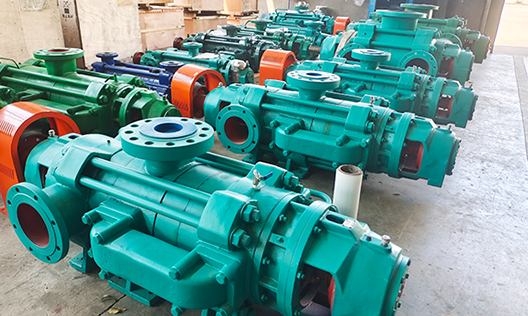
Puede fabricar 26 series de productos, incluyendo bombas de circulación para grandes centrales eléctricas, bombas de condensación para grandes centrales eléctricas, bombas petroquímicas, bombas multietapa, bombas de aguas residuales y lodo, bombas multietapa autoequilibradas, bombas de doble succión y única etapa tipo split, y bombas centrífugas de succión simple y única etapa.
-
Cases
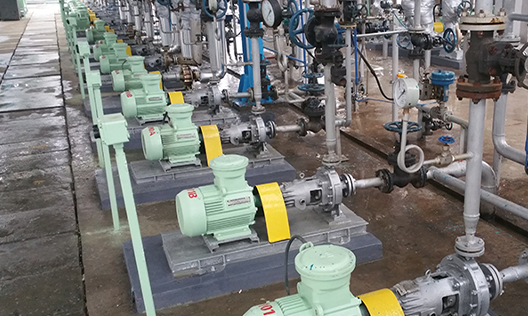
La elección de más de cientos de miles de clientes, cubriendo industrias como minería de carbón, metalurgia, química, energía, recursos hídricos, alimentos, municipalidades y protección ambiental, y exportando a Asia Sudeste, África, América y otros lugares.
-
Service
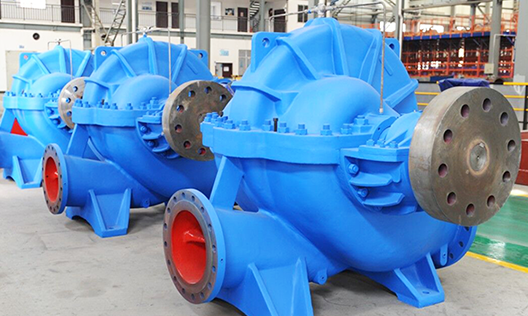
La empresa fue la primera en la industria en obtener las certificaciones internacionales del sistema de calidad ISO 9001:2008, del sistema de gestión ambiental ISO 14001 y del sistema de gestión de seguridad y salud ocupacional GB/T 28001, además de la certificación API 610 de la Asociación Estadounidense del Petróleo.
-
About us
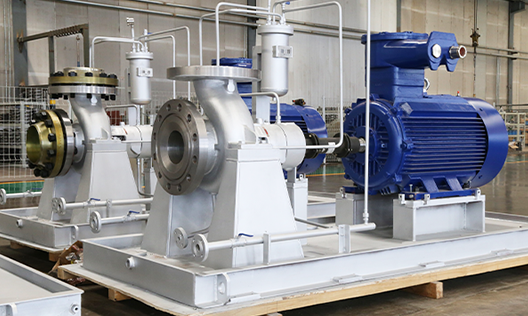
La empresa, fundada en 1989, es una empresa nacional de alta tecnología integral que integra diseño, investigación y desarrollo, fabricación y servicios; actualmente es una empresa clave en la industria china de bombas centrífugas y una de las grandes fábricas especializadas.
-

Blogs
Con productos innovadores, calidad excepcional y servicios integrales, buscamos la verdad y la pragmática, avanzamos con iniciativa, y nos esforzamos por lograr el objetivo de ser "la marca líder en el campo de aplicación de bombas centrífugas en el país"! Raigada en Hunan, orientada a todo el país y hacia el mundo!
Solutions and Preventive Measures for Water Leakage from the Pump Cover of High-Head Multistage Pumps
Publication Date:
2026-04-07
Author:
Source:


When high-head multistage pumps operate under high-pressure conditions, seal failure at the pump cover often leads to leakage—a common and persistent problem that plagues users. Although such leaks may appear minor, they can reduce pump efficiency and increase energy consumption; if ignored over the long term, they may even result in serious secondary issues, such as bearing damage and water ingress into the motor. To address this widespread industry challenge, the original manufacturer of multistage pumps Changsha Zoomlion Pump Industry Drawing on decades of field service experience and starting with root-cause analysis of failures, we have developed a comprehensive set of solutions and preventive measures for addressing and preventing leakage from the pump cover of high-head multistage pumps, helping users fundamentally resolve this issue.

I. Diagnosis of Leakage Causes
1. Seal failure: Aging, deformation, or misalignment of the sealing gasket at the pump cover–pump housing interface is common in equipment that has been in operation for more than 10,000 hours. Particular attention should be paid to the hardness (Shore A 60–70) and compression set (0.5–1.5 mm) of nitrile rubber or fluororubber gaskets.
2. Bolted-joint issues: High-strength bolts (grade 8.8 and above) may experience a reduction in preload due to vibration or thermal expansion and contraction, resulting in torque values that fall below the manufacturer’s specified range (typically 150–200 N·m).
3. Pump body defects: casting porosity, sand holes, or weld cracks, which are commonly found in stress-concentrated areas of castings (such as the junction between the pump cover and the impeller), shall be located by hydrostatic pressure testing at 0.8 times the working pressure.
II. Tiered Handling Plan
1. Sealing System Repair: Gasket Replacement: Select metal spiral-wound gaskets that comply with GB/T 3922, and apply diagonal, evenly distributed torque in accordance with the assembly drawing requirements (it is recommended to calibrate the torque wrench to within ±5% accuracy). Seal Ring Repair: For O-ring seals, it is recommended to upgrade to PTFE material and use dedicated installation tools to prevent damage.
2. Bolt Tightening Procedure: Perform secondary tightening using a torque multiplier, following the three-step procedure of “initial tightening → re-tightening → anti-loosening.” After re-tightening, conduct a 30-minute operational vibration test.
3. Treatment of Pump Body Defects: For porosity ≤0.5 mm, argon arc welding repair shall be performed, followed by stress-relief annealing at 550±20℃; for cracks, the pump cover shall be replaced after full-circumference grinding, with preference given to castings made of QT450-10 material.
III. Preventive Maintenance System
1. Regular inspections: Perform ultrasonic thickness measurements quarterly (replace gaskets when their remaining thickness is ≥50% of the original design thickness), and conduct a seal-face roughness inspection annually (Ra ≤ 1.6 μm).
2. Environmental Adaptation: The humidity in the installation area shall not exceed 65% RH; in corrosive environments, a pump cover made of 316L stainless steel must be used; when the temperature of the process fluid exceeds 150°C, a water-cooled jacket is recommended.
IV. Technical Support and Security Standards
If self-resolution proves difficult, please contact the Changsha Zoomlion Pump Industry Technical Service Center at 400-XXX-XXXX and provide the pump model, operating parameters, and photos of the fault for remote diagnostics. Prior to commencing work, the power supply must be disconnected and a “Do Not Start” sign hung; when using a torque wrench, impact-resistant safety goggles must be worn to prevent burns from high-temperature components. Through precise diagnosis, process optimization, and standardized maintenance, the failure rate of pump cover leakage can be reduced to below 0.3 incidents per 1,000 units per year, significantly lowering system energy consumption (approximately 5,000 kWh of annual energy savings per unit). It is recommended to establish a full lifecycle record for each piece of equipment, documenting all seal-system upgrades to serve as a reference for future operation and maintenance.
In addition, Changsha Zoomlion Pump Industry emphasizes that, throughout the implementation of the aforementioned solutions and preventive measures, ongoing technical training and continuous enhancement of personnel capabilities are equally critical. At the same time, technical staff are encouraged to participate in industry forums and conferences to share real-world case studies and practical experience, thereby jointly exploring innovative approaches to addressing complex challenges. By establishing a comprehensive technical training system, not only can the overall technical competence of the team be elevated, but technological innovation can also be fostered, providing a more robust technical foundation for tackling the various pump-head leakage challenges that may arise in the future. In short, effectively resolving the issue of pump-head leakage in high-head multistage pumps depends not only on advanced technical solutions and preventive measures, but also on a highly qualified, specialized technical team serving as a strong supporting pillar.
Recommended Information


Related Products
Perhaps you also want to know?
Zoomlian Pump Industry
Address:No. 210, Environmental Protection Middle Road, Yuhua Economic Development Zone, Changsha City, Hunan Province China
All rights reserved © Changsha Zoomlian Pump Co., Ltd.
This website supports IPv4 IPv6 bidirectional access
Website construction:Zhongqi Power Changsha