

-
Products
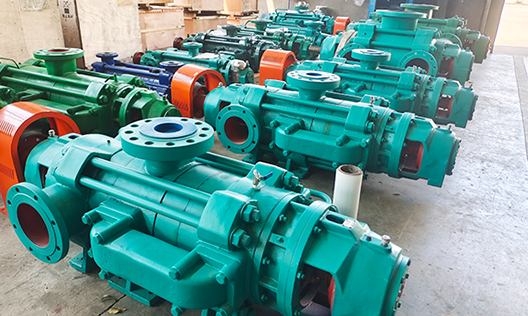
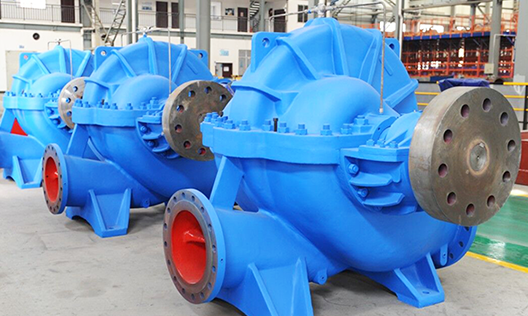
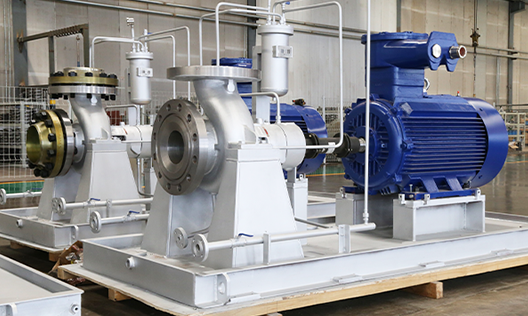
Puede fabricar 26 series de productos, incluyendo bombas de circulación para grandes centrales eléctricas, bombas de condensación para grandes centrales eléctricas, bombas petroquímicas, bombas multietapa, bombas de aguas residuales y lodo, bombas multietapa autoequilibradas, bombas de doble succión y única etapa tipo split, y bombas centrífugas de succión simple y única etapa.
-
Cases
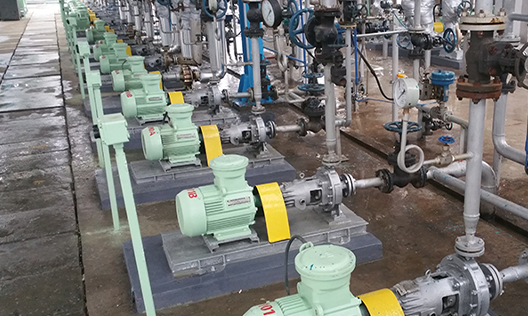
La elección de más de cientos de miles de clientes, cubriendo industrias como minería de carbón, metalurgia, química, energía, recursos hídricos, alimentos, municipalidades y protección ambiental, y exportando a Asia Sudeste, África, América y otros lugares.
-
Service
La empresa fue la primera en la industria en obtener las certificaciones internacionales del sistema de calidad ISO 9001:2008, del sistema de gestión ambiental ISO 14001 y del sistema de gestión de seguridad y salud ocupacional GB/T 28001, además de la certificación API 610 de la Asociación Estadounidense del Petróleo.
-
About us
La empresa, fundada en 1989, es una empresa nacional de alta tecnología integral que integra diseño, investigación y desarrollo, fabricación y servicios; actualmente es una empresa clave en la industria china de bombas centrífugas y una de las grandes fábricas especializadas.
-

Blogs
Con productos innovadores, calidad excepcional y servicios integrales, buscamos la verdad y la pragmática, avanzamos con iniciativa, y nos esforzamos por lograr el objetivo de ser "la marca líder en el campo de aplicación de bombas centrífugas en el país"! Raigada en Hunan, orientada a todo el país y hacia el mundo!
Causes of Misalignment in Couplings for High-Head Multistage Pumps and Corresponding Solutions
Publication Date:
2026-04-06
Author:
Source:


High-lift multistage Water pump At runtime, it is used to Coupling When connected to the motor to achieve power transmission, the coupling assumes the critical function of transmitting torque between the motor shaft and the pump shaft; therefore, its coaxial alignment directly affects pump efficiency and equipment safety. In practical applications, misalignment of couplings is a common failure mode, necessitating a multidimensional analysis of its root causes and the development of targeted mitigation strategies. In this paper, a manufacturer of multistage pumps Changsha Zoomlion Pump Industry This section introduces the causes of misalignment in couplings for high-head multistage water pumps and corresponding solutions, for reference by user organizations.

I. Main Causes of Coupling Misalignment
1. Installation-stage deviation: Non-standard installation procedures or variations in operator skill can easily result in excessive misalignment between the coupling and the motor shaft/pump shaft, leading to initial eccentricity.
2. Deformation under Operating Conditions: Fluctuations in medium pressure and non-uniform temperature distributions can cause thermal expansion and contraction of pump casing or coupling components, thereby disrupting the original coaxial alignment. 3. Long-Term Wear During Operation: Wear of critical components (such as bearings and sealing rings) leads to cumulative clearance variations, resulting in misalignment of the coupling’s relative position.
4. Lack of maintenance and management: Regular inspections are not conducted, resulting in the failure to promptly detect issues such as component deformation and loosening, which accelerates the occurrence of misalignment faults.
II. Prevention and Remedial Measures
1. Installation Control: Strictly adhere to the installation specifications for equipment issued by Changsha Zoomlion Pump Industry, and use laser alignment instruments and other tools to ensure that the coaxiality error does not exceed 0.05 mm/m.
2. Operating Condition Monitoring: Establish a ledger of operating parameters, with a focus on monitoring temperature and vibration data, and conduct regular stress inspections in areas at risk of deformation, such as the pump casing in the high-pressure section.
3. Spare Parts Upgrade: High-precision flexible couplings and reinforced bearings are selected to enhance wear resistance and extend the service life of components.
4. Operations and Maintenance Optimization: Implement a three-tier maintenance system (daily inspection, weekly inspection, monthly inspection) and perform real-time calibration of key parameters such as coupling clearance and bolt torque.
Changsha Zoomlion Pump Industry advises that coupling misalignment faults must be addressed through comprehensive equipment lifecycle management, leveraging process standardization and intelligent operations and maintenance to achieve proactive fault prevention. Technical personnel should place particular emphasis on installation accuracy, operational condition adaptability, and the sustainability of maintenance practices to ensure the stable operation of high-head multistage pump systems. At the same time, regular technical training should be organized to enhance operators’ understanding of coupling design, installation specifications, and key maintenance considerations, thereby strengthening their ability to identify faults and respond effectively in emergency situations. By integrating theory with practical application, technicians will be able to accurately pinpoint the root causes of misalignment faults and implement targeted corrective measures, such as adjusting the positions of the motor or pump shaft or replacing worn components. In addition, enterprises can adopt digital management tools—such as equipment health management systems—to monitor coupling conditions in real time, provide early warnings of potential risks, and shift from reactive repair to proactive prevention. This approach will comprehensively enhance the reliability and energy efficiency of multistage pump systems, providing a solid foundation for both production safety and economic benefits.
Recommended Information


Related Products
Perhaps you also want to know?
Zoomlian Pump Industry
Address:No. 210, Environmental Protection Middle Road, Yuhua Economic Development Zone, Changsha City, Hunan Province China
All rights reserved © Changsha Zoomlian Pump Co., Ltd.
This website supports IPv4 IPv6 bidirectional access
Website construction:Zhongqi Power Changsha