

-
Products
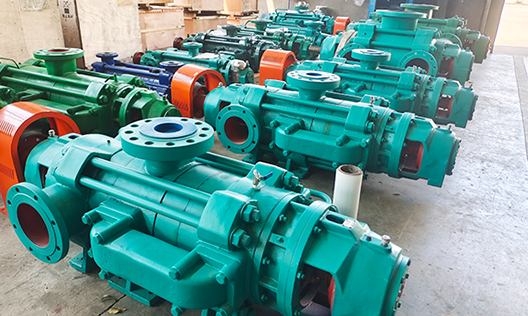
Puede fabricar 26 series de productos, incluyendo bombas de circulación para grandes centrales eléctricas, bombas de condensación para grandes centrales eléctricas, bombas petroquímicas, bombas multietapa, bombas de aguas residuales y lodo, bombas multietapa autoequilibradas, bombas de doble succión y única etapa tipo split, y bombas centrífugas de succión simple y única etapa.
-
Cases
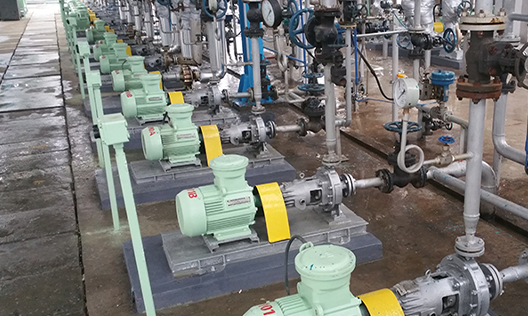
La elección de más de cientos de miles de clientes, cubriendo industrias como minería de carbón, metalurgia, química, energía, recursos hídricos, alimentos, municipalidades y protección ambiental, y exportando a Asia Sudeste, África, América y otros lugares.
-
Service
La empresa fue la primera en la industria en obtener las certificaciones internacionales del sistema de calidad ISO 9001:2008, del sistema de gestión ambiental ISO 14001 y del sistema de gestión de seguridad y salud ocupacional GB/T 28001, además de la certificación API 610 de la Asociación Estadounidense del Petróleo.
-
About us
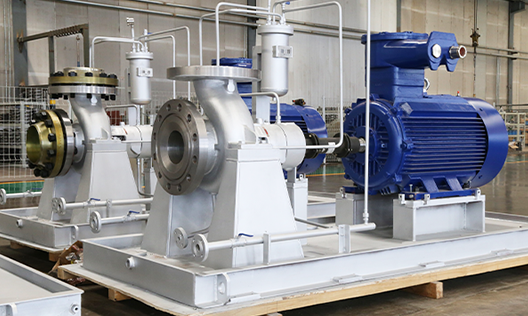
La empresa, fundada en 1989, es una empresa nacional de alta tecnología integral que integra diseño, investigación y desarrollo, fabricación y servicios; actualmente es una empresa clave en la industria china de bombas centrífugas y una de las grandes fábricas especializadas.
-

Blogs
Con productos innovadores, calidad excepcional y servicios integrales, buscamos la verdad y la pragmática, avanzamos con iniciativa, y nos esforzamos por lograr el objetivo de ser "la marca líder en el campo de aplicación de bombas centrífugas en el país"! Raigada en Hunan, orientada a todo el país y hacia el mundo!
Technical Analysis and Solutions for Flange Damage in High-Pressure Multistage Pumps
Publication Date:
2026-04-09
Author:
Source:


Changsha Zoomlion Pump Industry’s high-pressure multistage pumps are widely used in industrial applications due to their energy-saving features and stable operation; however, flange damage poses a challenge to system reliability. In the following article, the multistage pump manufacturer Changsha Zoomlion Pump Industry This paper will analyze, from a technical perspective, the root causes of flange damage in high-pressure multistage pumps and propose corresponding troubleshooting approaches for reference by multistage pump users.

I. Installation and Maintenance Defects
Non-standard installation is the root cause: uneven bolt-tightening torque or torque exceeding specified limits can lead to an imbalanced stress distribution on the flange face, resulting in deformation or seal failure. Over long-term operation, if flange condition monitoring is neglected, issues such as aging, corrosion, and wear will progressively accumulate, ultimately causing structural damage. It is recommended to use a torque wrench to tighten bolts in accordance with specifications and in staged increments, and to establish a three-tier maintenance regime comprising daily inspections, weekly checks, and monthly in-depth examinations.
II. Erosion by Environmental Factors
When the working environment features humidity exceeding 85%, temperatures above 150°C, or the presence of corrosive media such as Cl⁻ and SO₂, the flange surface is prone to electrochemical corrosion or spalling of the oxide film. In particular, under conditions where dust-laden gas streams cause erosion, the wear rate can increase by a factor of 3 to 5. Therefore, it is necessary to select corrosion-resistant materials such as 316L stainless steel or Hastelloy C276 based on the service conditions, combined with anti-corrosion coatings or bimetallic composite structures.
III. Material Selection Deviations
Inadequate material compatibility between flanges and the process medium is a common safety hazard: for example, using carbon steel flanges to convey acidic media can result in severe pitting corrosion within 1–2 years; and in cryogenic service (below –40°C), failure to use low-temperature steels (LCB/LC3) can lead to brittle fracture. Changsha Zoomlion Pump Industry recommends conducting a media composition analysis report and selecting materials that correspond to the appropriate pressure class as specified in GB/T 12224, while providing material traceability reports for critical components.
IV. Parameter Fluctuations Exceeding Limits
When the pump operating pressure exceeds 1.2 times the design value, plastic deformation may occur at the flange sealing surfaces; when flow fluctuations exceed ±15% of the rated value, the superposition of fluid impact stresses can induce cyclic fatigue. To address these issues, a pressure transmitter and a flow control valve should be installed to limit flow fluctuations to within ±5% of the rated value, and periodic stress simulations of the flanges should be performed for verification using ANSYS Workbench software.
V. Design Structural Defects
If axial-force balance is not accounted for in the early design stage—such as when the first-stage impeller does not adopt a double-suction configuration—or if anti-deformation stiffening ribs are not provided, the stress-concentration factor at the flange edge can exceed 1.8. Changsha Zoomlion Pump Industry has employed finite-element analysis to optimize the flange structure; by increasing the transition fillet radius (R ≥ 1.5 times the bolt diameter) and incorporating reinforced stiffening ribs, the fatigue life has been extended to more than 80,000 hours.
Changsha Zoomlion Pump Industry recommends addressing flange damage through a full lifecycle management approach: establishing equipment health records in accordance with ISO 45001, conducting vibration spectrum monitoring and real-time stress–strain data acquisition at critical nodes, and thereby ensuring the operational efficiency and safety redundancy of multi-stage pump systems.
Recommended Information


Related Products
Perhaps you also want to know?
Zoomlian Pump Industry
Address:No. 210, Environmental Protection Middle Road, Yuhua Economic Development Zone, Changsha City, Hunan Province China
All rights reserved © Changsha Zoomlian Pump Co., Ltd.
This website supports IPv4 IPv6 bidirectional access
Website construction:Zhongqi Power Changsha