

-
Products
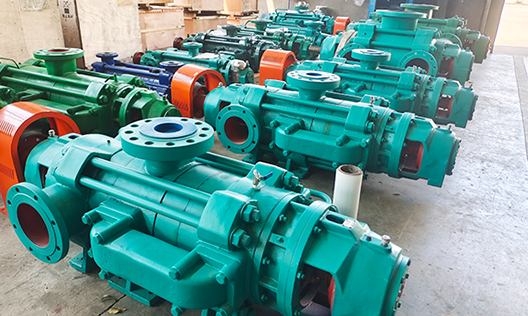
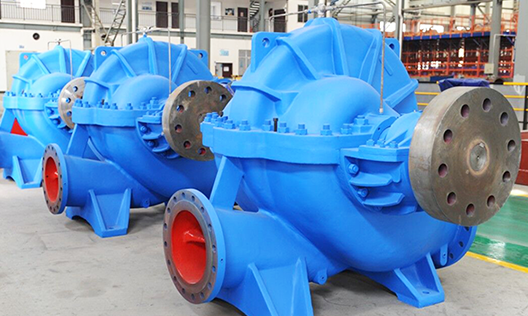
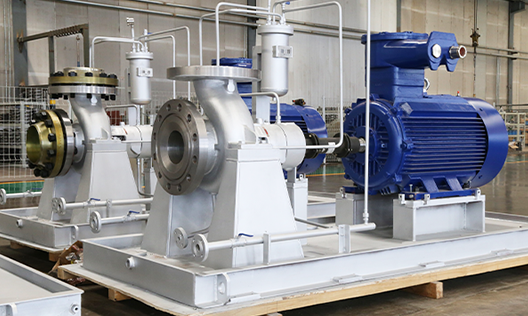
Puede fabricar 26 series de productos, incluyendo bombas de circulación para grandes centrales eléctricas, bombas de condensación para grandes centrales eléctricas, bombas petroquímicas, bombas multietapa, bombas de aguas residuales y lodo, bombas multietapa autoequilibradas, bombas de doble succión y única etapa tipo split, y bombas centrífugas de succión simple y única etapa.
-
Cases
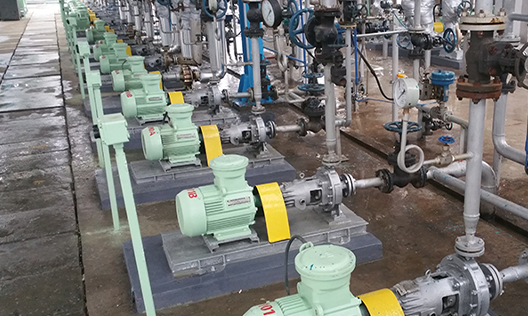
La elección de más de cientos de miles de clientes, cubriendo industrias como minería de carbón, metalurgia, química, energía, recursos hídricos, alimentos, municipalidades y protección ambiental, y exportando a Asia Sudeste, África, América y otros lugares.
-
Service
La empresa fue la primera en la industria en obtener las certificaciones internacionales del sistema de calidad ISO 9001:2008, del sistema de gestión ambiental ISO 14001 y del sistema de gestión de seguridad y salud ocupacional GB/T 28001, además de la certificación API 610 de la Asociación Estadounidense del Petróleo.
-
About us
La empresa, fundada en 1989, es una empresa nacional de alta tecnología integral que integra diseño, investigación y desarrollo, fabricación y servicios; actualmente es una empresa clave en la industria china de bombas centrífugas y una de las grandes fábricas especializadas.
-

Blogs
Con productos innovadores, calidad excepcional y servicios integrales, buscamos la verdad y la pragmática, avanzamos con iniciativa, y nos esforzamos por lograr el objetivo de ser "la marca líder en el campo de aplicación de bombas centrífugas en el país"! Raigada en Hunan, orientada a todo el país y hacia el mundo!
Causes of Speed Instability in High-Head Multistage Pumps and Corresponding Mitigation Measures
Publication Date:
2026-05-28
Author:
Source:


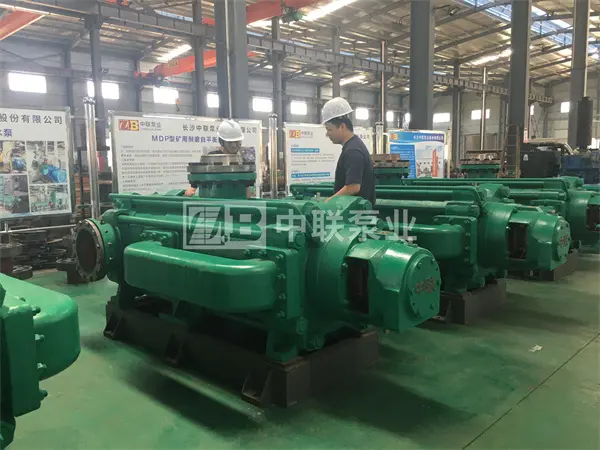
In high-head multistage pumps, fluctuations in rotational speed can directly compromise the stability of pump‑unit performance, manifesting as flow imbalance, head reduction, and even equipment damage. In this paper, the multistage pump manufacturer… Changsha Zoomlion Pump Industry Drawing on its engineering expertise, the technical team will provide user organizations with a professional analysis of the causes and mitigation strategies for unstable rotational speeds in high-head multistage pumps, for your reference.

I. Analysis of the Root Causes of Unstable Rotational Speed in Multistage Pumps
1. Electrical system abnormalities: Voltage deviations beyond ±5% of the rated value or frequency fluctuations (deviating from 50 Hz by ±0.5 Hz) can cause instability in the motor’s electromagnetic torque; in particular, variable-frequency drive systems are highly sensitive to power quality.
2. Fluid‑dynamic interference: Sudden changes in fluid viscosity (e.g., viscosity index drift caused by temperature variations), pipeline blockages (with local resistance coefficients exceeding 0.5), or flow rates exceeding the design value by more than 15% can lead to fluctuations in pump shaft power.
3. Mechanical transmission failure: Excessive bearing clearance (>0.3 mm), impeller cavitation (NPSH value < the required net positive suction head by 0.3 m), or coupling misalignment (>0.1 mm/m) can all induce periodic vibrations that compromise rotational speed stability.
4. Control system deficiencies: Incorrect inverter parameter settings (e.g., output harmonic distortion exceeding 3% when the carrier frequency is greater than 15 kHz), logical flaws in the PLC program, or sensor calibration drift (with a range error of ±0.5%) can all lead to closed-loop control failure.
II. Engineering-Grade Solution for Unstable Rotational Speed
1. Power Quality Optimization: Install a 380 V ±2% regulated power supply (with a response time of less than 10 ms) and add a passive filter module to address harmonic interference. For variable-frequency drive systems, a dedicated EMC filter must be used to suppress common-mode interference by at least 60 dB.
2. Fluid-condition control: A PID temperature-control system (with an accuracy of ±1°C) is used to maintain stable fluid viscosity; the piping system features a variable-diameter design (transition section from DN50 to DN100), and an in-line filter with a mesh size of ≥80 mesh is installed.
3. Mechanical System Maintenance: Bearings: Use SKF/NSK precision bearings; inspect radial clearance every 5,000 operating hours (≤0.15 mm). Impeller: Perform periodic dynamic balancing checks (to G6.3 standard); for cavitation damage, apply overlay welding with wear‑resistant alloy (hardness ≥ HRC55). Coupling: Align using a laser alignment instrument (accuracy ±0.02 mm); if deviation exceeds 0.05 mm, realignment is mandatory.
4. Intelligent Control Upgrade: Replace with a 4–20 mA standard‑signal sensor (measurement range ±0.2% FS); configure a redundant PLC control system (dual‑CPU hot standby); implement a triple‑check validation mechanism for critical parameters (speed command and actual feedback); install a vibration monitoring module (accelerometer, measurement range 0–100 m/s²), triggering a three‑level alarm when vibration exceeds 6.3 mm/s. 5. Protection System Enhancement: Overcurrent protection: set the trip threshold at 1.25 times the rated current, with a response time of less than 200 ms; overload protection: employ dual redundancy using both a thermal relay and a motor protector; overtemperature protection: utilize a PT100 temperature sensor (measurement range −20 to 200 °C), with the shutdown temperature set 20 °C below the medium’s boiling point.
Recommended Information



Related Products
Perhaps you also want to know?
Zoomlian Pump Industry
Address:No. 210, Environmental Protection Middle Road, Yuhua Economic Development Zone, Changsha City, Hunan Province China
All rights reserved © Changsha Zoomlian Pump Co., Ltd.
This website supports IPv4 IPv6 bidirectional access
Website construction:Zhongqi Power Changsha