

-
Products
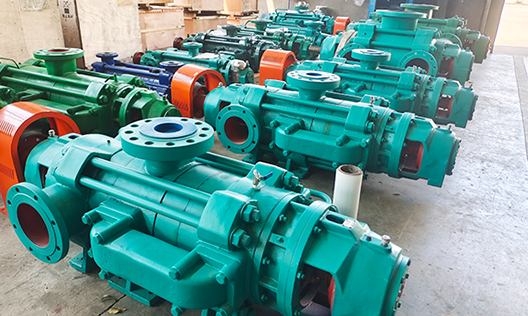
Puede fabricar 26 series de productos, incluyendo bombas de circulación para grandes centrales eléctricas, bombas de condensación para grandes centrales eléctricas, bombas petroquímicas, bombas multietapa, bombas de aguas residuales y lodo, bombas multietapa autoequilibradas, bombas de doble succión y única etapa tipo split, y bombas centrífugas de succión simple y única etapa.
-
Cases
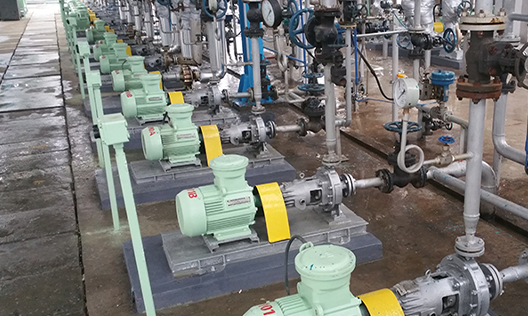
La elección de más de cientos de miles de clientes, cubriendo industrias como minería de carbón, metalurgia, química, energía, recursos hídricos, alimentos, municipalidades y protección ambiental, y exportando a Asia Sudeste, África, América y otros lugares.
-
Service
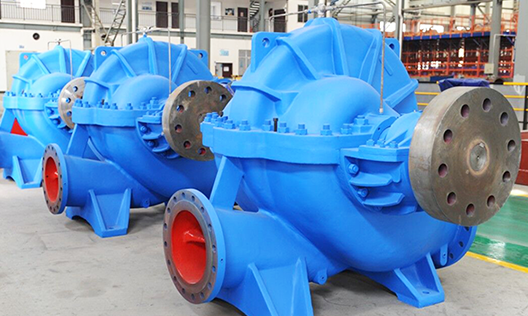
La empresa fue la primera en la industria en obtener las certificaciones internacionales del sistema de calidad ISO 9001:2008, del sistema de gestión ambiental ISO 14001 y del sistema de gestión de seguridad y salud ocupacional GB/T 28001, además de la certificación API 610 de la Asociación Estadounidense del Petróleo.
-
About us
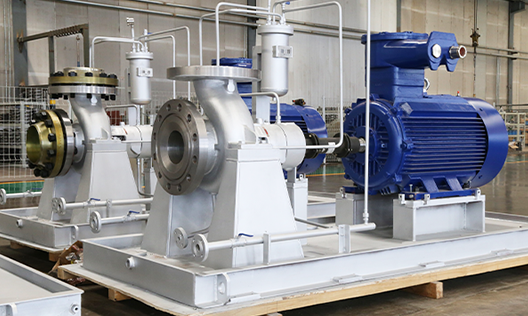
La empresa, fundada en 1989, es una empresa nacional de alta tecnología integral que integra diseño, investigación y desarrollo, fabricación y servicios; actualmente es una empresa clave en la industria china de bombas centrífugas y una de las grandes fábricas especializadas.
-

Blogs
Con productos innovadores, calidad excepcional y servicios integrales, buscamos la verdad y la pragmática, avanzamos con iniciativa, y nos esforzamos por lograr el objetivo de ser "la marca líder en el campo de aplicación de bombas centrífugas en el país"! Raigada en Hunan, orientada a todo el país y hacia el mundo!
Causes of Pumping Interruption in DGP-Type Self-Balancing Multistage Boiler Feedwater Pumps
Publication Date:
2026-05-13
Author:
Source:


When the DGP-type self-balancing multistage boiler feedwater pump experiences flow interruption during operation, it directly affects the boiler’s thermal efficiency and safe operation. In such cases, the unit must be shut down promptly, and operation may resume only after the fault has been rectified. In this paper, Self-balancing multistage pump Manufacturer Changsha Zoomlion Pump Industry We will share the causes of pump suction interruptions in DGP‑type self‑balancing multistage boiler feedwater pumps, for reference by user organizations.

I. Failure of the Pump’s Core Components
1. Impeller damage: Cavitation, impact from foreign objects, or material fatigue can cause deformation of the blade passages, leading to a sudden reduction in the flow area. This results in deviations of the pump’s head–flow curve from the design operating conditions, potentially causing flow interruption.
2. Wear of the balance disc/sleeve: In a self‑balancing design, if the clearance between the balance disc and the balance sleeve exceeds allowable limits, axial force imbalance can cause friction between the impeller and the guide vanes, potentially leading to severe seizing and shutdown.
3. Seal leakage: Aging of the mechanical seal or O-ring can lead to cross‑flow between the high‑pressure and low‑pressure chambers, resulting in insufficient effective head. This risk is particularly pronounced under high‑head operating conditions, where flow interruption becomes more likely.
II. Water Source and System Blockage
1. Water Source Depletion: When the water level in the tank or reservoir falls below the minimum effective suction lift, a vicious cycle of cavitation and vaporization occurs at the pump inlet, causing the flow rate to plummet until flow is completely lost.
2. Suction pipe blockage: The filter screen is clogged with debris (such as rust or scale), or misalignment of the pipe supports causes a reduction in pipe diameter, resulting in excessive local resistance.
3. Pipeline leakage: Flange seals fail or welds crack, resulting in a static pressure loss exceeding 3% of the design value, and the pump’s actual head is insufficient to overcome the pipeline resistance.
III. Electrical and Control System Faults
1. Motor abnormalities: Bearing overheating can cause the motor bearing clearance to exceed allowable limits, or winding insulation aging may lead to speed fluctuations, resulting in a mismatch between the pump unit’s output power and its intended operating conditions.
2. PLC control logic error: The DCS system erroneously issues an “overload” signal, or the frequency setpoint deviates from the safe range of 50 Hz (±1 Hz), causing the pump unit to shut down.
3. Sensor drift: Distortion of data from the inlet pressure sensor (range ±0.2% FS) or the flow transmitter (accuracy class 0.5) can lead to misjudgments by the automatic control system.
IV. Operations and Maintenance, and Environmental Factors
1. Maintenance deficiencies: Quarterly disassembly inspections were not conducted in accordance with Changsha Zhonglian Pump Industry’s “DGP Pump Maintenance Procedure,” resulting in bearing clearance exceeding 0.15 mm (per the national standard GB/T 4952) and potential risks such as emulsification and degradation of the lubricating oil.
2. Extreme operating conditions: When the ambient temperature falls below –15°C, the viscosity of the fluid in the pump increases to 1.5 times its design value, causing the suction performance curve to shift to the right and resulting in flow interruption at low speeds.
3. Voltage Fluctuations: When the three-phase voltage imbalance exceeds 2%, or when the voltage momentarily drops below 90% of its rated value, the motor’s starting torque becomes insufficient, preventing the pump unit from establishing the initial head.
Diagnosis and Recommended Actions: We recommend adopting the “Four-Quadrant Troubleshooting Method”: first, use vibration spectrum analysis (10–2000 Hz) to pinpoint bearing faults; then, employ an infrared thermal imager to measure the pump’s temperature differential (normal ≤5°C). Combined with a comparison against the flow‑head curve—using the dedicated diagnostic software provided by Changsha Zhonglian Pump Industry—this approach enables rapid identification of the fault source. In routine operations and maintenance, prioritize monitoring the balance disc wear (≤0.2 mm/year) and the seal ring clearance (≤0.3 mm) to ensure stable operation of the pump unit throughout its designed service life.
Recommended Information


Related Products
Perhaps you also want to know?
Zoomlian Pump Industry
Address:No. 210, Environmental Protection Middle Road, Yuhua Economic Development Zone, Changsha City, Hunan Province China
All rights reserved © Changsha Zoomlian Pump Co., Ltd.
This website supports IPv4 IPv6 bidirectional access
Website construction:Zhongqi Power Changsha