

-
Products
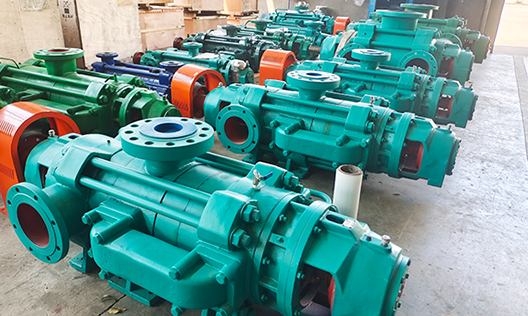
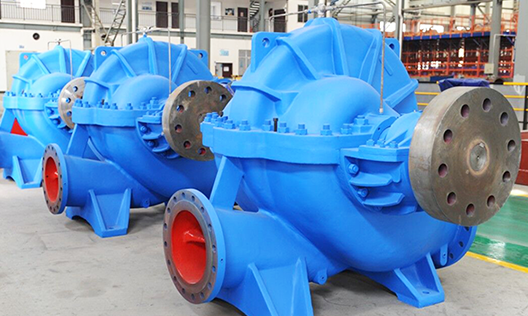
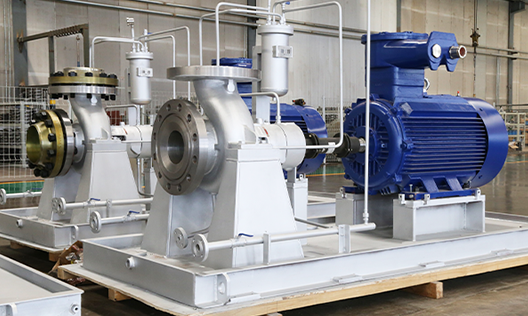
Puede fabricar 26 series de productos, incluyendo bombas de circulación para grandes centrales eléctricas, bombas de condensación para grandes centrales eléctricas, bombas petroquímicas, bombas multietapa, bombas de aguas residuales y lodo, bombas multietapa autoequilibradas, bombas de doble succión y única etapa tipo split, y bombas centrífugas de succión simple y única etapa.
-
Cases
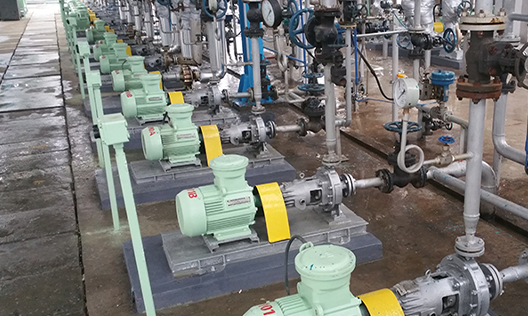
La elección de más de cientos de miles de clientes, cubriendo industrias como minería de carbón, metalurgia, química, energía, recursos hídricos, alimentos, municipalidades y protección ambiental, y exportando a Asia Sudeste, África, América y otros lugares.
-
Service
La empresa fue la primera en la industria en obtener las certificaciones internacionales del sistema de calidad ISO 9001:2008, del sistema de gestión ambiental ISO 14001 y del sistema de gestión de seguridad y salud ocupacional GB/T 28001, además de la certificación API 610 de la Asociación Estadounidense del Petróleo.
-
About us
La empresa, fundada en 1989, es una empresa nacional de alta tecnología integral que integra diseño, investigación y desarrollo, fabricación y servicios; actualmente es una empresa clave en la industria china de bombas centrífugas y una de las grandes fábricas especializadas.
-

Blogs
Con productos innovadores, calidad excepcional y servicios integrales, buscamos la verdad y la pragmática, avanzamos con iniciativa, y nos esforzamos por lograr el objetivo de ser "la marca líder en el campo de aplicación de bombas centrífugas en el país"! Raigada en Hunan, orientada a todo el país y hacia el mundo!
What causes abnormally high power consumption in multi-stage centrifugal pumps used in mining? (With solutions)
Publication Date:
2026-05-18
Author:
Source:


Multistage centrifugal pumps for mining applications achieve both high head and large flow rates through a series‑connected multistage impeller design. They are widely used as mine‑water drainage pumps in the mining industry and serve as a critical safeguard for mine safety. Even the slightest malfunction must not be overlooked; in this paper, Multistage centrifugal pump Manufacturer Changsha Zoomlion Pump Industry This article will explain the causes of abnormally high power consumption in mining multistage centrifugal pumps and propose corresponding solutions, helping to conserve energy and serving as a reference for both suppliers and users.

I. The Core Causes of Excessive Power Consumption
1. Efficiency Degradation: The pump’s actual operating efficiency falls short of its design value (e.g., 75% versus a designed efficiency of 85%). Possible causes include: Design Deficiencies: Insufficient matching between the impeller and guide vane flow passages, leading to increased hydraulic losses. Manufacturing Tolerances: Excessive surface roughness on critical wetted components (impeller and guide vanes). Incorrect Sizing: Discrepancies between flow rate and head ratings and system requirements, resulting in prolonged operation under conditions where the pump is oversized for the application.
2. Operating Condition Deviation: The operating point deviates from the Best Efficiency Point (BEP), manifesting as follows: changes in pipeline network resistance cause fluctuations in flow rate and head (e.g., abnormal valve opening); improper speed control (e.g., line-frequency operation not adapted to variable-frequency requirements).
3. Performance Degradation: Wear of wetted components: impeller cavitation, blade corrosion, and bearing clearance exceeding allowable limits. Changes in fluid characteristics: high-viscosity or contaminated fluids that have not been matched with a dedicated wetted‑part design.
II. Optimization Plan for Changsha Zhonglian Pump Industry
1. Precise Model Selection: Leveraging CFD flow‑field simulation, a three‑dimensional selection model is established based on “flow rate–head–efficiency.” A dual‑volute design is developed for high‑viscosity fluids, while a tungsten carbide coating is employed for sand‑laden media.
2. Operating Condition Optimization: Equipped with an intelligent variable-frequency control system to enable adaptive flow regulation (achieving energy savings of 15%–25%). Pressure and flow sensors are installed at key points to provide real-time feedback and adjust operating parameters accordingly.
3. Operations and Maintenance Upgrade: A three-tiered life‑cycle early‑warning system has been established for the impeller, guide vanes, and bearings, with automatic alarms triggered when wear exceeds predefined thresholds. Laser alignment technology is employed to reduce shaft‑system vibration (≤4.5 mm/s), thereby minimizing additional energy consumption.
4. Intelligent Monitoring: Deploy an IoT data platform to monitor 28 parameters—including vibration, temperature, and current—in real time. Leveraging big-data algorithms, the system generates energy-efficiency optimization reports and provides quantifiable recommendations, such as “a monthly average electricity consumption reduction of X%.”
III. Operational Standards and Management Recommendations
1. Standardized Operations and Maintenance: Operators must hold “Level 3 Energy Efficiency Certification” and strictly adhere to the “High-Efficiency Pump O&M SOP.”
2. Energy-Saving Training: Regular specialized training sessions on “Improving Pump System Energy Efficiency” will be conducted, with a particular focus on the calculation and control of NPSH (Net Positive Suction Head).
3. Regular Audits: Conduct energy‑efficiency audits quarterly, comparing design parameters with actual operating data; initiate optimization when deviations exceed 5%.
Changsha Zoomlion Pump Industry recommends that the issue of high energy consumption should be diagnosed from three perspectives—pump‑type characteristics, system compatibility, and operations‑and‑maintenance management—and that energy‑saving goals be achieved through “precise pump selection + intelligent control + full‑lifecycle O&M.” It is also advised to collaborate with a team of technical experts to conduct a system‑level energy‑efficiency assessment and develop tailored optimization measures.
Recommended Information


Related Products
Perhaps you also want to know?
Zoomlian Pump Industry
Address:No. 210, Environmental Protection Middle Road, Yuhua Economic Development Zone, Changsha City, Hunan Province China
All rights reserved © Changsha Zoomlian Pump Co., Ltd.
This website supports IPv4 IPv6 bidirectional access
Website construction:Zhongqi Power Changsha