

-
Products
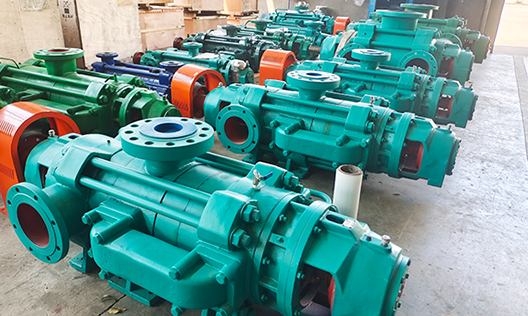
Puede fabricar 26 series de productos, incluyendo bombas de circulación para grandes centrales eléctricas, bombas de condensación para grandes centrales eléctricas, bombas petroquímicas, bombas multietapa, bombas de aguas residuales y lodo, bombas multietapa autoequilibradas, bombas de doble succión y única etapa tipo split, y bombas centrífugas de succión simple y única etapa.
-
Cases
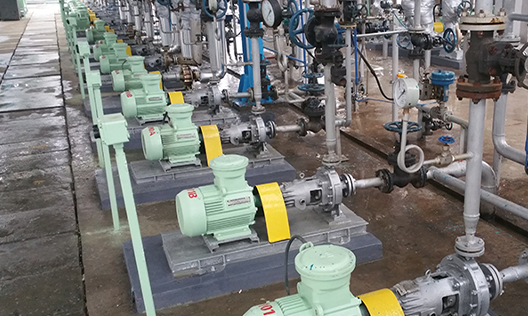
La elección de más de cientos de miles de clientes, cubriendo industrias como minería de carbón, metalurgia, química, energía, recursos hídricos, alimentos, municipalidades y protección ambiental, y exportando a Asia Sudeste, África, América y otros lugares.
-
Service
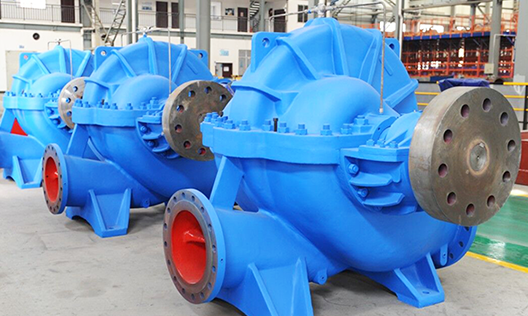
La empresa fue la primera en la industria en obtener las certificaciones internacionales del sistema de calidad ISO 9001:2008, del sistema de gestión ambiental ISO 14001 y del sistema de gestión de seguridad y salud ocupacional GB/T 28001, además de la certificación API 610 de la Asociación Estadounidense del Petróleo.
-
About us
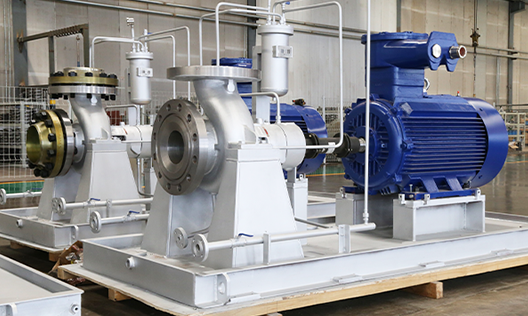
La empresa, fundada en 1989, es una empresa nacional de alta tecnología integral que integra diseño, investigación y desarrollo, fabricación y servicios; actualmente es una empresa clave en la industria china de bombas centrífugas y una de las grandes fábricas especializadas.
-

Blogs
Con productos innovadores, calidad excepcional y servicios integrales, buscamos la verdad y la pragmática, avanzamos con iniciativa, y nos esforzamos por lograr el objetivo de ser "la marca líder en el campo de aplicación de bombas centrífugas en el país"! Raigada en Hunan, orientada a todo el país y hacia el mundo!
Multi-stage Pump High-efficiency Cooling Technical Solution (Including Materials, Parameters, and Maintenance Standards)
Publication Date:
2026-05-25
Author:
Source:


Multistage pumps play a core role in fluid conveyance across various applications, including industrial manufacturing, construction projects, and water supply systems. Their high efficiency and energy-saving performance stem from optimized hydraulic design and structural engineering; however, thermal management under high-temperature conditions directly impacts operational stability and service life. As discussed in the article, multistage pump manufacturers Changsha Zoomlion Pump Industry This paper will elaborate on multi-stage pump high-efficiency cooling technology solutions from the perspective of various application practices, for reference by user organizations.

I. Structural Optimization and Thermal Design
1. Radiator System: The system employs a hybrid convection–radiation cooling design. By optimizing the radiator fin pitch (recommended 2–5 mm), the air-to-fins area ratio (≥1.2), and the installation angle (inclined at 30° relative to the pump shaft), air-flow efficiency is enhanced. The pump housing is made of HT250 gray cast iron or 316L stainless steel, with thermal conductivity coefficients of 52 W/(m·K) and 16 W/(m·K), respectively, resulting in a 30%–50% improvement in heat-dissipation performance compared with conventional cast iron.
2. Forced-air cooling system: Equipped with a variable-frequency axial fan (airflow ≥ 1,500 m³/h, static pressure ≥ 300 Pa), which is interlocked with temperature sensors to automatically start and stop the fan, thereby maintaining the pump casing surface temperature below 65°C.
II. Medium Cooling Technology
1. Internal Circulation Cooling: A helical cooling channel is incorporated between the pump casing and the pump cover, utilizing an ethylene glycol–water-based coolant (at a concentration of 30%–50%). Heat exchange is achieved via an external plate heat exchanger, with the cooling temperature differential maintained within the range of 8–12°C.
2. External Circulation Cooling: For high-temperature operating conditions (ambient temperature > 40°C), an independent closed-loop cooling tower system shall be employed, with an inlet water temperature ≤ 25°C and a flow rate designed at 1.2 times the pump power, to ensure a heat transfer coefficient K ≥ 1800 W/(m²·K).
III. Operation Parameter Control
1. Flow Optimization: Use a variable-frequency drive to adjust the motor speed (recommended frequency range: 50–60 Hz) so that the flow rate operates within ±10% of the design operating point, thereby reducing hydraulic losses and heat generation.
2. Pressure Matching: Set the system pressure at 5%–8% below the pump’s rated head to reduce frictional heat generation in the mechanical seal.
IV. Preventive Maintenance
1. Bearing Monitoring: Use SKF 6310 bearings (maximum speed of 4,500 r/min), and regularly measure the radial clearance (≤0.15 mm). If the clearance exceeds the limit, replace the bearing assembly.
2. Impeller Cleaning: Conduct an endoscopic inspection of the impeller every 5,000 operating hours and remove any accumulated deposits (ultrasonic cleaning at 40 kHz is recommended) to ensure that the deviation in flow area remains below 3%.
V. Intelligent Monitoring System
The system integrates a PT100 temperature sensor (accuracy ±0.5°C) with a PLC control system to continuously acquire temperatures at three measurement points: the pump bearing housing (T1), the motor stator (T2), and the process fluid inlet (T3). Temperature data are transmitted via the Modbus protocol to the SCADA system, where over-temperature conditions trigger an automatic audible and visual alarm and simultaneously disconnect the power supply.
In summary, Changsha Zoomlion Pump Industry’s multi-stage pump cooling solution, implemented through an integrated “structure–medium–parameters–maintenance–monitoring” technical system, achieves the following performance targets: continuous-operation thermal efficiency of ≥85%, mean time between failures (MTBF) of ≥8,000 hours, and a 15%–20% reduction in overall energy consumption compared with conventional solutions.
Previous:
Recommended Information


Related Products
Perhaps you also want to know?
Zoomlian Pump Industry
Address:No. 210, Environmental Protection Middle Road, Yuhua Economic Development Zone, Changsha City, Hunan Province China
All rights reserved © Changsha Zoomlian Pump Co., Ltd.
This website supports IPv4 IPv6 bidirectional access
Website construction:Zhongqi Power Changsha