

-
Products
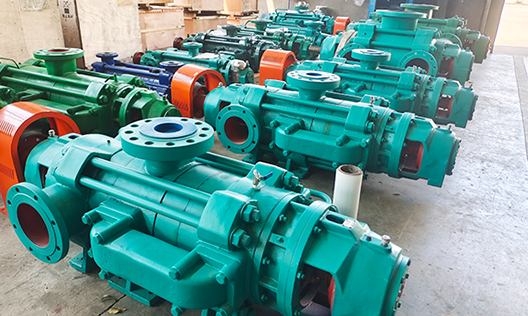
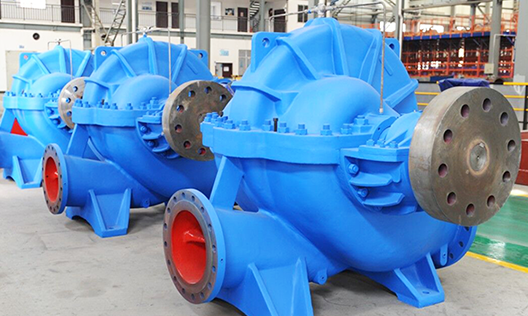
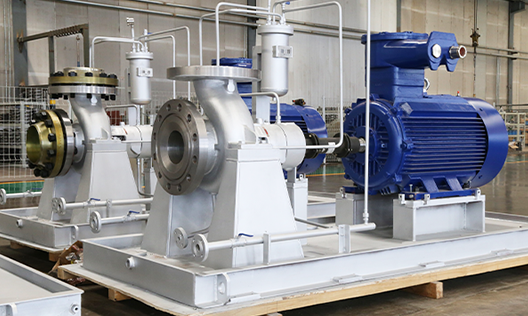
Puede fabricar 26 series de productos, incluyendo bombas de circulación para grandes centrales eléctricas, bombas de condensación para grandes centrales eléctricas, bombas petroquímicas, bombas multietapa, bombas de aguas residuales y lodo, bombas multietapa autoequilibradas, bombas de doble succión y única etapa tipo split, y bombas centrífugas de succión simple y única etapa.
-
Cases
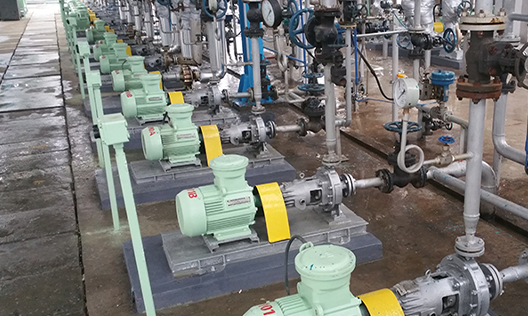
La elección de más de cientos de miles de clientes, cubriendo industrias como minería de carbón, metalurgia, química, energía, recursos hídricos, alimentos, municipalidades y protección ambiental, y exportando a Asia Sudeste, África, América y otros lugares.
-
Service
La empresa fue la primera en la industria en obtener las certificaciones internacionales del sistema de calidad ISO 9001:2008, del sistema de gestión ambiental ISO 14001 y del sistema de gestión de seguridad y salud ocupacional GB/T 28001, además de la certificación API 610 de la Asociación Estadounidense del Petróleo.
-
About us
La empresa, fundada en 1989, es una empresa nacional de alta tecnología integral que integra diseño, investigación y desarrollo, fabricación y servicios; actualmente es una empresa clave en la industria china de bombas centrífugas y una de las grandes fábricas especializadas.
-

Blogs
Con productos innovadores, calidad excepcional y servicios integrales, buscamos la verdad y la pragmática, avanzamos con iniciativa, y nos esforzamos por lograr el objetivo de ser "la marca líder en el campo de aplicación de bombas centrífugas en el país"! Raigada en Hunan, orientada a todo el país y hacia el mundo!
Common Faults and Cause Analysis of Double-Suction Center-Opening Centrifugal Pumps
Publication Date:
2025-11-10
Author:
Source:


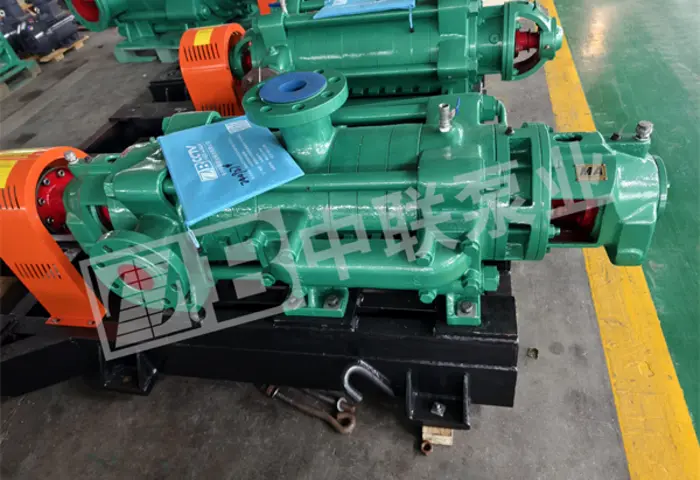
Double-suction, Centrifugal Pump with Split Casing As a versatile fluid-handling device, it is widely used in fields such as water conservancy, municipal engineering, and industrial production. During prolonged operation, factors like installation, handling, and wear-and-tear can easily lead to malfunctions such as no water discharge, abnormal rotation speed, and insufficient suction lift, directly affecting the system's operational efficiency. Below, Centrifugal pump Manufacturing factory Changsha Zoomlion Pump Industry Technical engineers, drawing on their practical experience, have worked on Double-suction, Centrifugal Pump with Split Casing Common faults and their causes are systematically analyzed to help quickly identify and resolve issues.

I. Fault 1: No water comes out after startup
This is Double-suction, Centrifugal Pump with Split Casing The most common failures during operation are often closely related to “ Air residue ““ Sealed air leak ” Related—specifically for the following reasons:
1. Insufficient water filling before startup: Although some users noticed water overflowing from the vent hole, they failed to rotate the pump shaft to completely expel the air inside, leaving a small amount of air trapped in the inlet pipe or pump body, which disrupted the vacuum environment essential for water suction.
2. The horizontal section of the inlet pipe is improperly installed: The horizontal segment of the inlet pipe connected to the pump body was not installed according to “ Against the flow of water ≥0.5% Descending slope ” Installation, or even upward tilting, can lead to air trapped inside the tube, reducing the vacuum level.
3. Packing seal failure: The packing wears out due to prolonged use, or the gland becomes loose, causing significant water to spray out from the gap between the packing and the shaft sleeve, while external air simultaneously leaks into the pump body.
4. The inlet pipe wall is damaged: The inlet pipe, which has been submerged underwater for an extended period, develops corrosion-induced holes. As the pump operates and the water level drops, these holes eventually emerge above the water surface, allowing air to enter the pipe through the openings.
5. Air leakage at the inlet pipe connection: Cracks may appear in the bent section of the inlet pipe, or tiny gaps could exist where the pipe connects to the pump’s inlet, both of which allow air to seep in.
II. Fault No. 2: Low flow rate, insufficient head, or even no water discharge (related to abnormal speed)
Such failures are often caused by mismatched power output or mechanical wear, with the specific reasons as follows:
1. Improper motor selection: After the originally equipped motor was damaged, users casually replaced it with a different model, resulting in mismatched motor power and speed with the pump unit, leading to insufficient flow, inadequate head, or even no water being pumped at all.
2. Mechanical failure of the pump body: The impeller's securing nut has loosened from the pump shaft, and the pump shaft is deformed and bent, causing the impeller to shift and rub against the pump casing. Alternatively, damaged or seized bearings can also lead to a decrease in the pump's rotational speed.
3. The power unit repair was incomplete: After the motor windings burned out and lost magnetization, modifying the number of winding turns, wire diameter, or wiring configuration during repairs—and failing to thoroughly address the underlying issue—can all lead to abnormal pump speed.
III. Fault 3: Excessive suction lift causing insufficient or no water intake
Some users ignore Double-suction, Centrifugal Pump with Split Casing “ Maximum Permissible Suction Lift ” Restrictions lead to poor water absorption, and the specific reasons are as follows:
When the water source is at a considerable depth or the installation site has flat terrain, if the pump is installed higher than its maximum allowable suction lift, it may result in insufficient water intake—or even complete failure to draw water. It’s important to note that the vacuum level achievable at the pump’s suction inlet is physically limited; theoretically, the maximum suction lift under absolute vacuum conditions is approximately 10 A column of rice water, but in reality Double-suction, Centrifugal Pump with Split Casing It is impossible to achieve absolute vacuum; moreover, excessively high vacuum levels can easily cause water vaporization inside the pump, compromising operational safety. Therefore, various types of Double-suction, Centrifugal Pump with Split Casing The maximum allowable suction lift is typically at 3–8.5 Between meters, installation should not simply prioritize convenience while neglecting suction requirements.
4. Fault 4: Excessive Resistance Loss in Inlet and Outlet Piping
Even if the vertical distance from the reservoir (water tower) to the water source surface is less than the pump's head, insufficient water lift or no water flow may still occur—primarily because pipeline resistance losses exceed acceptable levels.
1. Pipeline design is unreasonable: pipes are laid too long and have excessive bends, especially 90 The resistance of bending the pipe is far greater than 120 Bend the pipe —— Every 1 One 90 Bending the pipe will cause 0.5–1 Mi Yangcheng loss, per 20 The straight pipe section of the meter will cause approximately 1 Mi Yangcheng Loss;
2. Improper pipe diameter selection: Users arbitrarily modify the inlet and outlet pipe diameters, resulting in a mismatch between the pipeline flow area and the pump body, which further increases resistance losses.
V. Fault 5: Other Reasons Causing Insufficient Water Output
In addition to the aforementioned malfunctions, abnormalities in components such as bottom valves, impellers, and valves can also affect the water-lifting performance.
1. The bottom valve fails to open properly: After the pump has been left idle for an extended period, the bottom valve washer may stick and become jammed; in cases where the bottom valve lacks a washer altogether, it could lose its ability to open or close due to rust.
2. Bottom valve strainer clogged: The strainer is covered with debris and sediment from the water, or the bottom valve has sunk into the sludge layer, blocking the water inlet passage.
3. The impeller is severely worn: After prolonged operation, the impeller blades have suffered wear and corrosion, compromising the pump's hydraulic performance and reducing water delivery efficiency.
4. Gate Valve / Check valve failure: The valve is stuck, clogged, or not closing tightly, resulting in reduced flow;
5. Export pipeline leakage: Sealing failure at the pipeline connections resulted in water leaks, leading to a decrease in the actual amount of water being extracted.
Previous:
Recommended Information



Related Products
Perhaps you also want to know?
Zoomlian Pump Industry
Address:No. 210, Environmental Protection Middle Road, Yuhua Economic Development Zone, Changsha City, Hunan Province China
All rights reserved © Changsha Zoomlian Pump Co., Ltd.
This website supports IPv4 IPv6 bidirectional access
Website construction:Zhongqi Power Changsha