

-
Products
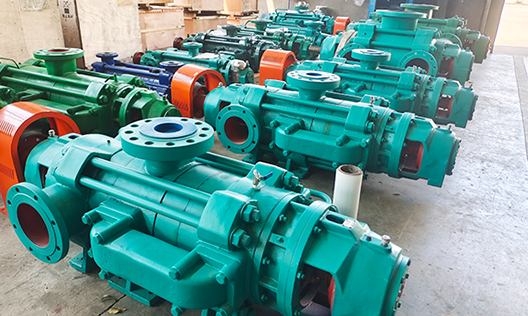
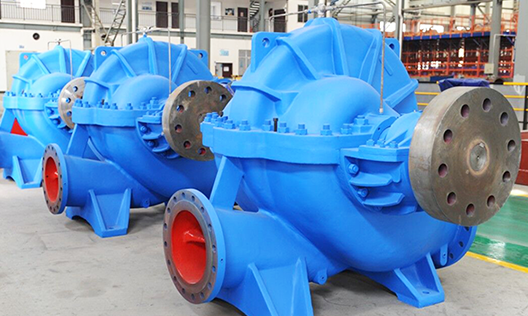
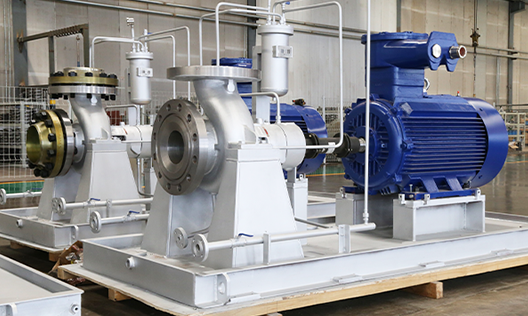
Puede fabricar 26 series de productos, incluyendo bombas de circulación para grandes centrales eléctricas, bombas de condensación para grandes centrales eléctricas, bombas petroquímicas, bombas multietapa, bombas de aguas residuales y lodo, bombas multietapa autoequilibradas, bombas de doble succión y única etapa tipo split, y bombas centrífugas de succión simple y única etapa.
-
Cases
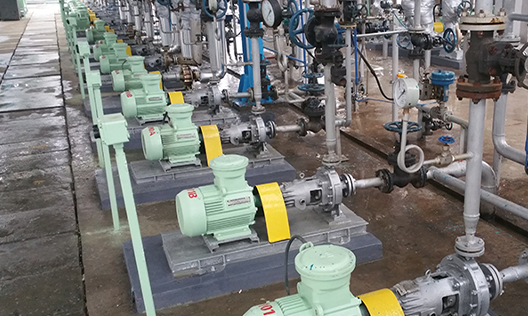
La elección de más de cientos de miles de clientes, cubriendo industrias como minería de carbón, metalurgia, química, energía, recursos hídricos, alimentos, municipalidades y protección ambiental, y exportando a Asia Sudeste, África, América y otros lugares.
-
Service
La empresa fue la primera en la industria en obtener las certificaciones internacionales del sistema de calidad ISO 9001:2008, del sistema de gestión ambiental ISO 14001 y del sistema de gestión de seguridad y salud ocupacional GB/T 28001, además de la certificación API 610 de la Asociación Estadounidense del Petróleo.
-
About us
La empresa, fundada en 1989, es una empresa nacional de alta tecnología integral que integra diseño, investigación y desarrollo, fabricación y servicios; actualmente es una empresa clave en la industria china de bombas centrífugas y una de las grandes fábricas especializadas.
-

Blogs
Con productos innovadores, calidad excepcional y servicios integrales, buscamos la verdad y la pragmática, avanzamos con iniciativa, y nos esforzamos por lograr el objetivo de ser "la marca líder en el campo de aplicación de bombas centrífugas en el país"! Raigada en Hunan, orientada a todo el país y hacia el mundo!
What is the parameter for the shaft length of a stainless steel vertical multistage pump?
Publication Date:
2025-06-19
Author:
Source:


In Stainless Steel Vertical Multistage Pump In the construction, the shaft length is a key parameter that has a crucial impact on the pump's performance and operational stability. The shaft, as the core component connecting the motor and the impeller, must have its length precisely determined based on many factors such as the pump's design flow rate, head, number of stages, and installation space.
From the perspective of flow rate and head, if the pump needs to have high head and large flow capacity, the number of impeller stages is often increased. As the number of stages increases, to ensure effective coordination between each impeller, the shaft length must be correspondingly extended to ensure that power is transmitted evenly and stably to each impeller stage. For example, in some large industrial water supply or secondary water supply systems for high-rise buildings, to meet head requirements of tens or even hundreds of meters, the shaft length of multistage pumps is designed to be relatively long, possibly reaching several meters.
The pump's installation space also restricts the shaft length. In some compact installation environments, such as small workshops or equipment rooms, to adapt to limited space while meeting performance requirements, the shaft length will be shortened as much as possible. This requires clever layout during design and the selection of more efficient hydraulic models to reduce the number of impeller stages, thereby shortening the shaft length while still ensuring pump performance.
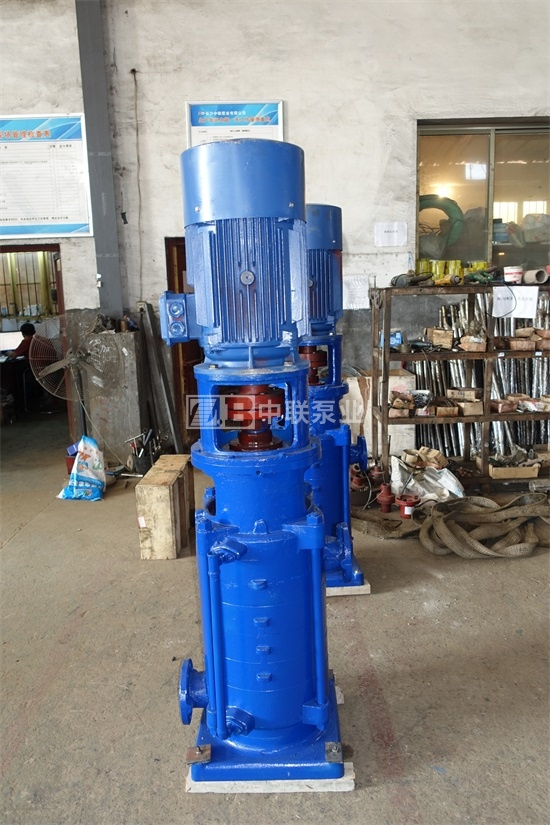
Additionally, the shaft length is closely related to the rigidity of the pump shaft. An excessively long shaft reduces the rigidity of the pump shaft, making it prone to significant deflection during high-speed rotation, which can cause vibration and noise, and in severe cases, even lead to friction between the impeller and the pump casing, reducing the pump's service life. According to relevant design standards, for a pump shaft rotating at 3000r/min, the slenderness ratio (the ratio of pump shaft diameter to pump shaft bearing length) should not be less than 0.04; at 4000r/min, the slenderness ratio should not be less than 0.045. This means that when determining the shaft length, the pump shaft diameter must be considered simultaneously, ensuring the rigidity of the pump shaft through a reasonable slenderness ratio. In practical engineering applications, to enhance the rigidity of long-shaft pump shafts, it is common to increase support points, such as adding sliding bearings in the middle of the pump shaft to reduce the cantilever length of the pump shaft and lower the risk of vibration.
I wonder if the above content meets your expectations? If you have Stainless Steel Vertical Multistage Pump more specific directions for discussion on shaft length, such as analysis of shaft length for specific pump models or methods for optimizing shaft length, you can let me know, and I will further improve the content.
Latest News
Related Products
Perhaps you also want to know?
Zoomlian Pump Industry
Address:No. 210, Environmental Protection Middle Road, Yuhua Economic Development Zone, Changsha City, Hunan Province China
All rights reserved © Changsha Zoomlian Pump Co., Ltd.
This website supports IPv4 IPv6 bidirectional access
Website construction:Zhongqi Power Changsha