

-
Products
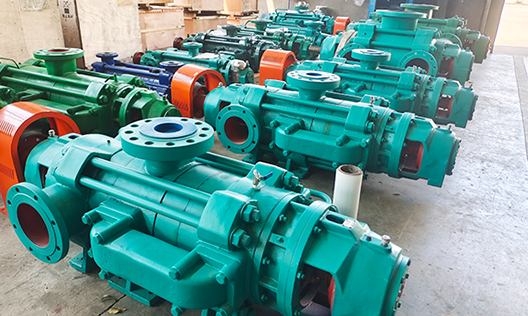
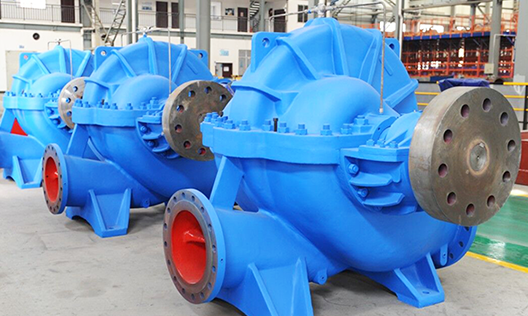
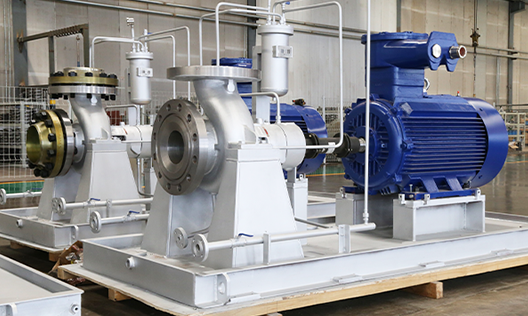
Puede fabricar 26 series de productos, incluyendo bombas de circulación para grandes centrales eléctricas, bombas de condensación para grandes centrales eléctricas, bombas petroquímicas, bombas multietapa, bombas de aguas residuales y lodo, bombas multietapa autoequilibradas, bombas de doble succión y única etapa tipo split, y bombas centrífugas de succión simple y única etapa.
-
Cases
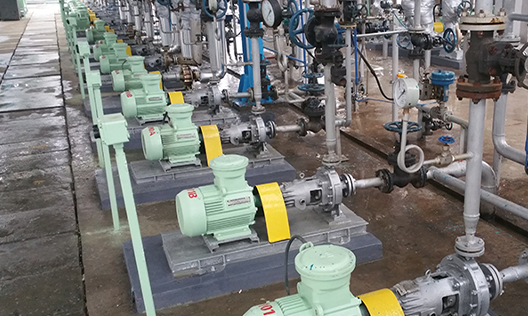
La elección de más de cientos de miles de clientes, cubriendo industrias como minería de carbón, metalurgia, química, energía, recursos hídricos, alimentos, municipalidades y protección ambiental, y exportando a Asia Sudeste, África, América y otros lugares.
-
Service
La empresa fue la primera en la industria en obtener las certificaciones internacionales del sistema de calidad ISO 9001:2008, del sistema de gestión ambiental ISO 14001 y del sistema de gestión de seguridad y salud ocupacional GB/T 28001, además de la certificación API 610 de la Asociación Estadounidense del Petróleo.
-
About us
La empresa, fundada en 1989, es una empresa nacional de alta tecnología integral que integra diseño, investigación y desarrollo, fabricación y servicios; actualmente es una empresa clave en la industria china de bombas centrífugas y una de las grandes fábricas especializadas.
-

Blogs
Con productos innovadores, calidad excepcional y servicios integrales, buscamos la verdad y la pragmática, avanzamos con iniciativa, y nos esforzamos por lograr el objetivo de ser "la marca líder en el campo de aplicación de bombas centrífugas en el país"! Raigada en Hunan, orientada a todo el país y hacia el mundo!
What is the difference between a vertical long-shaft pump and a vertical multistage pump?
Publication Date:
2025-06-19
Author:
Source:


In many fields such as industrial processes, building water supply, and farmland irrigation, vertical pumps hold a crucial position due to their advantages of saving floor space and easy installation. However, when faced with the two similarly shaped vertical structures, "vertical long-shaft pumps" and "vertical multistage pumps," many people often feel confused. Although both stand vertically, they carry completely different missions, and their internal structures are vastly different.
Fundamental Differences in Structural Genes
Vertical Long-Shaft Pump Its core feature lies in its "long shaft" structure. Its power source (motor) is suspended above the pump body, connected tightly by an extra-long drive shaft that runs through the entire working depth. This shaft must pass through the space above the liquid surface, dive deep into wells or pools, and ultimately drive a single impeller located at the lowest position to rotate at high speed. To ensure the stability and precision of the long shaft during high-speed operation, multiple guide bearings are installed at different heights on the shaft, which require continuous liquid lubrication and cooling. The pump body structure is relatively simple, usually containing only a single-stage impeller.
The structure of the vertical multistage pump is quite different from that of the long-shaft pump. Its power source is either closely integrated with the pump body or directly connected at the top. The core part of the pump is a vertically stacked "impeller castle"—multiple impellers are firmly fixed on the same shorter pump shaft and arranged sequentially inside the series-connected pump casings (guide vanes or middle sections). Each impeller stage draws energy from the previous stage, causing the water pressure to increase step by step. Although guide bearings also exist, their length and lubrication requirements are much lower than those of the long-shaft pump. The pump body structure is relatively complex and precise, and the number of impeller stages is flexibly set according to the final head requirement.
Disparity in Head Generation Principles
Structural differences directly determine their different logic in head generation. The vertical long-shaft pump is essentially a "single-stage deep water lifter." Its head is mainly provided by a single-stage impeller, and the head height mainly depends on the impeller's size, shape, and rotational speed. The mission of the long-shaft pump is to lift liquids buried deep underground (such as deep well water or mine water) to the surface. Its head mainly reflects overcoming the huge "lifting height" rather than generating ultra-high pressure. Therefore, its performance curve focuses more on the relationship between flow rate and "lifting depth."
The vertical multistage pump is a true "pressure multiplier." Water sequentially passes through each impeller and guide vane stage, with each stage contributing an additional pressure gain. The final head is the arithmetic sum of the heads generated by each impeller stage. Therefore, even if the single-stage head is limited, simply increasing the number of stages can easily achieve astonishing pressures of tens of megapascals or higher. Its performance curve focuses more on the correspondence between flow rate and "outlet pressure."
Divergence of Performance Curves and Different Missions
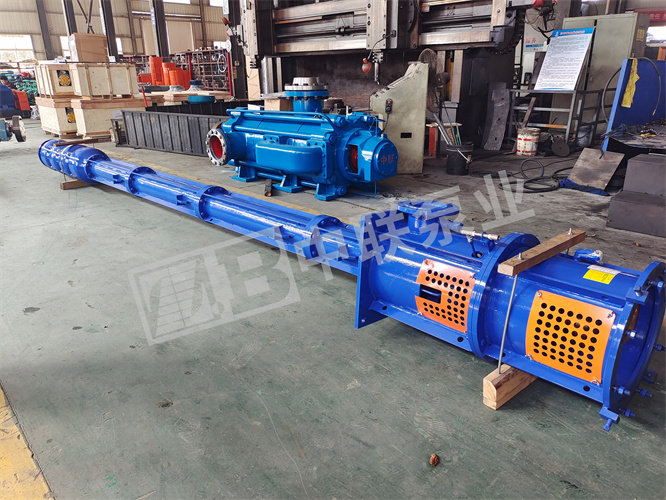
The performance curve of the vertical long-shaft pump usually shows that within a larger flow range, the head (or lifting depth) changes relatively gently, with a wide efficient zone. Its core value lies in effectively lifting deep-seated liquids, especially excelling at stable water extraction from wells or reservoirs tens to hundreds of meters deep. Typical scenarios include: deep well water extraction, large reservoir raw water pumping, mine drainage, and power plant circulating water supply.
The performance curve of the vertical multistage pump is steeper, especially in the high-pressure low-flow region. It is designed for high-pressure environments and usually achieves higher efficiency than single-stage pumps under the same power through multistage boosting. It is widely used in situations with strict outlet pressure requirements: stepwise pressurized water supply for high-rise buildings, boiler feedwater systems, high-pressure liquid transport in chemical processes, industrial cleaning equipment, and more.
Key Factors in Selection Decisions
The key to selection lies in identifying core requirements:
Liquid source depth (suction lift): When water needs to be directly lifted from deep wells, pits, or pools (with a large suction lift), the vertical long-shaft pump is the only reasonable choice. The vertical multistage pump is usually designed for smaller suction lifts, focusing on outlet pressure boosting.
Required outlet pressure: When extremely high outlet pressure is required, the vertical multistage pump becomes the first choice due to its pressure stacking advantage. The vertical long-shaft pump focuses on overcoming depth rather than generating high pressure.
Space and maintenance: The slender structure of the long-shaft pump requires sufficient vertical space to install deep wells or pump pits, and the guide bearings in its long shaft system are the maintenance focus; the multistage pump structure is relatively compact, but with many internal stages and precise mating surfaces, disassembly and maintenance demands are higher.
Vertical Long-Shaft Pump Compared with the vertical multistage pump, one explores depth with a long shaft, the other multiplies pressure with multiple stages. Although they share the name "vertical," they diverge in head generation principles and performance curve characteristics due to profound differences in structural genes, ultimately serving different engineering missions. Understanding their core distinction—whether to overcome depth or create high pressure—is essential to making wise choices amid complex requirements, ensuring every stream of water reaches its target propelled by the most appropriate force.
Latest News
Related Products
Perhaps you also want to know?
Zoomlian Pump Industry
Address:No. 210, Environmental Protection Middle Road, Yuhua Economic Development Zone, Changsha City, Hunan Province China
All rights reserved © Changsha Zoomlian Pump Co., Ltd.
This website supports IPv4 IPv6 bidirectional access
Website construction:Zhongqi Power Changsha