

-
Products
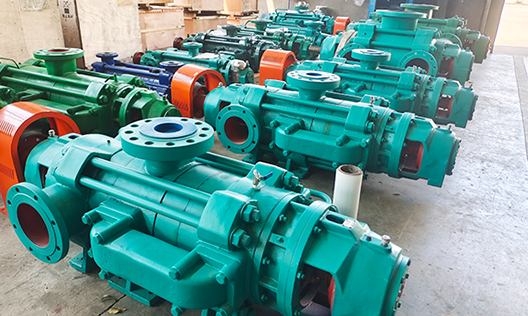
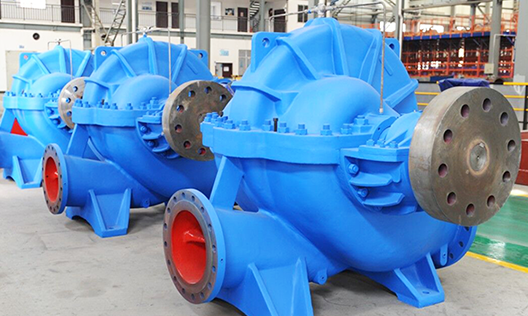
Puede fabricar 26 series de productos, incluyendo bombas de circulación para grandes centrales eléctricas, bombas de condensación para grandes centrales eléctricas, bombas petroquímicas, bombas multietapa, bombas de aguas residuales y lodo, bombas multietapa autoequilibradas, bombas de doble succión y única etapa tipo split, y bombas centrífugas de succión simple y única etapa.
-
Cases
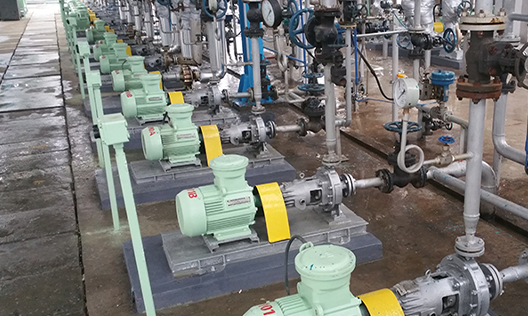
La elección de más de cientos de miles de clientes, cubriendo industrias como minería de carbón, metalurgia, química, energía, recursos hídricos, alimentos, municipalidades y protección ambiental, y exportando a Asia Sudeste, África, América y otros lugares.
-
Service
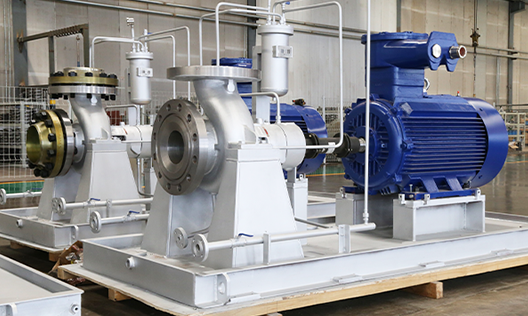
La empresa fue la primera en la industria en obtener las certificaciones internacionales del sistema de calidad ISO 9001:2008, del sistema de gestión ambiental ISO 14001 y del sistema de gestión de seguridad y salud ocupacional GB/T 28001, además de la certificación API 610 de la Asociación Estadounidense del Petróleo.
-
About us
La empresa, fundada en 1989, es una empresa nacional de alta tecnología integral que integra diseño, investigación y desarrollo, fabricación y servicios; actualmente es una empresa clave en la industria china de bombas centrífugas y una de las grandes fábricas especializadas.
-

Blogs
Con productos innovadores, calidad excepcional y servicios integrales, buscamos la verdad y la pragmática, avanzamos con iniciativa, y nos esforzamos por lograr el objetivo de ser "la marca líder en el campo de aplicación de bombas centrífugas en el país"! Raigada en Hunan, orientada a todo el país y hacia el mundo!
What causes backflow in wear-resistant multistage centrifugal drainage pumps used in coal mines?
Publication Date:
2026-03-09
Author:
Source:


As a critical core piece of equipment for underground mine drainage and tailings transport, the wear‑resistant multistage centrifugal drainage pump used in coal mines is directly linked to safe mine production and the stable operation of the drainage system. Backflow—where the medium leaks backward from the pump outlet to the inlet or circulates within the pump chamber—is a typical failure mode for this type of pump under the high-sand-content, high‑abrasion, and high‑pressure operating conditions prevalent in coal mines. Due to the high sand content and poor water quality of underground mine media, backflow not only leads to a reduction in the pump’s actual discharge flow but also increases energy consumption. 15%–30% It will also exacerbate wear and cavitation in flow‑passing components such as impellers and sealing rings, thereby shortening the service life of these components. 50% The above issues are more likely to cause pump body vibration exceeding the standard, pipeline surges, and even complete failure of the drainage system, posing a significant hazard to safe mine production. In this paper, for mining use… Multistage pump Manufacturer Changsha Zoomlion Pump Industry Drawing on practical operational and maintenance experience with underground drainage pumps in coal mines, this analysis will delve into the core causes of backflow in wear‑resistant multistage centrifugal drainage pumps used in coal mining, helping mining enterprises address issues at their source and ensuring the continuous, stable operation of their drainage systems.

1. Design Defects in Piping Systems and Seal Failure: The Primary External Causes of Backflow
As a medium transport channel, the design rationality and sealing performance of a piping system directly determine whether backflow will occur.
Pipeline Layout and Parameter Mismatch: Excessive Pipe Bends (Number of Bends per Pipeline Section > 3 and no diversion design has been implemented), the pipeline is excessively long, resulting in excessive frictional resistance along the length of the pipe, or the pipeline diameter has been undersized (with a medium flow velocity exceeding… 3m/s ), causing fluctuations in outlet pressure and triggering backflow of the medium; in some operating conditions, improper pipeline slope design and the failure to install air vents at high points lead to gas accumulation within the pipes, forming “air locks” that disrupt fluid stability and indirectly induce backflow.
Pipeline Sealing and Connection Failure: Damage to flange sealing surfaces, aging and cracking of gaskets, and uneven bolt tightening can lead to leaks at pipeline connections, allowing ambient air to enter and create negative pressure, which in turn causes media backflow. Internal leakage in pump inlet and outlet valves—such as valve stem wear or damage to the valve seat sealing surface—can result in high‑pressure media flowing backward through valve clearances during shutdowns or operational mode changes, leading to backflow.
2. Pump Body Core Component Failures and Design Defects: The Internal Root Causes of Backflow
The pump body’s own structure and the condition of its components are key to preventing backflow; the core issue centers on… 3 Component type:
Impeller and Hydraulic System Issues: Outdated impeller hydraulic models, deviations in blade angles, or blade wear, corrosion, and scaling after prolonged operation can lead to turbulent fluid flow within the pump, causing “internal circulation” between high‑pressure and low‑pressure zones and triggering internal backflow. An excessively large clearance between the impeller and the pump casing—exceeding the design value—can also… 1.5 (Increased by a factor of two), the high-pressure medium exiting the system leaks through the clearance to the inlet, creating gap reflux.
Sealing and Bearing Component Failure: Excessive Wear of the Seal Ring (Lip Seal) 0.5mm The sealing surfaces are scratched, failing to effectively isolate the high‑pressure and low‑pressure zones within the pump cavity, resulting in backflow of the medium between chambers; bearing wear exceeds the allowable limit, and the clearance exceeds the specified tolerance (> 0.1mm ), causing the pump shaft to move axially, disrupting the coaxial alignment between the impeller and the pump casing, which in turn further widens the clearance and increases backflow; mechanical seal failure leads to end-face leakage, indirectly exacerbating the backflow phenomenon.
Defects in pump body structural design: Insufficient precision of the sealing surfaces in the middle section of multistage pumps and aging of interstage gaskets lead to interstage leakage and backflow; wear or failure of internal balancing devices (such as balance discs and balance drums) prevents them from effectively counteracting axial forces, causing pump shaft vibration, damaging seals and clearance fits, and triggering backflow.
3. Lack of Operational Standards and Inadequate Maintenance Management: Human‑Controlled Factors in Recirculation
Improper operation and lack of maintenance can turn potential hazards into actual backflow failures.
Improper start‑stop and operating condition switching procedures: Before starting, the pump is not thoroughly primed and vented, leaving residual air in the pump chamber that causes cavitation, disrupts fluid continuity, and triggers backflow; when shutting down, the outlet valve is not closed first, allowing high‑pressure fluid in the pipeline to surge backward into the pump body and flow back through the sealing gaps; during sudden changes in operating conditions—such as abrupt drops in flow rate or pressure fluctuations—valve openings are not adjusted in a timely manner, causing the pump to operate outside its efficient range and triggering backflow.
Lack of Routine Maintenance and Inspections: The pump inlet strainer is not cleaned on a regular basis, leading to debris clogging the flow passages, causing insufficient inlet pressure and resulting in negative pressure backflow. Wear‑prone components such as sealing rings, gaskets, and bearings are operated beyond their service life and are not replaced according to the prescribed cycle ( 3–6 (months) for maintenance and replacement; the sealing performance of inlet and outlet valves has not been regularly verified, resulting in internal leakage that has gone undetected for a long time and has gradually intensified the backflow phenomenon.
Recommended Information


Related Products
Perhaps you also want to know?
Zoomlian Pump Industry
Address:No. 210, Environmental Protection Middle Road, Yuhua Economic Development Zone, Changsha City, Hunan Province China
All rights reserved © Changsha Zoomlian Pump Co., Ltd.
This website supports IPv4 IPv6 bidirectional access
Website construction:Zhongqi Power Changsha